Panthenol: Comedogenic Rating & Ingredient Analysis
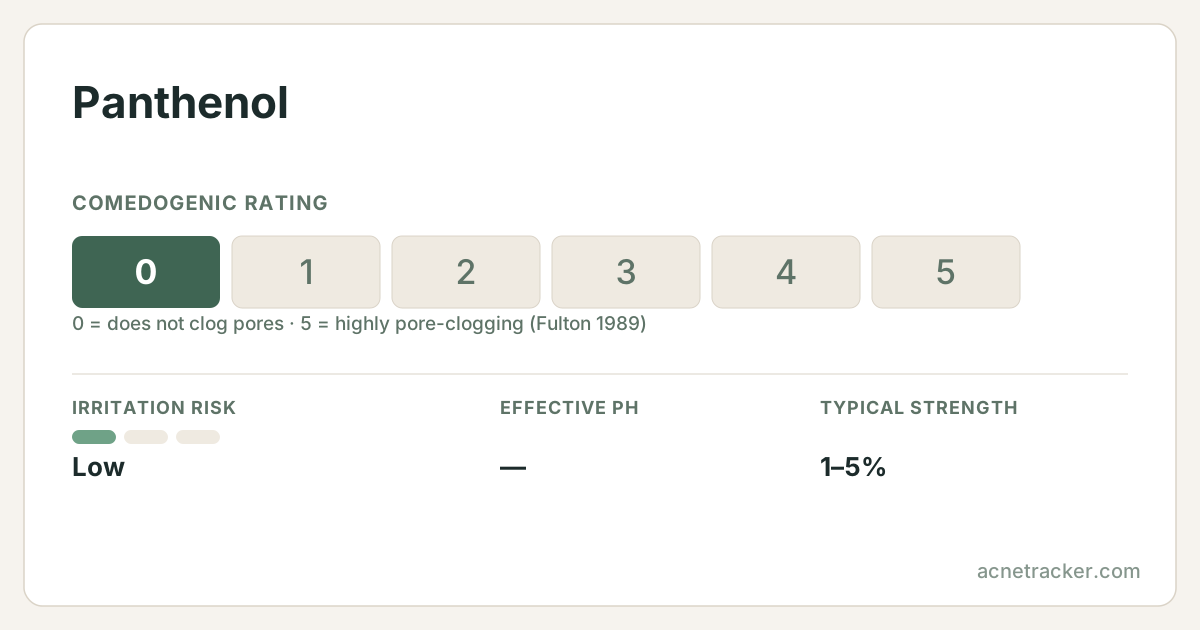
Panthenol is the alcohol form of vitamin B5 and one of the most quietly useful ingredients in a modern routine. It is a small, water-loving molecule that both draws moisture into the upper layers of the skin and helps the barrier hold onto it, which is why it turns up in everything from lightweight hydrating serums to rich repair creams and after-sun gels. What makes it especially valuable for acne-prone skin is that it is soothing rather than active: it does not exfoliate, dry or sensitise, so it can sit comfortably alongside the harsher ingredients — retinoids, benzoyl peroxide, exfoliating acids — that actually clear breakouts but tend to leave skin tight, red and flaky. Used consistently, panthenol makes those stronger actives easier to tolerate.
Quick facts
- Comedogenic rating
- measured (Fulton 1989)
- Irritation risk
- Low
- Effective pH
- —
- Typical strength
- 1–5%
- Pregnancy
- Considered safe
- Suits skin types
- drysensitivenormalcombinationacne-pronemature
Where this number comes from
Read directly from Table I of Fulton's 1989 paper — the primary source, not one of the copied tables that circulate online.
Fulton read his own scale as 0-1 not significant, 2-3 borderline, 4-5 positive. The assay is the rabbit ear at 10% dilution, which the paper itself calls extremely sensitive and not fully predictive of human skin. Ratings describe the raw ingredient; concentration and formulation change real-world behaviour.
Caution profile
The four published fields on this page, on one 0–5 scale. Further from the centre means more care is needed — never that the ingredient is worse.
Derived, not measured: pore-clogging is the published comedogenic rating; irritation maps low/moderate/high to 1/3/5; pregnancy maps safe/caution/avoid to 0/3/5; skin-type limits is how many of the seven skin types this entry does NOT list. Every input is printed in words in the quick-facts card above.
Show the numbers
| Metric | 0–5 | Published field |
|---|---|---|
| Pore-clogging | 0 | 0/5 |
| Irritation | 1 | Low |
| Skin-type limits | 0.7 | 6/7 |
| Pregnancy | 0 | Considered safe |
Working pH and typical strength
Where this ingredient is formulated to sit, and at what concentration.
Both bars come from the fields above: the pH window and the typical strength range published for this ingredient. The tinted column is healthy skin's surface pH (about 4.7–5.75).
Show the numbers
| Metric | 0–5 |
|---|---|
| Typical strength | 1–5% |
What is it?
Chemically, panthenol is a provitamin: once it is absorbed, skin enzymes convert it into pantothenic acid (vitamin B5), a component the body uses to build coenzyme A and, further downstream, the lipids that seal the skin barrier. Topically it behaves as a humectant, binding water in the stratum corneum much like glycerin, but it also has a documented emollient and film-forming quality that softens rough patches and reduces transepidermal water loss. Dermatological studies on dexpanthenol, the pharmaceutical grade of the same molecule, show it can speed the recovery of minor skin damage and calm inflammation, which is why panthenol creams are a long-standing pharmacy staple for chapped, wind-burned or over-treated skin. It is non-acidic, odourless and stable across a wide pH, so formulators can add it to almost any product without disrupting the rest of the formula.
Benefits
Deeply hydrates without heaviness
As a humectant, panthenol pulls water into the outer skin layers and holds it there, relieving the tight, dehydrated feeling that acne treatments often cause — without the greasy weight of an occlusive.
Soothes irritation and redness
Studies on dexpanthenol show a measurable calming effect on inflamed, reddened skin, making panthenol a reliable buffer when retinoids or acids leave the face sore and flushed.
Supports barrier recovery
By feeding the skin's lipid-building pathway, panthenol helps a compromised moisture barrier rebuild, which cuts down on the flaking and stinging that derail many acne routines.
Improves skin softness and texture
Its emollient, film-forming action smooths the surface, so skin that has been roughened by over-exfoliation feels supple and looks less patchy within a few days.
How to use
Panthenol is effortless to use and fits any step of a routine, morning or night. In a serum, apply it to damp skin after cleansing and before your moisturiser; in a cream, use it as your final hydrating layer. Because it is soothing rather than active, it is the ideal partner for irritating treatments — apply your retinol or acid, wait, then follow with a panthenol product to soften the after-effects. It layers under sunscreen and makeup without pilling and needs no adjustment period. There is no wrong time of day and no need to build up tolerance; simply use it whenever your skin feels tight, raw or over-treated.
Side effects
Panthenol is among the best-tolerated ingredients in skincare and carries a comedogenic rating of 0, so it will not clog pores. Side effects are rare and usually limited to occasional mild redness or itching in people with a specific sensitivity. As with any ingredient, an allergic reaction is possible but uncommon; if you have reacted to B-vitamin derivatives before, patch test first. It does not increase sun sensitivity.
Who should avoid it
Almost no one needs to avoid panthenol. The only group that should be cautious is people with a known allergy to panthenol or pantothenic acid, who may develop contact dermatitis. If you have highly reactive skin, patch test a new product behind the ear for a few nights before applying it to the whole face.
Pairs well with
Frequently asked questions
Is panthenol good for acne-prone skin?
Yes. Panthenol has a comedogenic rating of 0 and does not clog pores. It is especially useful for acne-prone skin because it soothes and hydrates the irritation caused by active treatments like retinoids and exfoliating acids.
What is the difference between panthenol and pro-vitamin B5?
They are the same thing. Panthenol is the topical, provitamin form; once absorbed, the skin converts it into pantothenic acid, which is vitamin B5. Labels often use 'pro-vitamin B5' as a marketing-friendly name.
Can I use panthenol every day?
Yes. Panthenol is gentle enough for twice-daily use and needs no adjustment period. Regular use is actually where it shines, as continuous hydration and barrier support build up over time.
Does panthenol help with dryness from retinol?
It is one of the best ingredients for exactly that. Panthenol hydrates and supports barrier repair, which offsets the dryness and flaking that retinol commonly causes, making the retinoid easier to keep using.
Is panthenol safe during pregnancy?
Topical panthenol is generally considered safe during pregnancy and breastfeeding, and is a common choice for soothing sensitive skin in this period. Confirm with your doctor for your individual situation.
Where this ingredient shows up here
Counted across this database, not the web — these are the pages on this site that reason about this ingredient.
Combination guides 6
Condition pages 7
- Chin Acne During Pregnancy
- Eczema on the Arms (and Why It Is Not Acne)
- Folliculitis on the Arms
- Skin Purging on the Cheeks
- Spots in the Corners of the Mouth
- Toothpaste and Breakouts Around the Mouth
+1 more on the site
Buying guides 56
- How to Choose a Body Wash for Dry Skin
- How to Choose a Body Wash for Eczema-Prone Skin
- How to Choose a Body Wash for Sensitive Skin
- How to Choose a Chemical Exfoliant for Sensitive Skin
- How to Choose a Cleanser for a Damaged Skin Barrier
- How to Choose a Cleanser for Combination Skin
+50 more on the site
Sources & further reading
Medical disclaimer
Find your personal acne triggers
Our free Acne Tracker lets you log breakouts, sleep, stress and diet, and shows you which factors correlate with your flare-ups.