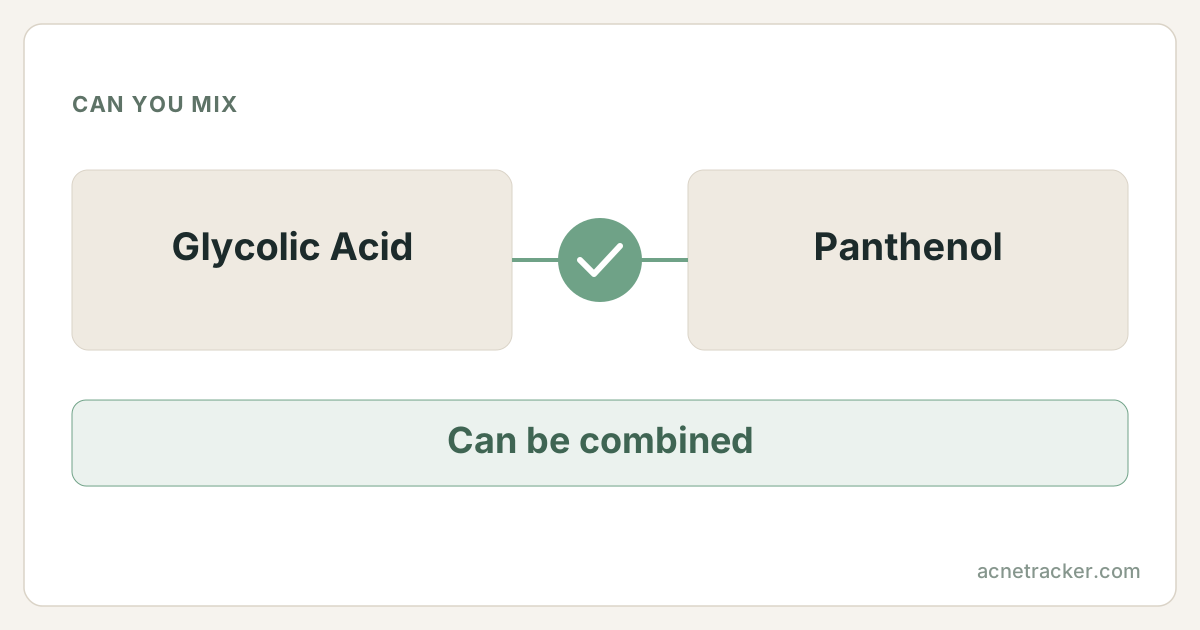
Can You Mix Glycolic Acid and Panthenol?
Yes, and it is an excellent pairing. Panthenol (provitamin B5) is a soothing, barrier-supporting humectant that offsets the dryness and mild irritation glycolic acid can cause. It does not interfere with how glycolic works, so applying panthenol after your acid, or using a moisturiser that contains it, helps you tolerate exfoliation with less redness and tightness. It is one of the best support ingredients for an acid routine.
How this pairing resolves
The two ingredients, their published numbers, and where they land together.
The numbers beside each ingredient are its published comedogenic rating and effective pH window, taken from its own profile page.
Show the numbers
| Ingredients | Metric | 0–5 |
|---|---|---|
| Glycolic Acid | Comedogenic rating | 0/5 |
| Glycolic Acid | Effective pH | 3.0–4.0 |
| Panthenol | Comedogenic rating | 0/5 |
| Panthenol | Effective pH | no published pH |
Why
Panthenol is the alcohol form of vitamin B5; once in the skin it converts to pantothenic acid, a building block your cells use in barrier repair. On the surface it acts as a humectant that draws in and holds water, and it has well-documented soothing and anti-inflammatory effects that calm redness and support the skin barrier. Glycolic acid, by contrast, is an AHA that exfoliates dead surface cells and, in doing so, can leave the barrier temporarily stressed, drier and more reactive. Pairing them is a classic active-plus-buffer strategy: the acid does the resurfacing work while panthenol replenishes water and helps the barrier recover, reducing the sting, tightness and flaking that make people abandon acids. There is no chemistry conflict, no pH problem that stops glycolic working, and no added irritation. If anything, panthenol makes a glycolic routine more sustainable, which matters because consistent, tolerable use is what actually improves skin over time. Sun protection is still needed because glycolic raises UV sensitivity.
How to combine them
Let glycolic act, then bring in panthenol to soothe. Evening: cleanse, apply glycolic acid to dry skin, wait a couple of minutes, then apply a panthenol serum or a moisturiser containing panthenol to calm and rehydrate. You can also use panthenol every day, morning and night, since it is gentle and non-irritating, making it a good everyday barrier supporter between acid nights. Because it is so mild, there is no need to limit or alternate it the way you would a second active; only the glycolic step needs to stay at two or three nights a week while your skin adjusts. Finish mornings with broad-spectrum SPF 30+, as the glycolic step increases sun sensitivity even though panthenol itself does not.
Example routine
| When | Steps |
|---|---|
| Evening (acid nights) | Cleanser → Glycolic acid → Panthenol serum → Moisturiser |
| Evening (other days) | Cleanser → Panthenol serum → Moisturiser |
| Morning | Cleanser → Panthenol → Moisturiser → SPF 30+ |
| Note | Panthenol is gentle enough for daily, twice-daily use |
Warning signs
Frequently asked questions
What does panthenol do in a glycolic acid routine?
Panthenol is provitamin B5, a soothing humectant that supports barrier repair. In an acid routine it replaces water and calms the dryness and irritation glycolic can cause, making exfoliation easier to tolerate.
Will panthenol stop glycolic acid from working?
No. Panthenol is a supportive humectant, not an acid neutraliser. Applied after glycolic has settled, it soothes and hydrates without interfering with the exfoliation you have already done.
Can I use panthenol every day with glycolic?
Yes. Panthenol is gentle and non-irritating, so use it morning and night, every day. Only the glycolic step needs limiting to a few nights a week while your skin adjusts.
Do I still need sunscreen if I use panthenol?
Yes. Panthenol soothes but does not reduce sun sensitivity, and glycolic acid increases it, so daily broad-spectrum SPF 30+ remains essential to protect the freshly exfoliated skin.
Sources & further reading
There is no single study of this exact question. The guidance here is reasoned from the ingredient profiles below, each of which carries its own references:
- Glycolic Acid3 refs
- Panthenol3 refs
Show every reference behind this page (5)
- PubChem — Glycolic acid compound summarycited by Glycolic Acid
- DermNet — Alpha hydroxy acidscited by Glycolic Acid
- European Commission CosIng database — Glycolic Acidcited by Glycolic Acid, Panthenol
- PubChem — Panthenol compound summarycited by Panthenol
- Safety Assessment of Panthenol, Pantothenic Acid, and Derivatives as Used in Cosmetics (PubMed)cited by Panthenol
Medical disclaimer
Ingredients mentioned on this page
Find your personal acne triggers
Our free Acne Tracker lets you log breakouts, sleep, stress and diet, and shows you which factors correlate with your flare-ups.