Retinol: Comedogenic Rating & Ingredient Analysis
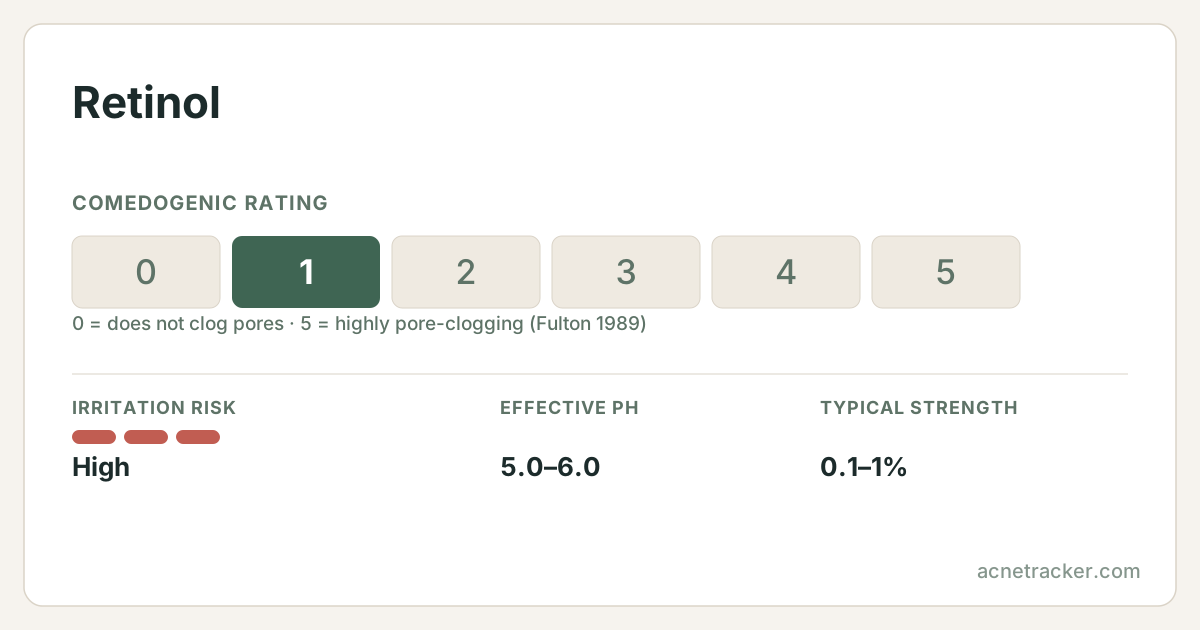
Retinol is the reference active ingredient that almost every other anti-acne and anti-aging ingredient is measured against. A derivative of vitamin A, it speeds up the rate at which skin cells renew themselves, keeps pores from clogging, and stimulates collagen production in the deeper layers of the skin. It is also one of the few cosmetic ingredients with decades of peer-reviewed evidence behind it. The trade-off is tolerance: retinol is the ingredient most likely to cause dryness, flaking and irritation in the first weeks, and using it correctly — low concentration, slow ramp-up, diligent sunscreen — matters more than with any other active.
Quick facts
- Comedogenic rating
- our estimate — not measured
- Irritation risk
- High
- Effective pH
- 5.0–6.0
- Typical strength
- 0.1–1%
- Pregnancy
- Avoid
- Suits skin types
- oilycombinationnormalmatureacne-prone
Where this number comes from
No one has published a comedogenic rating for this ingredient. Fulton's 1989 table tested about 250 raw materials and this was not among them, and we found no later study measuring it. The figure shown is our own reasoning from the ingredient's chemistry and how it is used — treat it as an estimate, not a measurement.
Fulton read his own scale as 0-1 not significant, 2-3 borderline, 4-5 positive. The assay is the rabbit ear at 10% dilution, which the paper itself calls extremely sensitive and not fully predictive of human skin. Ratings describe the raw ingredient; concentration and formulation change real-world behaviour.
Caution profile
The four published fields on this page, on one 0–5 scale. Further from the centre means more care is needed — never that the ingredient is worse.
Derived, not measured: pore-clogging is the published comedogenic rating; irritation maps low/moderate/high to 1/3/5; pregnancy maps safe/caution/avoid to 0/3/5; skin-type limits is how many of the seven skin types this entry does NOT list. Every input is printed in words in the quick-facts card above.
Show the numbers
| Metric | 0–5 | Published field |
|---|---|---|
| Pore-clogging | 1 | 1/5 |
| Irritation | 5 | High |
| Skin-type limits | 1.4 | 5/7 |
| Pregnancy | 5 | Avoid |
Working pH and typical strength
Where this ingredient is formulated to sit, and at what concentration.
Both bars come from the fields above: the pH window and the typical strength range published for this ingredient. The tinted column is healthy skin's surface pH (about 4.7–5.75).
Show the numbers
| Metric | 0–5 |
|---|---|
| Working pH | 5.0–6.0 |
| Typical strength | 0.1–1% |
What is it?
Retinol belongs to the retinoid family, which spans everything from gentle over-the-counter esters (retinyl palmitate) to prescription tretinoin. Once absorbed, skin enzymes convert retinol in two steps into retinoic acid, the biologically active form that binds to receptors in skin cells and changes how genes involved in growth and repair are expressed. This conversion is why retinol is weaker but better tolerated than prescription retinoids. Its effects are broad: faster cell turnover unclogs pores from the inside, thickens the deeper dermis, and normalizes the sticky, disordered shedding of dead cells that starts most comedones. Results on acne typically show at 8–12 weeks; on fine lines, at 3–6 months.
Benefits
Prevents clogged pores at the source
Retinol normalizes how dead skin cells shed inside the pore, preventing the microcomedones that every blackhead, whitehead and inflamed pimple starts as.
Fades acne scars and marks
By accelerating cell turnover and stimulating collagen, retinol softens shallow atrophic scarring and speeds up the fading of dark post-acne marks.
Reduces fine lines
Retinol is the best-documented cosmetic ingredient for photoaging: consistent use measurably increases collagen density and smooths fine lines around the eyes and mouth.
Evens skin texture
Faster, more organized cell renewal leaves the skin surface smoother and more uniform, improving how skin reflects light and how makeup sits.
How to use
Apply retinol at night only — it degrades in sunlight. Start with 0.1–0.3% twice a week on dry skin after cleansing, wait 20 minutes, then apply moisturizer. Increase frequency every two weeks as tolerated before increasing strength. The 'sandwich method' (moisturizer, retinol, moisturizer) blunts irritation for sensitive skin without meaningfully reducing results. Daily broad-spectrum SPF 30+ is non-negotiable while using retinol, as fresh skin cells burn faster. Expect a possible purge — a temporary increase in small pimples in weeks two to six as existing clogs surface — which is different from irritation and passes on its own.
Side effects
The most common side effects are dryness, flaking, redness and a stinging sensation, collectively called retinization, which peak in the first two to four weeks and fade as the skin adapts. Overuse can damage the moisture barrier, which paradoxically worsens breakouts. Retinol also increases photosensitivity, so unprotected sun exposure while using it accelerates the very damage it is meant to repair. If burning is severe or a rash develops, stop and let the skin recover before reintroducing at a lower dose.
Who should avoid it
Do not use retinol during pregnancy or while breastfeeding — oral vitamin A derivatives are known teratogens and topical retinoids are avoided as a precaution. People with active eczema, rosacea flares or a damaged skin barrier should repair the barrier first. If you are on prescription acne medication (tretinoin, isotretinoin, adapalene), do not add cosmetic retinol on top without asking your dermatologist.
Pairs well with
Avoid combining with
Frequently asked questions
How long does the retinol purge last?
Typically two to six weeks. Purging shows up as small pimples in the areas where you usually break out. If new breakouts appear in unusual areas or last beyond eight weeks, it is more likely irritation or a comedogenic formula, not purging.
Can I use retinol with salicylic acid?
Not in the same routine when starting out — both increase cell turnover and stacking them multiplies irritation. Alternate nights, or use salicylic acid in the morning and retinol at night once your skin is fully adjusted.
What strength retinol should a beginner use?
0.1–0.3%. Studies show meaningful results at these concentrations with far less irritation than 1%. Move up only after 8–12 weeks of comfortable use, and only if you want faster results.
Is retinol safe during pregnancy?
No. All retinoids, including cosmetic retinol, are avoided during pregnancy and breastfeeding. Azelaic acid and niacinamide are the standard pregnancy-safe alternatives for acne.
Why is my skin worse after starting retinol?
Either purging (existing clogs surfacing faster — temporary and located where you normally break out) or barrier irritation from ramping up too fast. Slow the frequency, moisturize more, and reassess after two weeks.
Where this ingredient shows up here
Counted across this database, not the web — these are the pages on this site that reason about this ingredient.
Combination guides 17
+9 more on the site
Sources & further reading
Medical disclaimer
Find your personal acne triggers
Our free Acne Tracker lets you log breakouts, sleep, stress and diet, and shows you which factors correlate with your flare-ups.