Glycerin: Comedogenic Rating & Ingredient Analysis
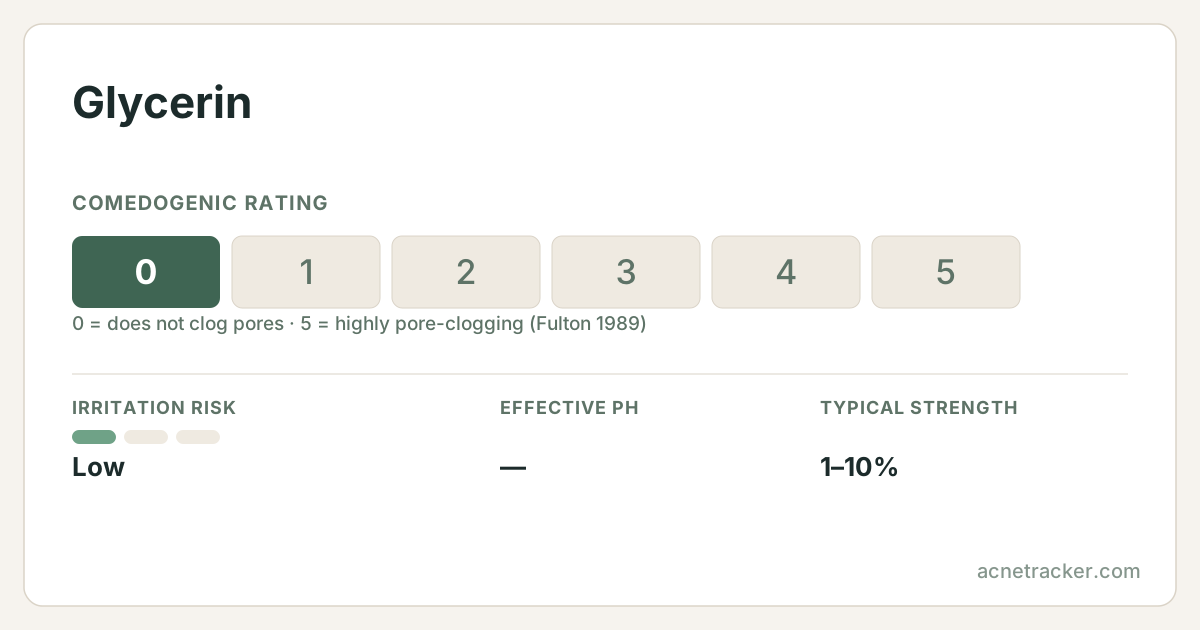
Glycerin is the most widely used moisturizing ingredient in the world, and for good reason: it is cheap, extraordinarily well tolerated, and effective across every skin type. Chemically it is a humectant, meaning it attracts and holds water, drawing moisture from the deeper layers of the skin and from humid air toward the surface where it is needed. You will find it near the top of the ingredient list in the majority of moisturizers, serums, cleansers and toners, usually somewhere between 1% and 10%. It has none of the drama of an active like retinol or an acid — no purge, no irritation, no adjustment period — which is exactly why it forms the reliable hydrating backbone of so many products.
Quick facts
- Comedogenic rating
- measured (Fulton 1989)
- Irritation risk
- Low
- Effective pH
- —
- Typical strength
- 1–10%
- Pregnancy
- Considered safe
- Suits skin types
- oilydrycombinationsensitivenormalacne-pronemature
Where this number comes from
Read directly from Table I of Fulton's 1989 paper — the primary source, not one of the copied tables that circulate online.
Fulton read his own scale as 0-1 not significant, 2-3 borderline, 4-5 positive. The assay is the rabbit ear at 10% dilution, which the paper itself calls extremely sensitive and not fully predictive of human skin. Ratings describe the raw ingredient; concentration and formulation change real-world behaviour.
Caution profile
The four published fields on this page, on one 0–5 scale. Further from the centre means more care is needed — never that the ingredient is worse.
Derived, not measured: pore-clogging is the published comedogenic rating; irritation maps low/moderate/high to 1/3/5; pregnancy maps safe/caution/avoid to 0/3/5; skin-type limits is how many of the seven skin types this entry does NOT list. Every input is printed in words in the quick-facts card above.
Show the numbers
| Metric | 0–5 | Published field |
|---|---|---|
| Pore-clogging | 0 | 0/5 |
| Irritation | 1 | Low |
| Skin-type limits | 0 | 7/7 |
| Pregnancy | 0 | Considered safe |
Working pH and typical strength
Where this ingredient is formulated to sit, and at what concentration.
Both bars come from the fields above: the pH window and the typical strength range published for this ingredient. The tinted column is healthy skin's surface pH (about 4.7–5.75).
Show the numbers
| Metric | 0–5 |
|---|---|
| Typical strength | 1–10% |
What is it?
Glycerin, also called glycerol, is a small three-carbon molecule with three hydroxyl groups that let it grab and hold on to water. When applied to skin it works in two ways: it pulls water into the outer layer to keep it plump and flexible, and it helps the skin hold on to that water rather than losing it to the air. Research shows it does more than sit passively on the surface — glycerin appears to support the skin's own barrier function and the maturation of skin cells, and it helps the fatty structures between cells stay in the flexible state that keeps a barrier healthy. Because it is naturally present in the skin already, it integrates seamlessly and essentially never causes the reactions that plague harsher ingredients. In very dry air, glycerin works best when paired with an occlusive that seals the drawn-in water in place.
Benefits
Hydrates without heaviness
As a humectant, glycerin draws water into the outer skin layer, relieving tightness and flakiness while feeling lightweight — suitable even for oily and acne-prone skin that dislikes rich creams.
Supports the skin barrier
Beyond surface hydration, glycerin helps the barrier function properly and keeps the lipids between skin cells flexible, which reduces water loss and reactivity over time.
Soothes and softens
Its water-binding action calms the tight, rough feeling of dehydrated skin and leaves the surface soft and supple, making it a mainstay of products for sensitive skin.
Plays well with actives
Because it is non-irritating and pH-flexible, glycerin buffers the drying effect of acids and retinoids, which is why it appears alongside them in so many balanced formulas.
How to use
Glycerin needs no special technique — it is almost always already in your cleanser, toner, serum or moisturizer, and works morning and night for every skin type. It performs best on slightly damp skin and when followed by a moisturizer or facial oil that seals the hydration in, especially in dry winter air. If you have a pure or high-percentage glycerin product, dilute it or layer it under a cream rather than using it neat, because concentrated glycerin in very dry conditions can feel sticky and theoretically draw water from deeper skin. Layer it freely with actives — it helps offset their drying tendency.
Side effects
Glycerin is among the gentlest ingredients in skincare and side effects are rare. At high concentrations it can feel tacky or sticky on the skin, and in a very dry environment undiluted glycerin can pull moisture upward from deeper layers, which is why it is formulated at moderate levels and combined with other moisturizers. True irritation or allergy is very uncommon. For virtually everyone, glycerin is a safe, everyday ingredient.
Who should avoid it
There is almost no one who needs to avoid glycerin. People who dislike a slightly sticky finish may prefer formulas where it sits lower in the ingredient list, and in extremely dry climates it is best used within a complete moisturizer rather than as a standalone humectant. Genuine glycerin allergy is rare enough to be a curiosity rather than a common concern.
Pairs well with
Frequently asked questions
Is glycerin good for acne-prone skin?
Yes. Glycerin has a comedogenic rating of 0 and hydrates without oil or heaviness, so it suits oily and acne-prone skin and helps offset the dryness caused by acne treatments like salicylic acid and retinol.
Does glycerin actually work as a moisturizer?
Yes. It is one of the best-studied humectants, drawing water into the skin and supporting barrier function. It works even better when paired with an occlusive that seals the hydration in place.
Can I use pure glycerin on my face?
It is better diluted or layered under a moisturizer. Neat, high-concentration glycerin can feel sticky and, in very dry air, may pull water from deeper skin, so most people get better results from formulated products.
Is glycerin or hyaluronic acid better?
They are complementary humectants rather than competitors. Glycerin is smaller and cheaper with strong barrier support; hyaluronic acid holds large amounts of water. Many products use both for layered hydration.
Is glycerin safe during pregnancy?
Yes. Glycerin is considered safe during pregnancy and breastfeeding and is a pregnancy-friendly way to keep skin hydrated. Check with your doctor if you have specific concerns.
Where this ingredient shows up here
Counted across this database, not the web — these are the pages on this site that reason about this ingredient.
Combination guides 4
Sources & further reading
Medical disclaimer
Find your personal acne triggers
Our free Acne Tracker lets you log breakouts, sleep, stress and diet, and shows you which factors correlate with your flare-ups.