How to Choose a Cleanser for a Damaged Skin Barrier
A damaged barrier is skin whose protective outer layer has been compromised — usually by over-exfoliating, too many actives, harsh cleansing or over-washing. It stings, flushes, feels tight and often peels, and reacts to products it used to tolerate. The way back is to do less: pare the routine down and let the barrier rebuild, and the cleanser is where over-doing it most often starts. The right choice here is the gentlest possible, non-stripping wash, or even just water for a while. This guide describes the ingredient profile that lets a barrier heal, what to strip out of your routine, and how to rebuild gradually.
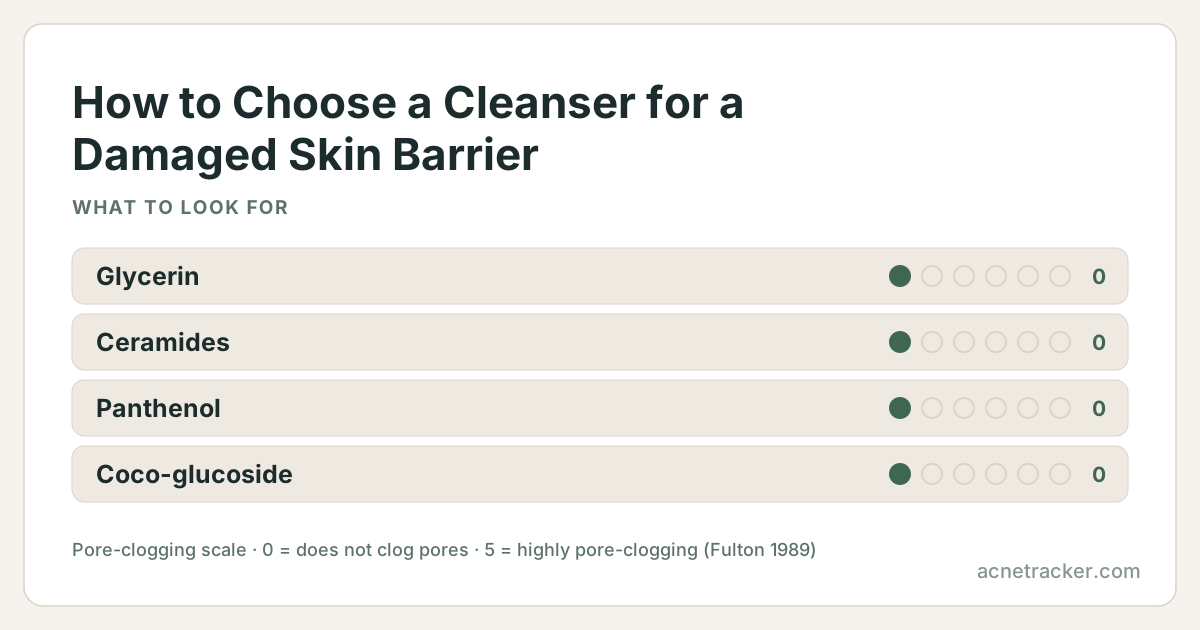
Ingredients to look for
| Ingredient | Why it matters |
|---|---|
| Glycerin | A gentle humectant that keeps a compromised barrier hydrated without any harshness while it recovers. |
| Ceramides | The barrier lipids a damaged surface is short of; help cleansing leave the barrier less depleted. |
| Panthenol | Soothes and supports repair, easing the tightness and roughness of a compromised barrier. |
| Coco-glucoside | One of the mildest surfactants, cleaning at low strength so a fragile barrier is barely disturbed. |
| Allantoin | A mild soothing agent that calms reactive, stinging skin while it heals. |
Ingredients to avoid
| Ingredient | Why it matters |
|---|---|
| SLS and other harsh sulfate detergents | Strip the little barrier lipid that remains and set recovery back. |
| Any exfoliating or 'active' cleanser | Acids, scrubs and strong actives are usually what damaged the barrier; pause them entirely. |
| Fragrance and essential oils | Provoke stinging and reactions in already inflamed, compromised skin. |
| Foaming gels, hot water and cloths | Extra surfactant, heat and friction all delay barrier repair. |
How to choose
Go as gentle as it gets. A non-foaming or very low-foam cream or milk cleanser with glycerin, ceramides and a soothing agent is ideal, and while the barrier is at its worst, even a plain lukewarm water rinse in the morning is fine. Cut every active out of the cleansing step — no acids, no scrubs, no strong actives — since those are usually what caused the damage. Screen out SLS, fragrance and essential oils. Ignore any 'repairing' claim on the front and read the list instead. Most importantly, simplify the whole routine to a gentle cleanser, a barrier moisturiser and daytime sunscreen, and reintroduce actives only once the skin is calm, one at a time. The cleanser's role is to do no harm while the barrier rebuilds itself.
How to apply
Cleanse once a day at most, in the evening, and rinse with lukewarm water in the morning — over-washing is a leading cause of barrier damage, so less is genuinely more here. Use fingertips only, no cloths or brushes, and keep the wash brief. Pat dry gently and apply a barrier moisturiser onto slightly damp skin straight away to lock in water and support repair. Hold off on all exfoliants and strong actives until the stinging, tightness and flushing have fully settled, usually over a few weeks, then reintroduce them slowly, one at a time.
Frequently asked questions
How do I know if my skin barrier is damaged?
Signs include new stinging or burning from products you used to tolerate, persistent tightness, flushing, rough or flaky patches and increased sensitivity. It usually follows over-exfoliating or over-washing, and improves when you simplify the routine and stop all actives.
Should I stop cleansing to heal my barrier?
You can cut right back. A single gentle evening cleanse with a plain water rinse in the morning is often enough while skin recovers. The key is removing harsh, foaming and active cleansers, not necessarily cleansing itself.
Can the wrong cleanser damage my barrier?
Yes. Harsh sulfates, high-pH soap, exfoliating acids in a wash, hot water and over-washing all strip barrier lipids. Repeated daily, that is a common route to a compromised barrier, which is why gentleness matters most at this step.
Can changing my cleanser alone repair a damaged barrier?
It is the highest-leverage single change, because the cleanser is usually what caused the damage — it is the one step that actively removes lipids rather than adding them, twice a day. Stopping that removal often matters more than anything you layer on afterwards. Recovery still takes a few weeks of a simplified, gentle routine, though it varies. Keep the routine minimal, avoid all actives until the symptoms settle, and reintroduce them slowly. If skin does not improve or worsens, see a doctor.
Sources & further reading
There is no single study of this exact question. The guidance here is reasoned from the ingredient profiles below, each of which carries its own references:
- Glycerin3 refs
- Ceramides3 refs
- Panthenol3 refs
- Coco-Glucoside2 refs
- Allantoin3 refs
Show every reference behind this page (10)
- PubChem — Glycerol compound summarycited by Glycerin
- DermNet — Moisturiserscited by Glycerin
- European Commission CosIng database — Glycerincited by Glycerin, Ceramides, Panthenol, Coco-Glucoside, Allantoin
- DermNet — Skin barrier functioncited by Ceramides
- PubChem — Ceramide compound summarycited by Ceramides
- PubChem — Panthenol compound summarycited by Panthenol
- Safety Assessment of Panthenol, Pantothenic Acid, and Derivatives as Used in Cosmetics (PubMed)cited by Panthenol
- Cosmetic Ingredient Review — safety of alkyl glucosidescited by Coco-Glucoside
- PubChem — Allantoin compound summarycited by Allantoin
- Final report of the safety assessment of allantoin and its related complexes (PubMed)cited by Allantoin
Medical disclaimer
Ingredients mentioned on this page
Find your personal acne triggers
Our free Acne Tracker lets you log breakouts, sleep, stress and diet, and shows you which factors correlate with your flare-ups.