Ceramides: Comedogenic Rating & Ingredient Analysis
Ceramides are the mortar that holds your skin barrier together. If you picture the outermost layer of skin as a brick wall, the flattened dead cells are the bricks and ceramides are the lipid mortar filling the gaps between them, sealing water in and irritants out. They make up roughly half of the barrier's lipid content, so when their levels drop — through age, harsh cleansing, cold weather or over-exfoliation — the wall becomes leaky, and skin turns dry, tight, flaky and reactive. Applying ceramides in a moisturizer tops up that supply and helps rebuild the seal, which is why they have become the defining ingredient of barrier-repair skincare and a favourite for sensitive, eczema-prone and over-treated skin.
Quick facts
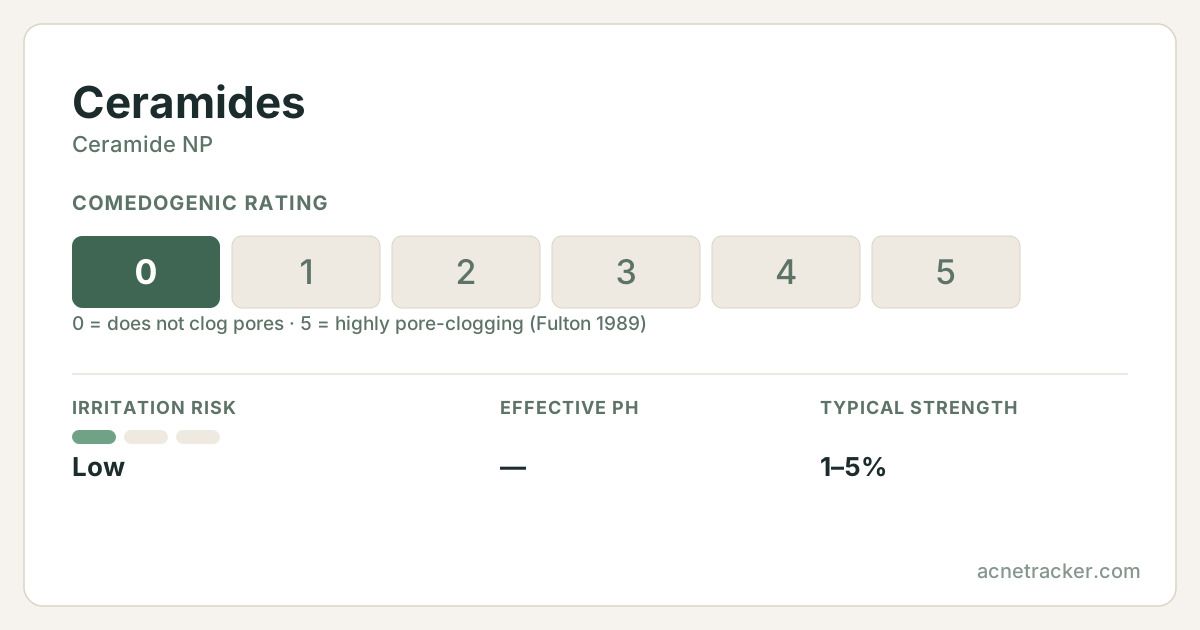
- Comedogenic rating
- our estimate — not measured
- Irritation risk
- Low
- Effective pH
- —
- Typical strength
- 1–5%
- Pregnancy
- Considered safe
- Suits skin types
- drysensitivenormalcombinationmatureacne-prone
Where this number comes from
No one has published a comedogenic rating for this ingredient. Fulton's 1989 table tested about 250 raw materials and this was not among them, and we found no later study measuring it. The figure shown is our own reasoning from the ingredient's chemistry and how it is used — treat it as an estimate, not a measurement.
Fulton read his own scale as 0-1 not significant, 2-3 borderline, 4-5 positive. The assay is the rabbit ear at 10% dilution, which the paper itself calls extremely sensitive and not fully predictive of human skin. Ratings describe the raw ingredient; concentration and formulation change real-world behaviour.
Caution profile
The four published fields on this page, on one 0–5 scale. Further from the centre means more care is needed — never that the ingredient is worse.
Derived, not measured: pore-clogging is the published comedogenic rating; irritation maps low/moderate/high to 1/3/5; pregnancy maps safe/caution/avoid to 0/3/5; skin-type limits is how many of the seven skin types this entry does NOT list. Every input is printed in words in the quick-facts card above.
Show the numbers
| Metric | 0–5 | Published field |
|---|---|---|
| Pore-clogging | 0 | 0/5 |
| Irritation | 1 | Low |
| Skin-type limits | 0.7 | 6/7 |
| Pregnancy | 0 | Considered safe |
Working pH and typical strength
Where this ingredient is formulated to sit, and at what concentration.
Both bars come from the fields above: the pH window and the typical strength range published for this ingredient. The tinted column is healthy skin's surface pH (about 4.7–5.75).
Show the numbers
| Metric | 0–5 |
|---|---|
| Typical strength | 1–5% |
What is it?
Ceramides are a family of waxy lipid molecules that occur naturally in the outermost layer of skin, the stratum corneum. Alongside cholesterol and fatty acids they self-assemble into the ordered, layered structure that makes the barrier both waterproof and flexible. Ceramide NP (also written ceramide 3) is one of the most common types used in skincare because it closely matches a ceramide the skin makes itself. The barrier does not rely on ceramides alone — research shows the lipids work best in a physiological ratio with cholesterol and free fatty acids, which is why the most effective formulas include all three rather than ceramides in isolation. Niacinamide is a natural partner here too, because it stimulates the skin to produce more of its own ceramides from within, complementing the ones you apply on top.
Benefits
Repairs a compromised barrier
By replenishing the lipids that seal the skin, ceramides help restore a barrier weakened by age, over-cleansing or aggressive actives, reducing the tightness and stinging that signal barrier damage.
Locks in moisture
A well-sealed barrier loses less water to the air, so ceramide-rich moisturizers keep skin hydrated for longer and relieve the chronic dryness of the face, hands and body.
Calms sensitive, reactive skin
Because a leaky barrier lets irritants in, rebuilding it with ceramides reduces reactivity, which makes them a staple recommendation for sensitive and eczema-prone skin.
Makes strong actives tolerable
Layering ceramides alongside retinol or exfoliating acids offsets their drying, barrier-stripping tendency, letting you keep using effective actives with far less irritation.
How to use
Ceramides live in leave-on products — moisturizers and creams — rather than cleansers, since they need to stay on the skin to do their job. Apply a ceramide moisturizer morning and night as the last hydrating step, or over a humectant serum to seal the water in. They are especially valuable at night and in winter, and as the recovery step after using retinol or acids. Look for a formula that pairs ceramides with cholesterol and fatty acids, and ideally niacinamide, for the most complete barrier support. There is no adjustment period and no incompatibility, so they slot into any routine.
Side effects
Ceramides are among the best-tolerated ingredients in skincare because they mirror lipids your skin already contains, so irritation and allergy are rare. Any reaction to a ceramide product usually traces back to another ingredient in the formula — a fragrance, preservative or added oil — rather than the ceramides themselves. On very oily skin, a heavy ceramide cream may feel richer than necessary, in which case a lighter lotion delivers the same barrier benefit with a lower load.
Who should avoid it
Practically no one needs to avoid ceramides; they suit even the most sensitive and reactive skin. The only real consideration is texture — oily and acne-prone skin may prefer a lightweight ceramide lotion or gel-cream over a thick balm. If you react to a ceramide product, suspect the fragrance or another additive and try a fragrance-free version before writing off the ingredient.
Pairs well with
Frequently asked questions
What do ceramides do for your skin?
They replenish the lipids that seal your skin barrier, reducing water loss and reactivity. That means less dryness, tightness and stinging, and a barrier better able to withstand actives and harsh weather.
Can I use ceramides with retinol?
Yes, it is one of the best pairings. Ceramides rebuild the barrier that retinol tends to dry out, so using a ceramide moisturizer alongside retinol lets you keep the benefits with much less irritation.
Do ceramides work better with niacinamide?
They complement each other well. Niacinamide prompts the skin to make more of its own ceramides, while applied ceramides top up the supply directly, so the two together support the barrier from within and without.
Are ceramides good for acne-prone skin?
Yes. Ceramides have a very low comedogenic rating and help repair the barrier that acne treatments strip. Choose a lightweight ceramide lotion rather than a heavy balm if your skin is oily.
Are ceramides safe during pregnancy?
Yes. Ceramides mirror lipids naturally found in skin and are considered safe to use during pregnancy and breastfeeding. Check with your doctor about your overall routine if unsure.
Where this ingredient shows up here
Counted across this database, not the web — these are the pages on this site that reason about this ingredient.
Combination guides 8
Sources & further reading
Medical disclaimer
Find your personal acne triggers
Our free Acne Tracker lets you log breakouts, sleep, stress and diet, and shows you which factors correlate with your flare-ups.