Can You Mix Mandelic Acid and Panthenol?
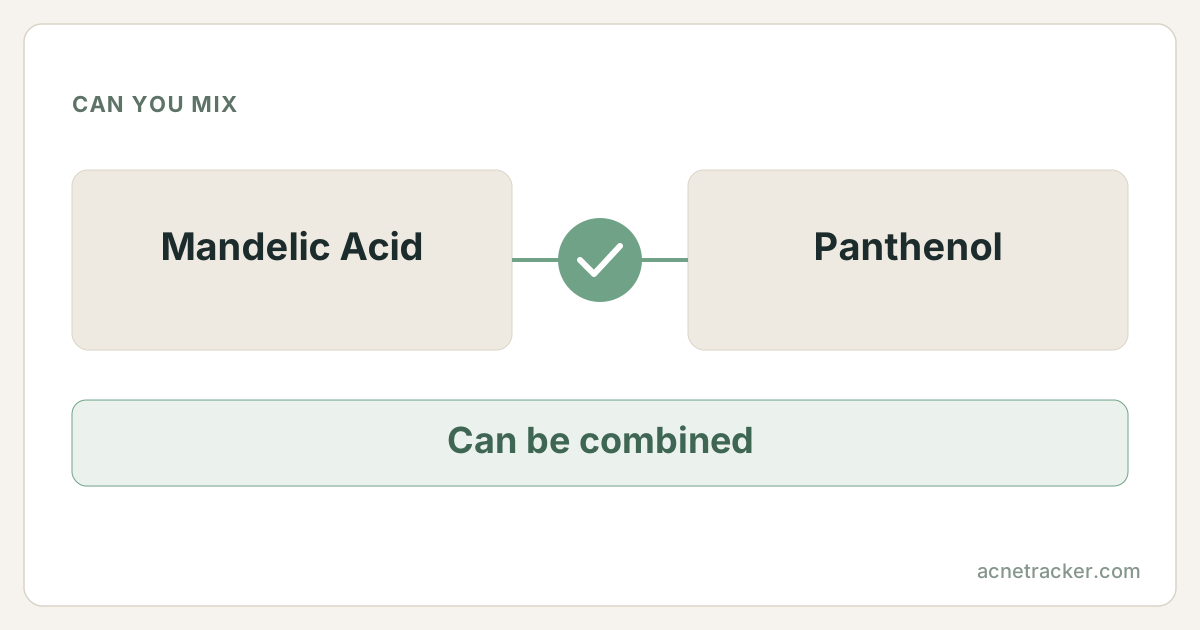
Yes, and panthenol is one of the best supporting acts for any acid. Mandelic acid does gentle exfoliation while panthenol, provitamin B5, draws in water and helps the barrier repair itself, taking the edge off any tingling. The result is resurfacing with a built-in soothing step, which suits acne-prone and easily irritated skin.
How this pairing resolves
The two ingredients, their published numbers, and where they land together.
The numbers beside each ingredient are its published comedogenic rating and effective pH window, taken from its own profile page.
Show the numbers
| Ingredients | Metric | 0–5 |
|---|---|---|
| Mandelic Acid | Comedogenic rating | 0/5 |
| Mandelic Acid | Effective pH | 3.0–4.0 |
| Panthenol | Comedogenic rating | 0/5 |
| Panthenol | Effective pH | no published pH |
Why
Panthenol converts in the skin to pantothenic acid, a building block the barrier uses to make lipids and repair itself. It is also a humectant, pulling water into the upper layers, and a recognised anti-inflammatory that calms redness and reinforces the skin's water-holding capacity. Those are exactly the functions mandelic acid puts under mild pressure: even the gentlest AHA nudges up water loss and can leave a faint tingle as it resurfaces. Applying panthenol afterwards replenishes moisture and supports the repair the exfoliation demands, so the routine feels comfortable rather than stripping. There is no chemical conflict — panthenol is stable across a wide pH range and does not need the acid's low pH, so it simply layers on top once the acid has absorbed. For acne-prone skin the calming effect is valuable because a soothed, intact barrier is less reactive and less likely to overproduce oil after irritation. Panthenol will not undo the exfoliation; it works in a different lane, which is why the pair is a low-drama way to keep an acid in your routine.
How to combine them
Cleanse and dry, apply mandelic acid so it meets bare skin at its low working pH, wait about five minutes, then apply a panthenol serum, essence or moisturiser. Because panthenol is a soothing, hydrating leave-on and not a scheduled active, use it every day — on acid nights as the calming follow-up and on off nights as a simple barrier-support layer. Finish mornings with SPF, since mandelic acid raises sun sensitivity while in use. If your skin is going through an adjustment phase with the acid, front-load panthenol: use it morning and night and reserve mandelic acid for two evenings a week until the tingling settles. Panthenol also pairs neatly inside a fragrance-free moisturiser, which keeps the routine short.
Example routine
| When | Steps |
|---|---|
| Evening (2–3× week) | Cleanser → Mandelic acid → wait 5 min → Panthenol → Moisturizer |
| Off evenings | Cleanser → Panthenol → Moisturizer |
| Every morning | Cleanser → Panthenol (optional) → Moisturizer → SPF 30+ |
Warning signs
Frequently asked questions
Does panthenol reduce the effect of mandelic acid?
No. Panthenol is a soothing humectant applied after the acid absorbs, so it hydrates and supports barrier repair without blocking or neutralising the exfoliation.
Should panthenol go on before or after mandelic acid?
After. Mandelic acid needs direct contact with bare skin at a low pH, so it goes first; panthenol follows as a calming, hydrating layer once the acid has sunk in.
Can panthenol calm irritation from mandelic acid?
Yes. Panthenol is anti-inflammatory and supports barrier repair, so it helps settle the tingling and dryness that exfoliation can cause, making an acid routine easier to tolerate.
Is mandelic acid and panthenol suitable for sensitive acne-prone skin?
It is a good match: mandelic acid is the mildest AHA and panthenol keeps the barrier calm and hydrated, so together they clear and refine without the harshness of stronger routines.
Sources & further reading
There is no single study of this exact question. The guidance here is reasoned from the ingredient profiles below, each of which carries its own references:
- Mandelic Acid2 refs
- Panthenol3 refs
Show every reference behind this page (5)
- Mandelic acid — PubChem compound summarycited by Mandelic Acid
- DermNet — Alpha hydroxy acidscited by Mandelic Acid
- PubChem — Panthenol compound summarycited by Panthenol
- European Commission CosIng database — Panthenolcited by Panthenol
- Safety Assessment of Panthenol, Pantothenic Acid, and Derivatives as Used in Cosmetics (PubMed)cited by Panthenol
Medical disclaimer
Ingredients mentioned on this page
Find your personal acne triggers
Our free Acne Tracker lets you log breakouts, sleep, stress and diet, and shows you which factors correlate with your flare-ups.