How to Choose a Body Wash for Sensitive Skin
Sensitive body skin stings, reddens or itches easily, and with a body wash the guiding principle is subtraction rather than addition: the fewer potential triggers a formula contains, the less it provokes. Sensitivity has many causes — a naturally reactive barrier, eczema, rosacea-adjacent skin, or simply years of harsh washing — but the response is similar, which is a short ingredient list built on the gentlest surfactants and free of the usual irritants. Because a wash only contacts the skin briefly, its main job is to clean without adding to the load. This page sets out the minimal, low-risk profile to look for and the ingredients most likely to set sensitive skin off.
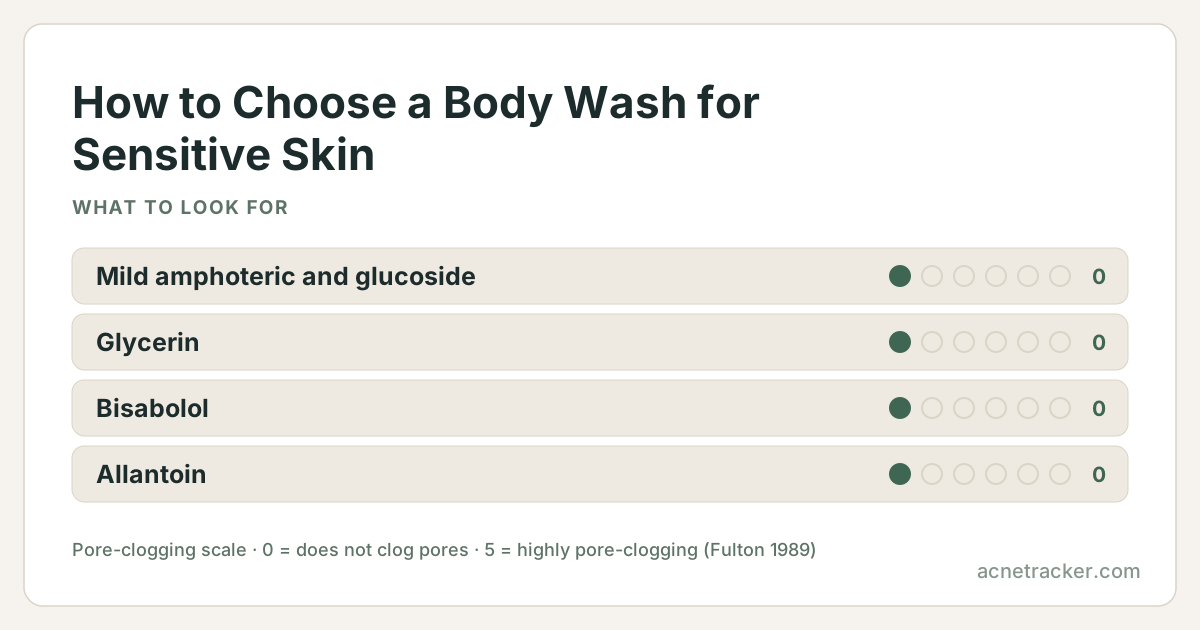
Ingredients to look for
| Ingredient | Why it matters |
|---|---|
| Mild amphoteric and glucoside surfactants (cocamidopropyl betaine, coco-glucoside, decyl glucoside) | The gentlest cleansing agents, cleaning at low pH with minimal barrier disruption — the backbone of a sensitive-skin wash. |
| Glycerin | A well-tolerated humectant that offsets any drying and rarely triggers sensitive skin; a reassuring high-list ingredient. |
| Bisabolol | A gentle chamomile-derived soothing agent that helps calm reactive skin without adding fragrance. |
| Allantoin | A low-risk soothing and softening ingredient that supports comfort on easily-irritated skin. |
| Panthenol | Barrier-supporting and calming, and very rarely a trigger — a useful addition in a wash for sensitive skin. |
Ingredients to avoid
| Ingredient | Why it matters |
|---|---|
| Added fragrance and essential oils | The most common cause of reactions in sensitive skin; 'unscented' can still contain masking fragrance, so look for 'fragrance-free' instead. |
| High-pH bar soaps and strong sulfate surfactants | They disrupt the acid mantle and strip the barrier, which is exactly what leaves sensitive skin more reactive. |
| Denatured alcohol and astringents | They dehydrate and sting reactive skin and add no cleansing benefit. |
| Botanical extracts and essential-oil 'natural' blends | Natural does not mean gentle; many plant extracts and citrus or mint oils are common sensitisers on reactive skin. |
How to choose
Read for a short list, not a long one: the fewer ingredients, the fewer chances to react. The base should be mild amphoteric or glucoside surfactants at low pH, with glycerin to offset drying and, at most, a couple of well-tolerated soothers such as bisabolol, allantoin or panthenol. The single most useful word on the front is 'fragrance-free' — not 'unscented', which can still contain masking scent. Be wary of long botanical and essential-oil line-ups sold as gentle; natural blends are a frequent source of reactions. Patch-testing on a small area for a few days before full use is sensible when skin reacts easily. And keep the rest of the routine simple: lukewarm water, no scrubbing, and a bland fragrance-free moisturiser afterwards, because a calm barrier is less reactive over time.
How to apply
Use lukewarm water and apply the wash gently with your hands, avoiding rough cloths, brushes and scrubbing that mechanically irritate reactive skin. Keep the wash brief and rinse thoroughly so nothing is left to sit on the surface. Pat — do not rub — dry, and apply a bland, fragrance-free moisturiser while the skin is still slightly damp. If you are trying a new wash, test it on a small area for a few days first before using it all over.
Frequently asked questions
What ingredient most often irritates sensitive skin in a body wash?
Added fragrance is the most common trigger, followed by harsh sulfate surfactants and high-pH soaps. Essential oils and some botanical extracts also provoke reactions. A short, fragrance-free formula with gentle surfactants is the safest starting point.
In a body wash, is 'unscented' the same as 'fragrance-free'?
No. 'Fragrance-free' means no fragrance has been added, while 'unscented' can mean masking fragrance was added to cover a base smell. For sensitive skin, look specifically for 'fragrance-free' and check the ingredient list for parfum or essential oils.
Are natural or botanical body washes better for sensitive skin?
Not necessarily. 'Natural' is unregulated, and many plant extracts and essential oils are common sensitisers. Sensitive skin usually does better with a simple, fragrance-free formula built on gentle surfactants than with a complex botanical blend.
Should I patch-test a body wash?
It is sensible if your skin reacts easily. Apply a little to a small area such as the inner forearm for a few days before using it all over, so a reaction stays limited rather than covering your whole body. Introduce one new product at a time.
Sources & further reading
There is no single study of this exact question. The guidance here is reasoned from the ingredient profiles below, each of which carries its own references:
- Cocamidopropyl Betaine2 refs
- Glycerin3 refs
- Bisabolol3 refs
- Allantoin3 refs
- Panthenol3 refs
Show every reference behind this page (10)
- European Commission CosIng — Cocamidopropyl Betainecited by Cocamidopropyl Betaine, Glycerin, Bisabolol, Allantoin, Panthenol
- Cosmetic Ingredient Review — safety assessment of Cocamidopropyl Betainecited by Cocamidopropyl Betaine
- PubChem — Glycerol compound summarycited by Glycerin
- DermNet — Moisturiserscited by Glycerin
- PubChem — Bisabolol (CID 1549992)cited by Bisabolol
- RIFM fragrance ingredient safety assessment, α-bisabolol, CAS registry number 515-69-5 (PubMed)cited by Bisabolol
- PubChem — Allantoin compound summarycited by Allantoin
- Final report of the safety assessment of allantoin and its related complexes (PubMed)cited by Allantoin
- PubChem — Panthenol compound summarycited by Panthenol
- Safety Assessment of Panthenol, Pantothenic Acid, and Derivatives as Used in Cosmetics (PubMed)cited by Panthenol
Medical disclaimer
Ingredients mentioned on this page
Find your personal acne triggers
Our free Acne Tracker lets you log breakouts, sleep, stress and diet, and shows you which factors correlate with your flare-ups.