Hyaluronic Acid: Comedogenic Rating & Ingredient Analysis
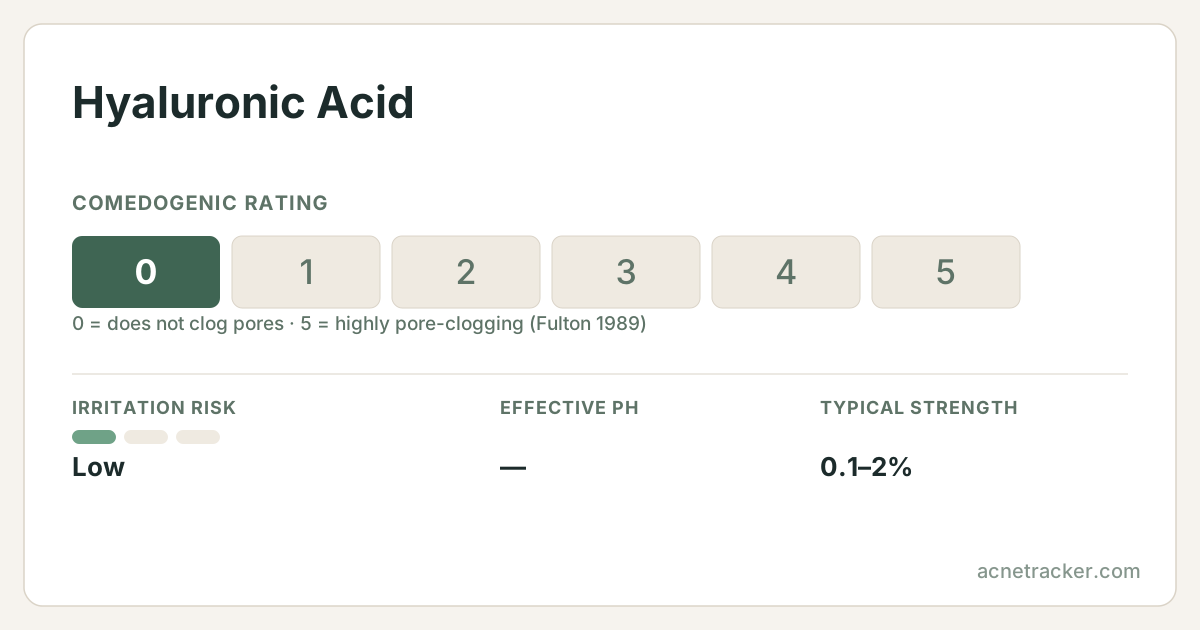
Hyaluronic acid is the workhorse hydrator of modern skincare — a humectant that draws water into the upper layers of the skin and holds it there. It occurs naturally in the human body, where it cushions joints and keeps the skin supple, and the version used in serums is produced by bacterial fermentation rather than harvested from tissue. Because it hydrates rather than exfoliates or resurfaces, hyaluronic acid suits essentially every skin type, from very oily and acne-prone to dry and mature. It is often the first thing dermatologists suggest layering under stronger actives, since well-hydrated skin tolerates retinoids and acids far better than parched, tight skin does.
Quick facts
- Comedogenic rating
- our estimate — not measured
- Irritation risk
- Low
- Effective pH
- —
- Typical strength
- 0.1–2%
- Pregnancy
- Considered safe
- Suits skin types
- oilydrycombinationsensitivenormalacne-pronemature
Where this number comes from
No one has published a comedogenic rating for this ingredient. Fulton's 1989 table tested about 250 raw materials and this was not among them, and we found no later study measuring it. The figure shown is our own reasoning from the ingredient's chemistry and how it is used — treat it as an estimate, not a measurement.
Fulton read his own scale as 0-1 not significant, 2-3 borderline, 4-5 positive. The assay is the rabbit ear at 10% dilution, which the paper itself calls extremely sensitive and not fully predictive of human skin. Ratings describe the raw ingredient; concentration and formulation change real-world behaviour.
Caution profile
The four published fields on this page, on one 0–5 scale. Further from the centre means more care is needed — never that the ingredient is worse.
Derived, not measured: pore-clogging is the published comedogenic rating; irritation maps low/moderate/high to 1/3/5; pregnancy maps safe/caution/avoid to 0/3/5; skin-type limits is how many of the seven skin types this entry does NOT list. Every input is printed in words in the quick-facts card above.
Show the numbers
| Metric | 0–5 | Published field |
|---|---|---|
| Pore-clogging | 0 | 0/5 |
| Irritation | 1 | Low |
| Skin-type limits | 0 | 7/7 |
| Pregnancy | 0 | Considered safe |
Working pH and typical strength
Where this ingredient is formulated to sit, and at what concentration.
Both bars come from the fields above: the pH window and the typical strength range published for this ingredient. The tinted column is healthy skin's surface pH (about 4.7–5.75).
Show the numbers
| Metric | 0–5 |
|---|---|
| Typical strength | 0.1–2% |
What is it?
Hyaluronic acid is a glycosaminoglycan — a long sugar-based molecule that can bind many times its own weight in water. In skincare you will usually see it listed as Sodium Hyaluronate, the sodium salt, which is more stable and penetrates the outer skin more easily than the parent acid. Manufacturers use different molecular weights on purpose: larger molecules stay near the surface and form a smoothing, moisture-sealing film, while smaller fragments reach a little deeper to hydrate lower layers. A good serum blends several weights. It is important to understand what hyaluronic acid does not do — it is not an anti-aging active in the way retinol is, and it does not build collagen. Its job is water: better hydrated skin looks plumper, feels softer and shows fine lines less, but the effect is cosmetic and reverses if you stop.
Benefits
Delivers immediate hydration
Applied to damp skin, hyaluronic acid pulls water into the outer layers and holds it, so skin looks and feels smoother within minutes rather than weeks.
Temporarily plumps fine lines
By swelling the surface with bound water, it softens the look of fine dehydration lines. Studies on topical HA show measurable increases in skin hydration and a smoother surface with consistent use.
Supports the skin barrier
Holding moisture at the surface reduces transepidermal water loss, which helps a stressed or over-exfoliated barrier recover and reduces the tight, stinging feeling that follows harsh actives.
Suits every skin type
With a comedogenic rating of 0 and no acidity, it hydrates oily and acne-prone skin without adding oil, and comforts dry or sensitive skin without irritation.
How to use
Apply hyaluronic acid to slightly damp skin, then seal it immediately with a moisturizer or facial oil — this is the single most important step, because a humectant left on dry skin in dry air can pull water out of deeper layers instead of in. Use it morning and night after cleansing, before heavier creams. It layers under sunscreen, makeup and every active without conflict, which is why it is a safe default in any routine. In very dry climates or heated indoor air, pairing it with an occlusive on top matters more than the concentration on the label; a 1% serum sealed properly outperforms a 2% serum left to evaporate.
Side effects
Hyaluronic acid is among the best-tolerated ingredients in skincare and rarely causes irritation, since it is non-acidic and closely resembles a molecule the body already makes. The main complaint is paradoxical dryness or tightness, which happens when it is applied to dry skin in a low-humidity environment and then not sealed — the fix is to apply on damp skin and lock it in with moisturizer. Genuine allergic reactions to topical cosmetic HA are uncommon. As with any product, a formula's fragrance or preservatives are more likely to cause stinging than the hyaluronic acid itself.
Who should avoid it
There is virtually no one who must avoid topical hyaluronic acid. People in very arid climates should simply be diligent about sealing it with a cream so it does not draw moisture the wrong way. Injectable HA fillers are a separate medical procedure with their own considerations and are unrelated to the cosmetic serums discussed here. If a specific product stings, suspect the other ingredients rather than the HA.
Pairs well with
Frequently asked questions
Should I apply hyaluronic acid to wet or dry skin?
Apply it to slightly damp skin and then seal it with a moisturizer. On bone-dry skin in dry air, a humectant can draw water from deeper layers to the surface, which can leave skin feeling tighter, so the moisturizer on top is essential.
Does hyaluronic acid help with acne?
Not directly — it does not treat breakouts — but its comedogenic rating of 0 and lightweight hydration make it ideal for keeping acne-prone skin comfortable, especially alongside drying treatments like benzoyl peroxide or retinoids.
Can I use hyaluronic acid every day?
Yes. It has no adjustment period and can be used twice daily. Because it is a humectant rather than an active that changes the skin, consistent daily use simply keeps hydration topped up.
Is hyaluronic acid safe during pregnancy?
Topical hyaluronic acid is generally considered safe during pregnancy and breastfeeding and is a common gentle hydrator for that period. As always, check with your doctor about your full routine.
Can I use hyaluronic acid with vitamin C or retinol?
Yes. Hyaluronic acid pairs well with almost everything. It is often layered under retinol or vitamin C to offset dryness and make stronger actives more comfortable to use.
Where this ingredient shows up here
Counted across this database, not the web — these are the pages on this site that reason about this ingredient.
Combination guides 27
+19 more on the site
Condition pages 1
Sources & further reading
Medical disclaimer
Find your personal acne triggers
Our free Acne Tracker lets you log breakouts, sleep, stress and diet, and shows you which factors correlate with your flare-ups.