Bifida Ferment Lysate: Comedogenic Rating & Ingredient Analysis
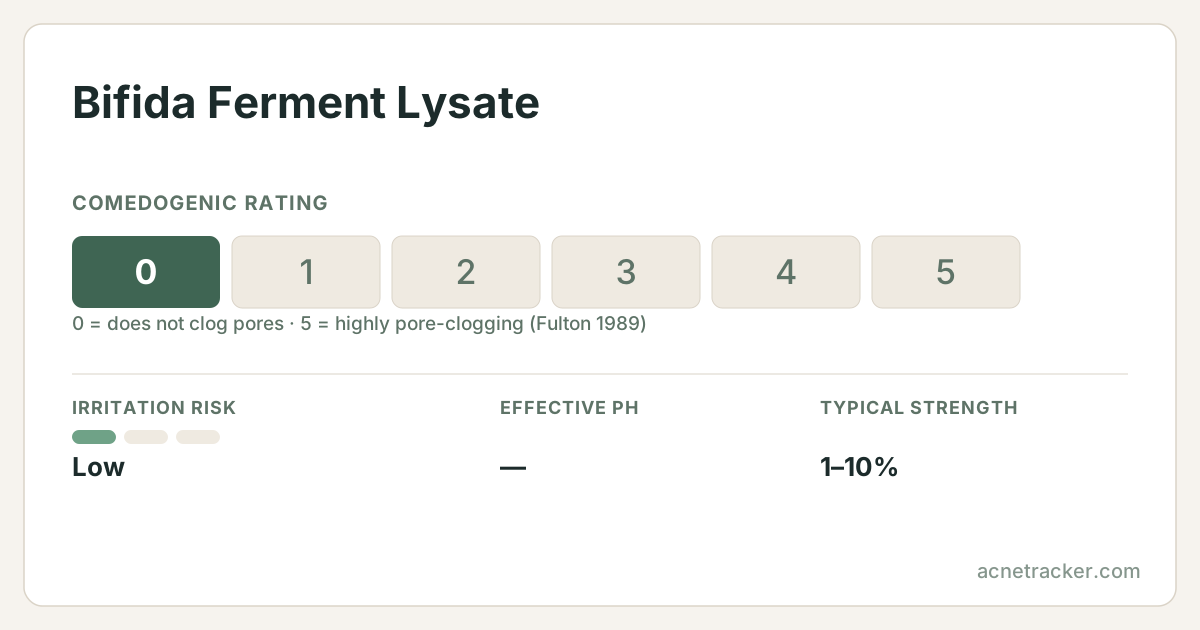
Bifida ferment lysate is a probiotic-derived ingredient made from Bifidobacterium, one of the beneficial bacteria associated with a healthy microbiome. It has become a signature ingredient in premium serums aimed at building skin resilience, calming sensitivity and supporting the barrier. Rather than treating a single visible concern, it works to make skin steadier and less reactive over time — a valuable role for people whose acne routines leave the barrier stressed. With a comedogenic rating of 0 and low irritation risk, it is gentle enough for sensitive skin and pairs easily with the rest of a routine.
Quick facts
- Comedogenic rating
- our estimate — not measured
- Irritation risk
- Low
- Effective pH
- —
- Typical strength
- 1–10%
- Pregnancy
- Considered safe
- Suits skin types
- oilydrycombinationsensitivenormalacne-pronemature
Where this number comes from
No one has published a comedogenic rating for this ingredient. Fulton's 1989 table tested about 250 raw materials and this was not among them, and we found no later study measuring it. The figure shown is our own reasoning from the ingredient's chemistry and how it is used — treat it as an estimate, not a measurement.
Fulton read his own scale as 0-1 not significant, 2-3 borderline, 4-5 positive. The assay is the rabbit ear at 10% dilution, which the paper itself calls extremely sensitive and not fully predictive of human skin. Ratings describe the raw ingredient; concentration and formulation change real-world behaviour.
Caution profile
The four published fields on this page, on one 0–5 scale. Further from the centre means more care is needed — never that the ingredient is worse.
Derived, not measured: pore-clogging is the published comedogenic rating; irritation maps low/moderate/high to 1/3/5; pregnancy maps safe/caution/avoid to 0/3/5; skin-type limits is how many of the seven skin types this entry does NOT list. Every input is printed in words in the quick-facts card above.
Show the numbers
| Metric | 0–5 | Published field |
|---|---|---|
| Pore-clogging | 0 | 0/5 |
| Irritation | 1 | Low |
| Skin-type limits | 0 | 7/7 |
| Pregnancy | 0 | Considered safe |
Working pH and typical strength
Where this ingredient is formulated to sit, and at what concentration.
Both bars come from the fields above: the pH window and the typical strength range published for this ingredient. The tinted column is healthy skin's surface pH (about 4.7–5.75).
Show the numbers
| Metric | 0–5 |
|---|---|
| Typical strength | 1–10% |
What is it?
A lysate is what you get when bacterial cells are broken open to release their contents, and bifida ferment lysate is the resulting mix from fermented Bifidobacterium. It contains a complex blend of metabolites, amino acids, proteins and other cell components. Research on this type of probiotic-derived ingredient points to soothing effects and support for the skin's barrier and its defenses against environmental stress, including some work suggesting benefits for skin exposed to UV and pollution. It does not contain live bacteria; it is the beneficial byproducts of fermentation that do the work, delivering a calming, strengthening effect without any risk from live organisms.
Benefits
Strengthens skin resilience
Bifida ferment lysate supports the barrier and the skin's own defenses, helping skin become steadier and less easily provoked by daily stressors.
Soothes sensitivity
Its calming action helps settle reactive, easily irritated skin, making it a useful ally when acne actives leave the skin feeling sensitized.
Antioxidant defense
The ferment provides antioxidant support that helps protect the skin surface from environmental stress such as UV and pollution.
Supports the microbiome
As a probiotic-derived ingredient, it fits a microbiome-friendly approach to skincare, supporting the skin's healthy surface ecosystem.
How to use
Bifida ferment lysate is most often found in serums and essences, sometimes at the top of the ingredient list in barrier-focused products. Apply after cleansing, before heavier creams, and use it morning and night for steady barrier support. It layers well with hydrators, niacinamide and other ferments, and its soothing nature makes it a good partner for retinol or exfoliating acids on the nights you use them. Because it is gentle and non-acidic, there is no adjustment period and no conflict with other ingredients.
Side effects
Bifida ferment lysate is well tolerated and side effects are uncommon. As with any ferment, a small number of people find fermented ingredients don't suit their skin, so patch testing is sensible if you are new to the category or highly reactive. It contains no live bacteria, so there is no concern about applying live organisms. Any reaction is usually mild and more often linked to other parts of a formula.
Who should avoid it
There is no group that specifically needs to avoid bifida ferment lysate. People who have reacted to fermented skincare before should patch test first. Otherwise it is suitable across skin types, including sensitive, mature and acne-prone skin looking for gentle barrier and soothing support.
Frequently asked questions
What is bifida ferment lysate good for?
It supports the skin barrier, soothes sensitivity and provides antioxidant defense, helping build more resilient, less reactive skin over time.
Does bifida ferment lysate contain live bacteria?
No. It is a lysate, meaning the bacterial cells are broken open, so it delivers the beneficial byproducts of fermentation without any live organisms.
Is bifida ferment lysate good for sensitive skin?
Yes. It is gentle, non-acidic and soothing, making it well suited to sensitive and reactive skin. Patch test first if you are new to ferments.
Can I use bifida ferment lysate with retinol?
Yes, and it is a good pairing. Its soothing, barrier-supporting action helps offset the irritation retinol can cause, improving comfort and tolerance.
Is bifida ferment lysate safe during pregnancy?
Yes. It is a lysate of fermented bacteria used topically, which raises no systemic concern, and it is generally regarded as safe to keep using while pregnant or breastfeeding.
Sources & further reading
Medical disclaimer
Find your personal acne triggers
Our free Acne Tracker lets you log breakouts, sleep, stress and diet, and shows you which factors correlate with your flare-ups.