Beta-Glucan: Comedogenic Rating & Ingredient Analysis
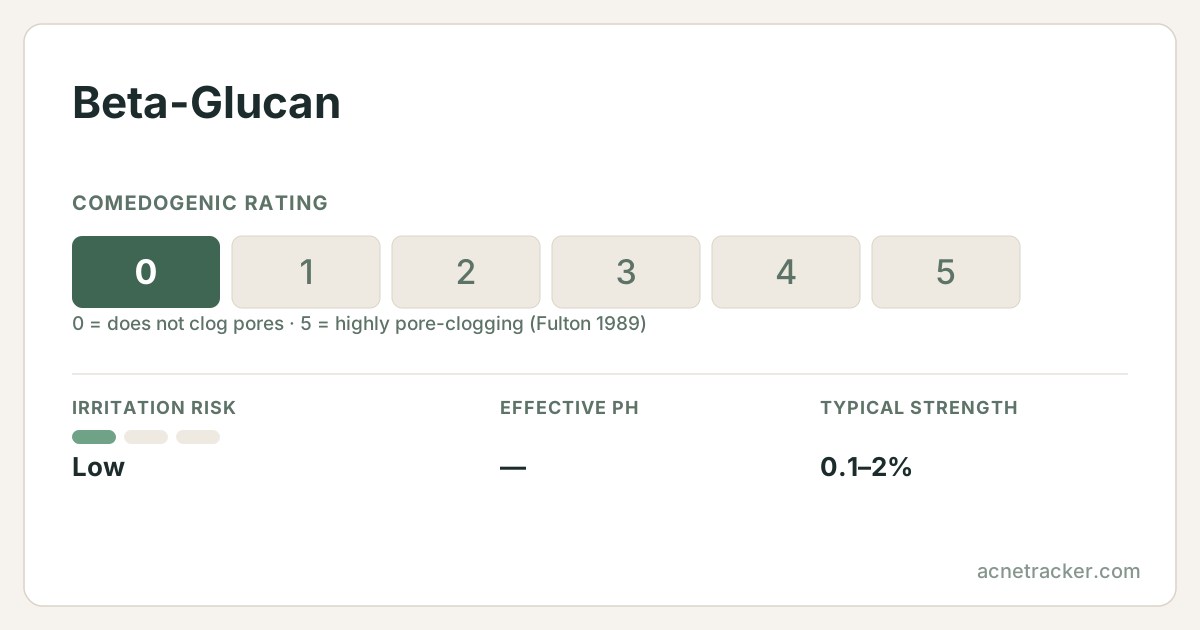
Beta-glucan is a soothing, hydrating polysaccharide derived from oats, yeast or mushrooms, and one of the most underrated calming ingredients in skincare. It combines the water-holding ability of a good humectant with a distinct ability to quiet irritation and support the skin's natural defenses. For people whose acne routines leave skin red, tight and reactive, beta-glucan offers relief without the heaviness of an oil or the sting of an active. It carries a comedogenic rating of 0 and an extremely low irritation risk, which makes it a natural fit for sensitive and blemish-prone skin that needs comfort as much as treatment.
Quick facts
- Comedogenic rating
- our estimate — not measured
- Irritation risk
- Low
- Effective pH
- —
- Typical strength
- 0.1–2%
- Pregnancy
- Considered safe
- Suits skin types
- oilydrycombinationsensitivenormalacne-pronemature
Where this number comes from
No one has published a comedogenic rating for this ingredient. Fulton's 1989 table tested about 250 raw materials and this was not among them, and we found no later study measuring it. The figure shown is our own reasoning from the ingredient's chemistry and how it is used — treat it as an estimate, not a measurement.
Fulton read his own scale as 0-1 not significant, 2-3 borderline, 4-5 positive. The assay is the rabbit ear at 10% dilution, which the paper itself calls extremely sensitive and not fully predictive of human skin. Ratings describe the raw ingredient; concentration and formulation change real-world behaviour.
Caution profile
The four published fields on this page, on one 0–5 scale. Further from the centre means more care is needed — never that the ingredient is worse.
Derived, not measured: pore-clogging is the published comedogenic rating; irritation maps low/moderate/high to 1/3/5; pregnancy maps safe/caution/avoid to 0/3/5; skin-type limits is how many of the seven skin types this entry does NOT list. Every input is printed in words in the quick-facts card above.
Show the numbers
| Metric | 0–5 | Published field |
|---|---|---|
| Pore-clogging | 0 | 0/5 |
| Irritation | 1 | Low |
| Skin-type limits | 0 | 7/7 |
| Pregnancy | 0 | Considered safe |
Working pH and typical strength
Where this ingredient is formulated to sit, and at what concentration.
Both bars come from the fields above: the pH window and the typical strength range published for this ingredient. The tinted column is healthy skin's surface pH (about 4.7–5.75).
Show the numbers
| Metric | 0–5 |
|---|---|
| Typical strength | 0.1–2% |
What is it?
Beta-glucans are long chains of glucose sugar units, and the type used in skincare is typically a beta-1,3-glucan sourced from oats or from the cell walls of yeast. The molecule is large, so it works mainly at and just beneath the skin surface, where it forms a hydrating film and interacts with the skin's own signaling. Research on beta-glucan describes soothing and film-forming effects and a role in supporting the skin's defensive responses. It also holds water well, giving it humectant properties comparable in feel to hyaluronic acid, but with an added calming character that pure hydrators lack.
Benefits
Calms redness and irritation
Beta-glucan's best-documented strength is soothing: it helps settle the redness and reactivity that follow over-exfoliation, retinoids or an angry breakout.
Hydrates like a humectant
It binds water at the surface to keep skin plump and comfortable, offering a hyaluronic-acid-like hydrating feel with extra calming benefits.
Supports the skin barrier
By forming a protective film and supporting the skin's defenses, it helps a stressed or over-treated barrier feel stronger and less easily provoked.
Antioxidant support
Beta-glucan contributes mild antioxidant activity, helping defend the surface against the everyday oxidative stress that ages and dulls skin.
How to use
Apply beta-glucan after cleansing, usually as a serum or essence, on its own or layered with other hydrators before your moisturizer. It works morning and night and is especially useful in the evening to calm skin after exfoliating acids or retinol. Because it is soothing and non-acidic, you can pair it freely with actives to reduce their sting — it is one of the best ingredients to reach for when your barrier feels compromised. Seal it in with a moisturizer, and use daily for the steadiest calming effect.
Side effects
Beta-glucan is one of the gentlest ingredients available and side effects are very rare. A heavier serum can feel slightly tacky before it absorbs, and, as with any humectant, sealing it with a moisturizer improves the result. Allergic reactions are uncommon; those with a specific oat or yeast allergy should check the source and patch test, though the purified ingredient rarely causes problems.
Who should avoid it
Almost no one needs to avoid beta-glucan. People with a known oat or yeast allergy should confirm the ingredient source and patch test first, since beta-glucan can be derived from either. Otherwise it is suitable across all skin types, including the most sensitive and reactive.
Pairs well with
Frequently asked questions
Is beta-glucan better than hyaluronic acid?
It hydrates similarly to hyaluronic acid but adds a soothing, barrier-supporting effect that pure hyaluronic acid does not. Many people use both, layering them for hydration plus calming.
Does beta-glucan help with acne redness?
Yes. Its main strength is calming irritation and redness, which makes it helpful for settling inflamed breakouts and the reactivity caused by acne actives.
Can I use beta-glucan with retinol?
Yes, and it is a great pairing. Its soothing action offsets the dryness and irritation retinol can cause, improving comfort and tolerance during treatment.
Does beta-glucan clog pores?
No. It has a comedogenic rating of 0 and is oil-free, so it soothes and hydrates oily and acne-prone skin without contributing to clogged pores.
Is beta-glucan safe during pregnancy?
Yes. It is a soothing, hydrating polysaccharide with no systemic concern and is generally considered safe to use during pregnancy and breastfeeding.
Where this ingredient shows up here
Counted across this database, not the web — these are the pages on this site that reason about this ingredient.
Combination guides 1
Sources & further reading
Medical disclaimer
Find your personal acne triggers
Our free Acne Tracker lets you log breakouts, sleep, stress and diet, and shows you which factors correlate with your flare-ups.