How to Choose a Chemical Exfoliant for Sensitive Skin
Sensitive skin can still be exfoliated — the trick is choosing acids that work slowly and shallowly rather than fast and deep. Molecule size is the key idea: large molecules penetrate less and irritate less, which is why polyhydroxy acids and large-molecule AHAs suit reactive skin far better than small, fast glycolic acid. This guide explains that hierarchy so you can pick an exfoliant your barrier tolerates, and sets clear limits, because over-exfoliation is the single most common way sensitive skin gets damaged. We review ingredient profiles instead of brands, so the reasoning applies to whatever product you are holding.
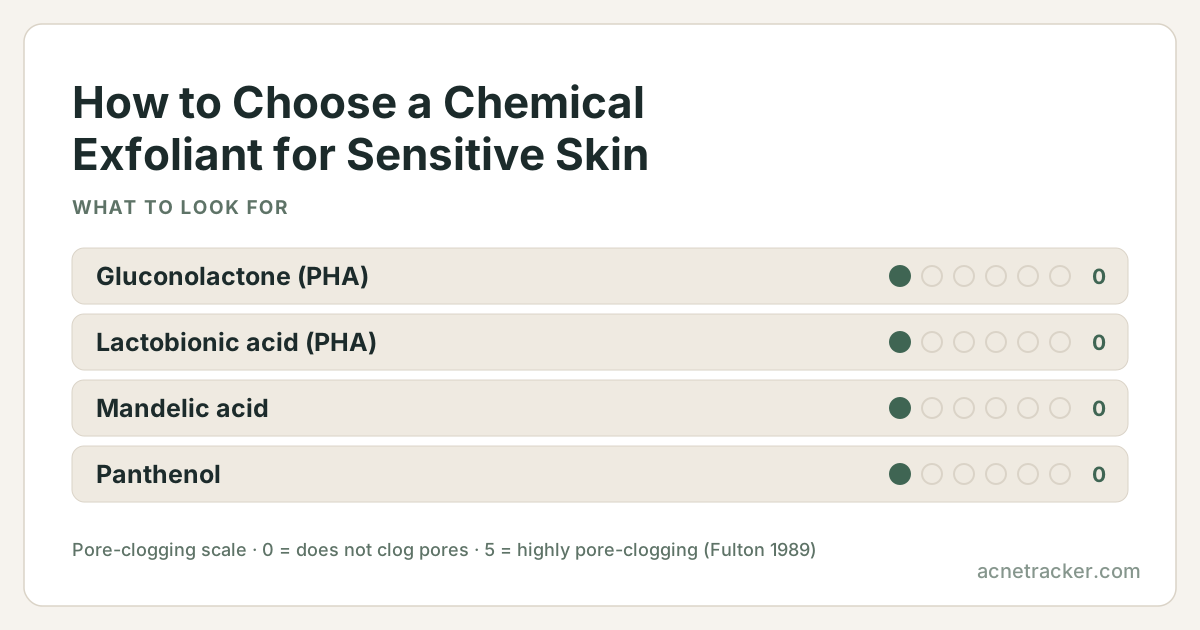
Ingredients to look for
| Ingredient | Why it matters |
|---|---|
| Gluconolactone (PHA) | A polyhydroxy acid with large molecules that exfoliate gently at the surface while also acting as a humectant — the go-to for sensitive, easily irritated skin. |
| Lactobionic acid (PHA) | Another large-molecule PHA that resurfaces slowly and holds water, giving mild exfoliation with a low irritation profile. |
| Mandelic acid | The gentlest common AHA thanks to its large molecule; a reasonable step up when a PHA alone is not doing enough. |
| Panthenol | A soothing, barrier-supporting ingredient often paired with mild acids to keep reactive skin calm during exfoliation. |
Ingredients to avoid
| Ingredient | Why it matters |
|---|---|
| High-percentage glycolic acid | Its small, fast molecule penetrates deeply and is a frequent trigger of stinging and redness on sensitive skin. |
| Multiple exfoliating products at once | Layering acids, scrubs and strong cleansers strips a barrier that is already reactive, and a damaged barrier feels more sensitive, not less. |
| Added fragrance and essential oils | These are among the most common irritants for sensitive skin and add nothing to an exfoliant's function. |
| Daily exfoliation | Sensitive skin needs long recovery windows; exfoliating every day removes them and tips reactive skin into chronic irritation. |
How to choose
Start at the gentle end and only move up if needed. Polyhydroxy acids like gluconolactone and lactobionic acid are the safest starting point because their large molecules exfoliate the surface without diving deep, and they hydrate as they work. If a PHA is not enough after several weeks, mandelic acid is the next mildest step; leave small, fast acids like glycolic for skin that has proven it can cope. Favour low percentages, and look for soothing partners such as panthenol, allantoin or centella. Do a patch test on the inner arm or behind the ear before using anything on your face. Ignore reassuring words like 'gentle' and 'for sensitive skin', which are unregulated, and read the actual acid and its concentration. Most importantly, keep frequency low — once or twice a week is often plenty for reactive skin.
How to apply
Patch test first. Then apply a PHA or mild acid in the evening on clean skin, no more than once or twice a week to begin. Use a small amount, let it absorb, and follow with a soothing, barrier-supporting moisturizer. Never combine it with scrubs, brushes or a second acid on the same night. Because even gentle acids raise sun sensitivity, wear broad-spectrum SPF each morning. If you feel stinging that does not settle, or see redness that lasts, stop and let the skin fully recover before trying again less often.
Frequently asked questions
Which chemical exfoliant is gentlest for sensitive skin?
Polyhydroxy acids such as gluconolactone and lactobionic acid are usually the gentlest, because their large molecules exfoliate only the surface and also hydrate. Mandelic acid is the mildest common AHA if you need something a little stronger.
Can sensitive skin use acids at all?
Yes, with the right choice and low frequency. The mistake is using strong, small-molecule acids too often. Start with a PHA once or twice a week, patch test first, and build up only if your skin stays calm.
How do I know if I am over-exfoliating?
Warning signs include stinging that lingers, tightness, persistent redness, unexpected flaking and skin that suddenly reacts to products it used to tolerate. If you see these, stop exfoliating and focus on barrier repair until the skin settles.
Should I patch test a new exfoliant?
Always, on sensitive skin. Apply a little to the inner forearm or behind the ear for a few days before using it on your face. It is a simple step that catches many reactions before they happen somewhere visible.
Sources & further reading
There is no single study of this exact question. The guidance here is reasoned from the ingredient profiles below, each of which carries its own references:
- Gluconolactone3 refs
- Lactobionic Acid3 refs
- Mandelic Acid2 refs
- Panthenol3 refs
Show every reference behind this page (8)
- European Commission CosIng database — Gluconolactonecited by Gluconolactone, Lactobionic Acid, Panthenol
- Clinical and cosmeceutical uses of hydroxyacids (PubMed)cited by Gluconolactone, Lactobionic Acid
- PubChem — Glucono-delta-lactonecited by Gluconolactone
- PubChem — Lactobionic acidcited by Lactobionic Acid
- Mandelic acid — PubChem compound summarycited by Mandelic Acid
- DermNet — Alpha hydroxy acidscited by Mandelic Acid
- PubChem — Panthenol compound summarycited by Panthenol
- Safety Assessment of Panthenol, Pantothenic Acid, and Derivatives as Used in Cosmetics (PubMed)cited by Panthenol
Medical disclaimer
Ingredients mentioned on this page
Find your personal acne triggers
Our free Acne Tracker lets you log breakouts, sleep, stress and diet, and shows you which factors correlate with your flare-ups.