Histidine: Comedogenic Rating & Ingredient Analysis
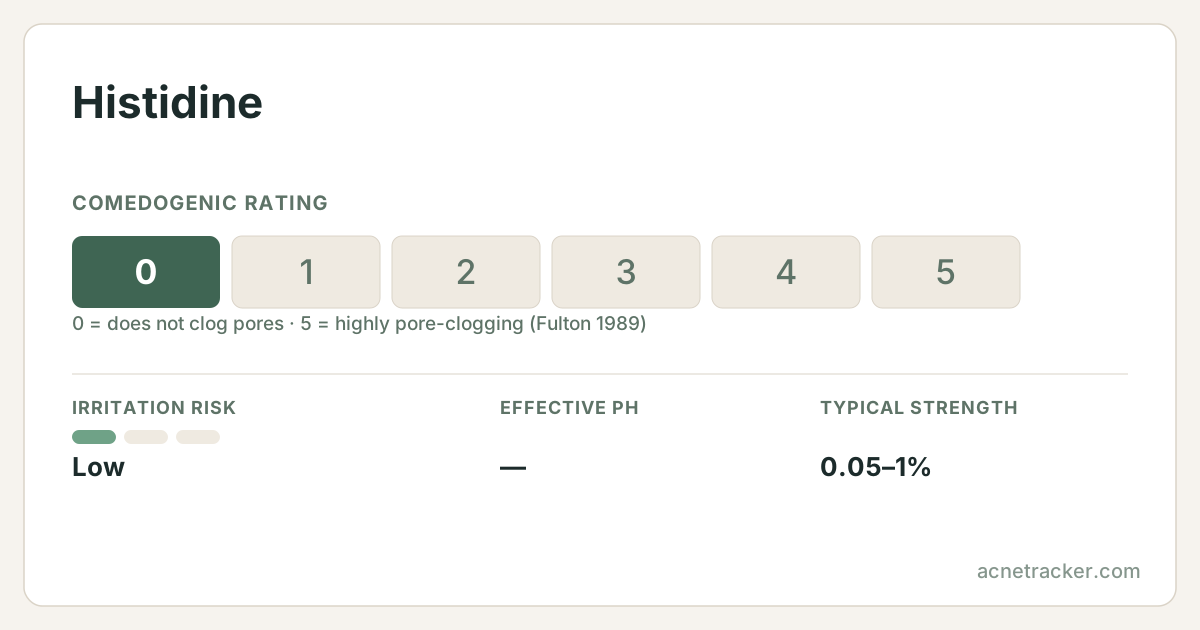
Histidine is an amino acid with a slightly more specialised profile than the average moisturising amino acid. Alongside its hydrating role as part of the skin's natural moisturising factor, histidine has antioxidant properties and has been studied for helping calm inflammation, including in research on sensitive and eczema-prone skin. That soothing angle makes it an interesting choice for products aimed at reactive, easily irritated skin, where it can contribute both moisture and a measure of protection against oxidative stress. It is gentle, non-comedogenic and, like the other amino acids in this group, a native component of healthy skin.
Quick facts
- Comedogenic rating
- our estimate — not measured
- Irritation risk
- Low
- Effective pH
- —
- Typical strength
- 0.05–1%
- Pregnancy
- Considered safe
- Suits skin types
- drysensitivenormalcombinationmatureacne-prone
Where this number comes from
No one has published a comedogenic rating for this ingredient. Fulton's 1989 table tested about 250 raw materials and this was not among them, and we found no later study measuring it. The figure shown is our own reasoning from the ingredient's chemistry and how it is used — treat it as an estimate, not a measurement.
Fulton read his own scale as 0-1 not significant, 2-3 borderline, 4-5 positive. The assay is the rabbit ear at 10% dilution, which the paper itself calls extremely sensitive and not fully predictive of human skin. Ratings describe the raw ingredient; concentration and formulation change real-world behaviour.
Caution profile
The four published fields on this page, on one 0–5 scale. Further from the centre means more care is needed — never that the ingredient is worse.
Derived, not measured: pore-clogging is the published comedogenic rating; irritation maps low/moderate/high to 1/3/5; pregnancy maps safe/caution/avoid to 0/3/5; skin-type limits is how many of the seven skin types this entry does NOT list. Every input is printed in words in the quick-facts card above.
Show the numbers
| Metric | 0–5 | Published field |
|---|---|---|
| Pore-clogging | 0 | 0/5 |
| Irritation | 1 | Low |
| Skin-type limits | 0.7 | 6/7 |
| Pregnancy | 0 | Considered safe |
Working pH and typical strength
Where this ingredient is formulated to sit, and at what concentration.
Both bars come from the fields above: the pH window and the typical strength range published for this ingredient. The tinted column is healthy skin's surface pH (about 4.7–5.75).
Show the numbers
| Metric | 0–5 |
|---|---|
| Typical strength | 0.05–1% |
What is it?
Histidine (L-histidine) is a semi-essential amino acid found in skin proteins and in the natural moisturising factor. It has a distinctive imidazole ring in its side chain that gives it antioxidant and metal-binding abilities, meaning it can help mop up free radicals and chelate the trace metals that catalyse oxidative damage. Histidine is also the precursor the body uses to make urocanic acid, a molecule in the outer skin involved in UV response and surface acidity. Research, including work relevant to atopic and sensitive skin, has explored histidine's role in supporting the barrier and calming inflammation. As a topical ingredient it acts mainly as a humectant, antioxidant and soothing conditioner. It carries a comedogenic rating of 0, and tolerance is rarely the issue with a molecule the outer skin already stocks in its own natural moisturising factor.
Benefits
Antioxidant defence
Its imidazole ring lets histidine neutralise free radicals and bind reactive trace metals, adding protection against oxidative stress.
Soothing for reactive skin
Histidine has been studied for helping calm inflammation, making it an appealing amino acid for sensitive and easily irritated skin.
Hydrates as part of NMF
As a natural moisturising factor component, it binds water at the surface to support a soft, comfortable feel.
Supports the barrier
It has been researched for a role in supporting the skin barrier, complementing barrier lipids and other amino acids.
How to use
Use products containing histidine as directed, morning or night. It fits naturally into soothing, barrier-focused and antioxidant routines and layers with humectants, other amino acids like glycine and serine, and calming actives such as niacinamide. As a humectant it benefits from being applied to damp skin and sealed with a moisturiser. There is no adjustment period, it does not increase photosensitivity, and it is compatible with the common ingredients you might use alongside it.
Side effects
Histidine is very well tolerated on the skin, with irritation and allergy being uncommon, as it is a naturally occurring skin amino acid. It has a comedogenic rating of 0, and its relationship to UV runs the other way from photosensitivity: it is the precursor of urocanic acid, a molecule the outer skin uses in its own UV response. As with all humectants, in very dry air it should be sealed under an occlusive. For nearly all users it is a comfortable, low-risk ingredient.
Who should avoid it
No skin type needs to avoid topical histidine. On very dry or eczema-prone skin, treat histidine as the calming, hydrating half of the job and let a richer barrier cream do the sealing half. Amino-acid sensitivity is rare, but if you have one on record, patch test a new product first.
Pairs well with
Frequently asked questions
What does histidine do for skin?
It hydrates as part of the natural moisturising factor, provides antioxidant defence and has been studied for soothing inflammation and supporting the skin barrier, especially in sensitive skin.
Is histidine good for sensitive skin?
It can be. Histidine has soothing and antioxidant properties and a low irritation profile, and it has featured in research relevant to sensitive and eczema-prone skin.
Does histidine clog pores?
No. Histidine has a comedogenic rating of 0 and is a water-soluble amino acid, so it does not clog pores and suits acne-prone skin.
Is topical histidine the same as the supplement?
It is the same amino acid, but skincare uses it on the surface as a humectant, antioxidant and soothing agent. Its topical effects are separate from those of oral supplements.
Sources & further reading
Histidine is the precursor of urocanic acid, one of the skin's own UV-responsive molecules, and it contributes to natural moisturising factor — established compositional facts. The antioxidant and soothing descriptions come from metabolic research rather than from trials of histidine applied to skin.
- PubChem — L-Histidine (CID 6274)
- European Commission CosIng — Histidine
- Histidine Metabolism and Function (PubMed)systemic research, not topical
Medical disclaimer
Find your personal acne triggers
Our free Acne Tracker lets you log breakouts, sleep, stress and diet, and shows you which factors correlate with your flare-ups.