Niacinamide: Comedogenic Rating & Ingredient Analysis
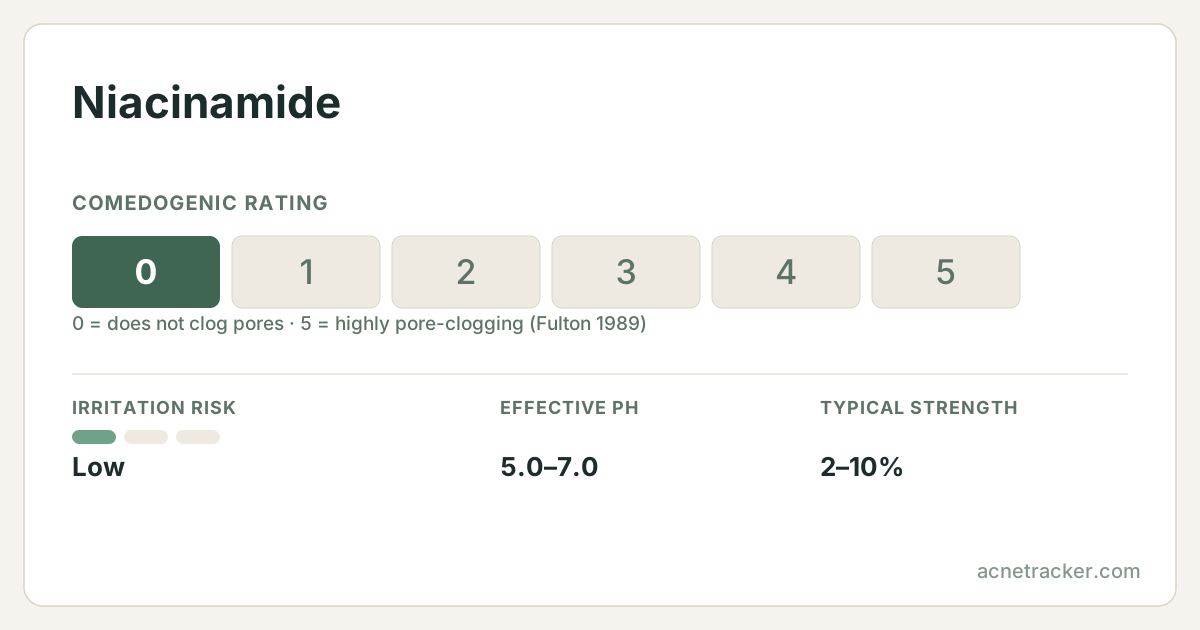
Niacinamide is one of the most studied and best tolerated active ingredients in modern skincare. A water-soluble form of vitamin B3, it appears in serums, moisturizers and cleansers at concentrations between 2% and 10%. Unlike many actives that target a single concern, niacinamide works on several fronts at once: it calms visible redness, helps regulate how much oil the skin produces, supports the skin barrier and gradually fades post-acne marks. Because it is stable, non-acidic and compatible with almost every other ingredient, it is often the first active recommended to people who are new to skincare or who have sensitive, breakout-prone skin.
Quick facts
- Comedogenic rating
- our estimate — not measured
- Irritation risk
- Low
- Effective pH
- 5.0–7.0
- Typical strength
- 2–10%
- Pregnancy
- Considered safe
- Suits skin types
- oilydrycombinationsensitiveacne-prone
Where this number comes from
No one has published a comedogenic rating for this ingredient. Fulton's 1989 table tested about 250 raw materials and this was not among them, and we found no later study measuring it. The figure shown is our own reasoning from the ingredient's chemistry and how it is used — treat it as an estimate, not a measurement.
Fulton read his own scale as 0-1 not significant, 2-3 borderline, 4-5 positive. The assay is the rabbit ear at 10% dilution, which the paper itself calls extremely sensitive and not fully predictive of human skin. Ratings describe the raw ingredient; concentration and formulation change real-world behaviour.
Caution profile
The four published fields on this page, on one 0–5 scale. Further from the centre means more care is needed — never that the ingredient is worse.
Derived, not measured: pore-clogging is the published comedogenic rating; irritation maps low/moderate/high to 1/3/5; pregnancy maps safe/caution/avoid to 0/3/5; skin-type limits is how many of the seven skin types this entry does NOT list. Every input is printed in words in the quick-facts card above.
Show the numbers
| Metric | 0–5 | Published field |
|---|---|---|
| Pore-clogging | 0 | 0/5 |
| Irritation | 1 | Low |
| Skin-type limits | 1.4 | 5/7 |
| Pregnancy | 0 | Considered safe |
Working pH and typical strength
Where this ingredient is formulated to sit, and at what concentration.
Both bars come from the fields above: the pH window and the typical strength range published for this ingredient. The tinted column is healthy skin's surface pH (about 4.7–5.75).
Show the numbers
| Metric | 0–5 |
|---|---|
| Working pH | 5.0–7.0 |
| Typical strength | 2–10% |
What is it?
Chemically, niacinamide is the amide form of niacin (vitamin B3), a nutrient every cell in your body uses to produce energy. In the skin, topical niacinamide raises levels of NAD+, a coenzyme involved in cell repair, and stimulates the production of ceramides — the lipids that hold your skin barrier together. A stronger barrier means less water loss, less stinging and less reactive skin. Niacinamide also has a documented effect on sebaceous glands: studies on 2% concentrations show measurably lower sebum production after two to four weeks, which is why it is a staple in products aimed at oily and acne-prone skin. It is not an exfoliating acid and does not increase sun sensitivity.
Benefits
Regulates oil production
Clinical studies show that 2% niacinamide reduces sebum excretion rates within a month, making skin visibly less shiny and reducing the raw material that clogged pores are made of.
Strengthens the skin barrier
By boosting ceramide synthesis, niacinamide helps repair a damaged moisture barrier — the underlying cause of tightness, flaking and sensitivity that often accompanies acne treatment.
Fades post-acne marks
Niacinamide slows the transfer of pigment from melanocytes to skin cells, which gradually softens the brown or red spots that linger after a pimple heals.
Calms redness and inflammation
Its anti-inflammatory action reduces the redness of active blemishes and general blotchiness, which is why it pairs so well with stronger, more irritating actives.
How to use
Niacinamide is flexible: it works morning and night, in a serum after cleansing or in a moisturizer as the final step. Start with a 4–5% product once daily; concentrations above 10% offer little extra benefit and raise the chance of temporary flushing. It layers safely under sunscreen and makeup, and it does not need to be introduced gradually the way retinoids or exfoliating acids do. If you use it alongside a vitamin C serum, modern formulations are stable together — the old advice to separate them is based on outdated chemistry.
Side effects
Niacinamide has one of the best safety profiles in skincare. A small number of users experience mild flushing, warmth or itching in the first days, usually with concentrations above 10%. This is temporary and not an allergy. True allergic reactions are rare. If a product with many ingredients stings, the culprit is more often the fragrance or preservative system than the niacinamide itself.
Who should avoid it
Almost no one needs to avoid niacinamide. People with very reactive skin should start with a low concentration (2–5%) and patch test behind the ear for three nights. If you have a known allergy to nicotinamide supplements, avoid topical use as well.
Pairs well with
Frequently asked questions
Does niacinamide clog pores?
No. Niacinamide has a comedogenic rating of 0 and actually helps reduce clogged pores by lowering sebum production, which makes it one of the safest actives for acne-prone skin.
Can I use niacinamide every day?
Yes. Niacinamide is gentle enough for twice-daily use and does not require an adjustment period. Most studies showing results used consistent daily application for 4–12 weeks.
Can I mix niacinamide with vitamin C?
Yes. The claim that they cancel each other out comes from experiments on unstabilized solutions at high heat in the 1960s. Modern formulations are stable and the combination is well tolerated.
What percentage of niacinamide should I use?
4–5% is the sweet spot for most people: strong enough to show results on oil control and post-acne marks, gentle enough to avoid flushing. Concentrations above 10% add irritation risk without added benefit.
Is niacinamide safe during pregnancy?
Yes. Topical niacinamide is considered safe during pregnancy and breastfeeding, and is often recommended as a substitute for retinoids during this period. Your midwife or doctor can tell you how it fits the rest of your routine.
Where this ingredient shows up here
Counted across this database, not the web — these are the pages on this site that reason about this ingredient.
Combination guides 18
+10 more on the site
Sources & further reading
Medical disclaimer
Find your personal acne triggers
Our free Acne Tracker lets you log breakouts, sleep, stress and diet, and shows you which factors correlate with your flare-ups.