How to Choose a Cleanser for Combination Skin
Combination skin sets a small puzzle: an oily, shine-prone T-zone alongside cheeks that can feel dry or tight. The instinct is to reach for a strong wash to control the shine, but that dries the cheeks and, over time, pushes the T-zone to produce even more oil. The better approach is a single balanced cleanser that cleans thoroughly yet gently, then treating each zone with the products that follow. This guide describes the ingredient profile that suits mixed skin, the extremes to avoid at both ends, and how to read a label rather than a marketing promise. We review formulas, not brands.
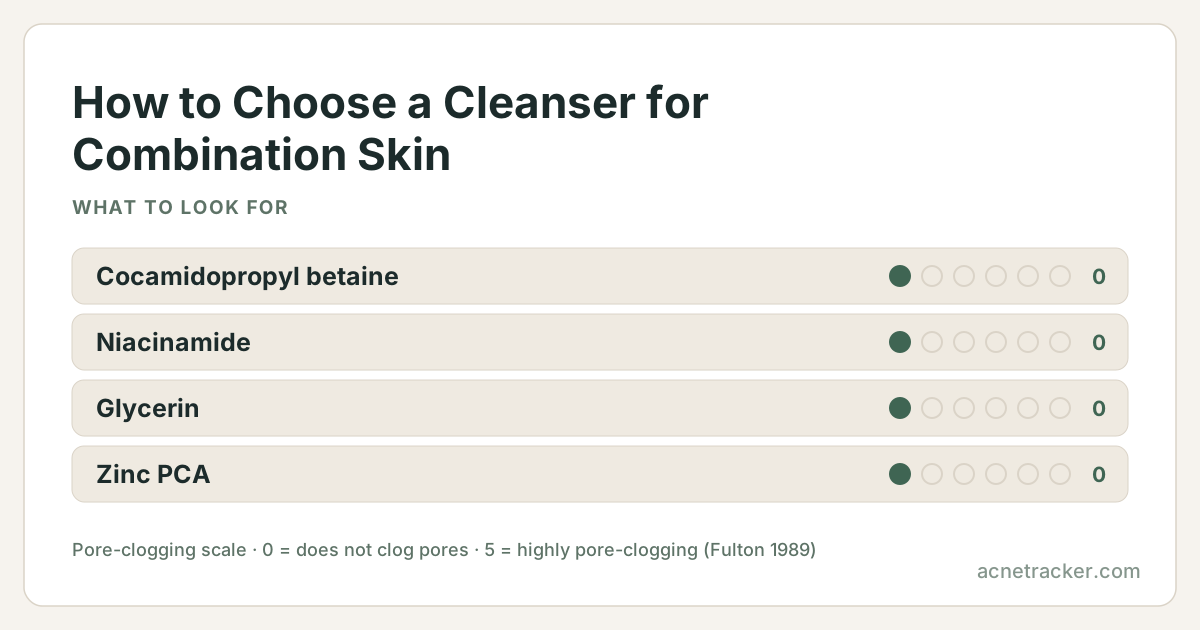
Ingredients to look for
| Ingredient | Why it matters |
|---|---|
| Cocamidopropyl betaine | A moderate, well-balanced surfactant that clears T-zone oil without stripping drier cheeks. |
| Niacinamide | Signals a barrier-friendly formula and helps mixed skin stay balanced across oily and dry areas. |
| Glycerin | Keeps the drier zones comfortable while the surfactants handle oil elsewhere. |
| Zinc PCA | Gently regulates sebum in the T-zone without over-drying the cheeks. |
| Panthenol | Adds a little soothing comfort to the areas that lean dry after washing. |
Ingredients to avoid
| Ingredient | Why it matters |
|---|---|
| Strong sulfates and high-pH soaps | Over-clean the oily zone and leave the dry zone tight, exaggerating the imbalance. |
| Heavy, rich cream cleansers | Comfort the cheeks but can leave the T-zone feeling greasy and congested. |
| Denatured alcohol high on the list | Matts the T-zone briefly, then dries the cheeks and triggers rebound oil. |
| Abrasive scrubs | Irritate the whole face while doing nothing useful for either the oil or the dryness. |
How to choose
Aim for the middle of the road: a gel or gel-cream with a moderate surfactant system rather than either a stripping foam or a heavy balm. Look for glycerin and ideally niacinamide, and skip anything with SLS or early denatured alcohol. Rather than chase separate products for each zone at the cleansing step, choose one balanced wash and let your serum and moisturiser do the zone-specific work afterwards. A single lightweight product across the whole face is usually easier and kinder than double-cleansing with two different formulas. Ignore 'balancing' and 'mattifying' as unregulated claims; judge instead by how the whole face feels after rinsing. The T-zone should feel clean without squeak, and the cheeks comfortable without tightness — if either extreme shows up, the formula is off for mixed skin.
How to apply
Cleanse twice daily with lukewarm water. Spend a little longer massaging the T-zone, where oil and congestion collect, and pass more lightly over the cheeks. Rinse thoroughly and pat dry. Afterwards, treat the zones differently: a lighter gel moisturiser or a touch of a mattifying product on the T-zone, and something more nourishing on the cheeks. In the evening, if you wear sunscreen or makeup, a quick oil or micellar first step lifts it so your balanced cleanser can finish gently across the whole face.
Frequently asked questions
Should I use two different cleansers for combination skin?
Usually not. A single balanced cleanser is simpler and gentler than washing zones separately. Save the zone-specific care for your moisturiser and serum, where longer contact time actually lets those products treat oil and dryness differently.
Can one cleanser really suit an oily T-zone and dry cheeks at once?
Yes, because a cleanser is rinsed off — it is the one step you cannot zone, and the one that least needs zoning. Oil glands are naturally denser through the forehead, nose and chin, so those areas produce more sebum, while the cheeks have fewer glands and lose water more easily. Rather than chasing the T-zone with something strong enough to strip the cheeks, pick one gentle, pH-appropriate wash for the whole face and do the zoning later, where products stay on.
Will a mattifying cleanser fix my shine?
'Mattifying' is an unregulated claim, and a wash rinses off before it can control oil for long. A gentle cleanser plus a light leave-on product on the T-zone manages shine more reliably than a stripping cleanser.
Is foaming cleanser okay for combination skin?
A gentle, moderate foaming gel can suit combination skin well, since it clears T-zone oil without a heavy residue. Avoid harsh, high-pH foaming soaps, which over-dry the cheeks and can worsen the imbalance.
Sources & further reading
There is no single study of this exact question. The guidance here is reasoned from the ingredient profiles below, each of which carries its own references:
- Cocamidopropyl Betaine2 refs
- Niacinamide2 refs
- Glycerin3 refs
- Zinc PCA3 refs
- Panthenol3 refs
Show every reference behind this page (9)
- European Commission CosIng — Cocamidopropyl Betainecited by Cocamidopropyl Betaine, Niacinamide, Glycerin, Zinc PCA, Panthenol
- Cosmetic Ingredient Review — safety assessment of Cocamidopropyl Betainecited by Cocamidopropyl Betaine
- Niacinamide: mechanisms of action and its topical use in dermatology (PubMed)cited by Niacinamide
- PubChem — Glycerol compound summarycited by Glycerin
- DermNet — Moisturiserscited by Glycerin
- PubChem — Zinc PCA (zinc pyrrolidone carboxylate)cited by Zinc PCA
- Zinc l-pyrrolidone carboxylate inhibits the UVA-induced production of matrix metalloproteinase-1 by in vitro cultured skin fibroblasts, whereas it enhances their collagen synthesis (PubMed)cited by Zinc PCA
- PubChem — Panthenol compound summarycited by Panthenol
- Safety Assessment of Panthenol, Pantothenic Acid, and Derivatives as Used in Cosmetics (PubMed)cited by Panthenol
Medical disclaimer
Ingredients mentioned on this page
Find your personal acne triggers
Our free Acne Tracker lets you log breakouts, sleep, stress and diet, and shows you which factors correlate with your flare-ups.