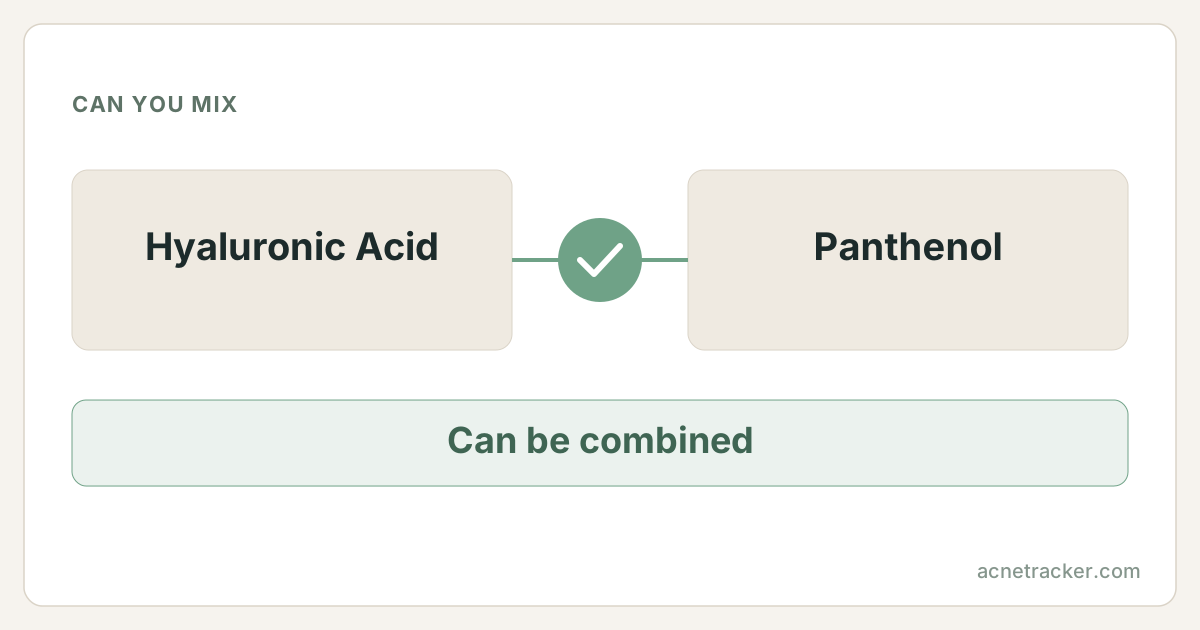
Can You Mix Hyaluronic Acid and Panthenol?
Yes, and this is one of the few humectant stacks where the second ingredient genuinely adds something the first cannot. Both hold water, but panthenol does not stop there: it converts in the skin to pantothenic acid, vitamin B5, and it has a body of evidence behind barrier repair and reduced water loss that hyaluronic acid simply does not have. They are usually found in the same bottle for exactly this reason.
How this pairing resolves
The two ingredients, their published numbers, and where they land together.
The numbers beside each ingredient are its published comedogenic rating and effective pH window, taken from its own profile page.
Show the numbers
| Ingredients | Metric | 0–5 |
|---|---|---|
| Hyaluronic Acid | Comedogenic rating | 0/5 |
| Hyaluronic Acid | Effective pH | no published pH |
| Panthenol | Comedogenic rating | 0/5 |
| Panthenol | Effective pH | no published pH |
Why
Panthenol is provitamin B5 — the alcohol analogue of pantothenic acid. Applied topically it penetrates the stratum corneum readily, being small and water-soluble, and is oxidised in the skin to pantothenic acid, which the body incorporates into coenzyme A. That matters because coenzyme A is central to fatty acid synthesis, and fatty acids are one of the three lipid classes building the barrier. So panthenol is not only a humectant with a mechanism; it feeds into the machinery that makes the barrier. The evidence follows: studies using dexpanthenol have reported accelerated recovery of barrier function after experimental damage, reductions in transepidermal water loss, and relief of itching and inflammation — which is why it turned up in wound and nappy-rash products long before it appeared in serums. Typical cosmetic use runs around 1–5%, and above that formulas turn tacky. Hyaluronic acid does none of this. It binds water at the surface, contributes nothing to lipid synthesis, and cannot lower water loss on its own — in dry air it can raise it. Putting them together is therefore not redundancy: it is a humectant with no repair function alongside a humectant that also supports repair. Between the molecules there is no interaction to manage. Panthenol is stable across the pH range cosmetics live in, is unaffected by the hyaluronate's charge, and needs no adjustment period.
How to combine them
Both are water-phase ingredients, so if they are in the same serum you have nothing to do. If they are separate products, panthenol usually comes in the lighter formula and goes first; otherwise apply them in whatever order runs thin to thick. Damp skin helps both. Then a moisturiser over the top, which is the step that decides whether the water they bind actually stays. Panthenol is a good candidate to keep running through periods when you have paused everything else: it is not an active in the irritating sense, it has no ceiling of tolerance, and it earns its place on the recovery nights after a retinoid or acid, or through a spell of cold weather when the barrier is struggling. Twice daily, indefinitely, is entirely reasonable for either ingredient.
Example routine
| When | Steps |
|---|---|
| Morning | Cleanser → Panthenol serum on damp skin → Hyaluronic acid → Moisturiser → SPF 30+ |
| Evening | Cleanser → Panthenol → Hyaluronic acid → Moisturiser |
| Same bottle | Very common — treat the combined serum as one hydrating step |
| Recovery nights | Both, plus moisturiser, on nights you skip actives |
Warning signs
Frequently asked questions
Is panthenol just another humectant like hyaluronic acid?
No — that is the useful distinction. Both bind water, but panthenol converts to pantothenic acid and feeds into coenzyme A and fatty acid synthesis, with evidence behind barrier recovery and reduced water loss. Hyaluronic acid holds water and does nothing structural.
Does panthenol actually reduce transepidermal water loss?
Studies on dexpanthenol have reported reduced water loss and faster barrier recovery after experimental damage, which is a stronger claim than can be made for hyaluronic acid alone. It is still a support ingredient, not a treatment for a specific condition.
What is the difference between panthenol and vitamin B5?
Panthenol is the provitamin — the alcohol form. Your skin oxidises it to pantothenic acid, which is vitamin B5 proper. Labels use the names loosely; D-panthenol, or dexpanthenol, is the biologically active isomer and the one used in the research.
Can I use panthenol and hyaluronic acid together every day?
Yes, twice daily and indefinitely. Neither has an adjustment period, neither causes photosensitivity, and neither has a tolerance ceiling. They are the sort of ingredients you keep running when you pause everything else.
Why do so many serums contain both?
Because they cover different gaps cheaply and neither destabilises the other. Panthenol adds the repair-and-soothe angle and improves the feel, hyaluronic acid adds surface water-binding and the name customers look for on the front of the box.
Sources & further reading
There is no single study of this exact question. The guidance here is reasoned from the ingredient profiles below, each of which carries its own references:
- Hyaluronic Acid3 refs
- Panthenol3 refs
Show every reference behind this page (5)
- PubChem — Hyaluronic acid compound summarycited by Hyaluronic Acid
- European Commission CosIng database — Hyaluronic Acidcited by Hyaluronic Acid, Panthenol
- DermNet — Moisturisers and humectantscited by Hyaluronic Acid
- PubChem — Panthenol compound summarycited by Panthenol
- Safety Assessment of Panthenol, Pantothenic Acid, and Derivatives as Used in Cosmetics (PubMed)cited by Panthenol
Medical disclaimer
Ingredients mentioned on this page
Find your personal acne triggers
Our free Acne Tracker lets you log breakouts, sleep, stress and diet, and shows you which factors correlate with your flare-ups.