Glycolic Acid: Comedogenic Rating & Ingredient Analysis
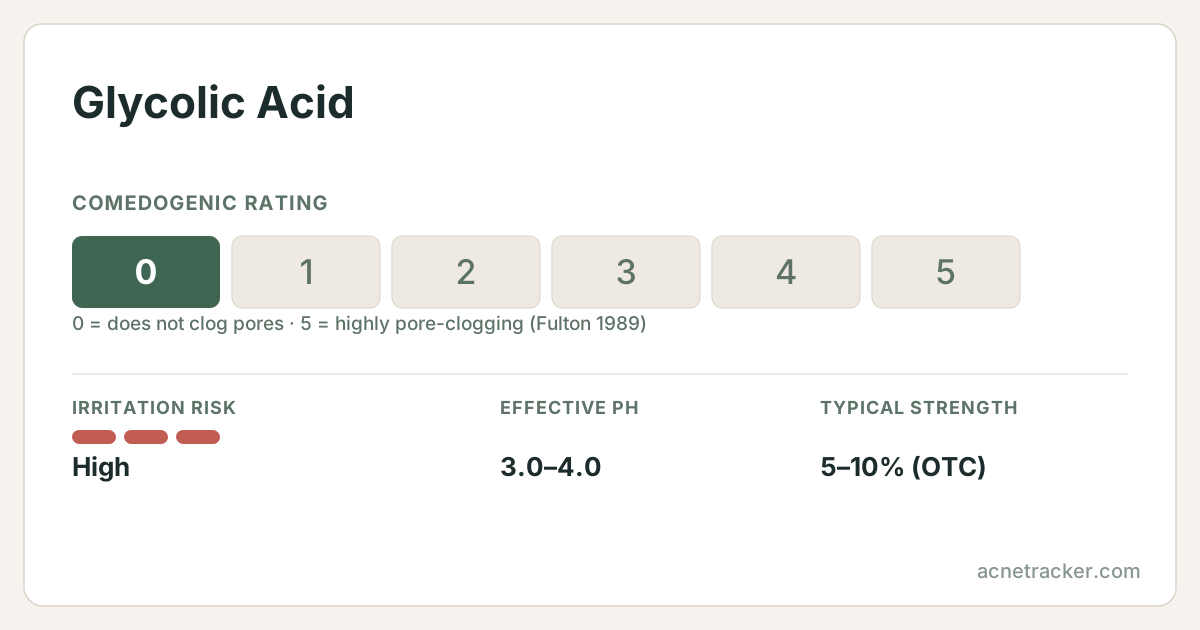
Glycolic acid is the most widely studied alpha hydroxy acid (AHA) and the benchmark surface exfoliant in skincare. Derived originally from sugar cane, it has the smallest molecular size of any AHA, which lets it penetrate the outer skin quickly and act strongly — the reason it delivers fast results on dullness and rough texture, and also the reason it is the most likely AHA to sting. Unlike salicylic acid, which works inside oily pores, glycolic acid works across the skin surface, dissolving the glue that holds dull dead cells together so they shed and reveal smoother skin underneath. It appears in toners, serums, pads and peels, usually between 5% and 10% over the counter.
Quick facts
- Comedogenic rating
- our estimate — not measured
- Irritation risk
- High
- Effective pH
- 3.0–4.0
- Typical strength
- 5–10% (OTC)
- Pregnancy
- Ask your doctor
- Suits skin types
- oilycombinationnormalmature
Where this number comes from
No one has published a comedogenic rating for this ingredient. Fulton's 1989 table tested about 250 raw materials and this was not among them, and we found no later study measuring it. The figure shown is our own reasoning from the ingredient's chemistry and how it is used — treat it as an estimate, not a measurement.
Fulton read his own scale as 0-1 not significant, 2-3 borderline, 4-5 positive. The assay is the rabbit ear at 10% dilution, which the paper itself calls extremely sensitive and not fully predictive of human skin. Ratings describe the raw ingredient; concentration and formulation change real-world behaviour.
Caution profile
The four published fields on this page, on one 0–5 scale. Further from the centre means more care is needed — never that the ingredient is worse.
Derived, not measured: pore-clogging is the published comedogenic rating; irritation maps low/moderate/high to 1/3/5; pregnancy maps safe/caution/avoid to 0/3/5; skin-type limits is how many of the seven skin types this entry does NOT list. Every input is printed in words in the quick-facts card above.
Show the numbers
| Metric | 0–5 | Published field |
|---|---|---|
| Pore-clogging | 0 | 0/5 |
| Irritation | 5 | High |
| Skin-type limits | 2.1 | 4/7 |
| Pregnancy | 3 | Ask your doctor |
Working pH and typical strength
Where this ingredient is formulated to sit, and at what concentration.
Both bars come from the fields above: the pH window and the typical strength range published for this ingredient. The tinted column is healthy skin's surface pH (about 4.7–5.75).
Show the numbers
| Metric | 0–5 |
|---|---|
| Working pH | 3.0–4.0 |
| Typical strength | 5–10% (OTC) |
What is it?
Chemically, glycolic acid is a water-soluble alpha hydroxy acid. It exfoliates by weakening the bonds (called desmosomes) between dead cells at the skin's surface, so the outermost layer sheds in an even, controlled way rather than building up into a dull, rough film. Its small molecule penetrates faster than larger AHAs such as lactic or mandelic acid, giving stronger but potentially harsher results. With longer-term use, studies on AHAs suggest a modest thickening of the deeper skin and improved appearance of photoaged skin, which is why glycolic acid is marketed for fine lines as well as texture. Effectiveness depends heavily on formulation: the product needs a low pH (around 3–4) and a meaningful concentration of free acid to work, so two products with the same percentage on the label can differ greatly in strength.
Benefits
Brightens dull, uneven skin
By sweeping away the built-up layer of dead cells, glycolic acid restores light reflection to a dull complexion, often producing a visible glow within a week or two of use.
Smooths rough texture
Its even, controlled exfoliation refines a bumpy or grainy surface and can soften the look of enlarged pores by keeping the pore openings clearer.
Fades post-acne marks and pigmentation
Faster surface turnover helps disperse excess pigment, so brown post-acne marks and patches of uneven tone gradually lighten with consistent use.
Improves photoaged skin
Research on AHAs indicates that regular use can improve the appearance of sun-damaged skin and fine lines, making glycolic acid a dual texture-and-aging exfoliant.
How to use
Start low and infrequent: a 5–7% leave-on product two evenings a week is plenty for most beginners. Apply to clean, dry skin, wait a few minutes, then follow with moisturizer, and build up frequency only as your skin tolerates it. Do not layer glycolic acid with retinol, benzoyl peroxide or other exfoliating acids in the same routine — stacking exfoliants and cell-turnover actives multiplies irritation and barrier damage; alternate them on different nights instead. Because AHAs increase sun sensitivity, and glycolic acid specifically has been shown to raise UV sensitivity, daily broad-spectrum sunscreen is essential — skipping it undoes the brightening and can worsen pigmentation.
Side effects
A brief tingle on application is normal; anything beyond mild is a sign to reduce strength or frequency. Because glycolic acid penetrates fast, it is the AHA most likely to cause redness, stinging, dryness and peeling, and over-use leads to a compromised barrier that stings at everything you apply. Chemical burns are possible with high-strength home peels used incorrectly. It also increases sun sensitivity, so unprotected exposure while using it can cause irritation and worsen the very pigmentation you are trying to fade. If your skin becomes tight, flaky or reactive, stop and let the barrier recover before restarting at a lower frequency.
Who should avoid it
People with sensitive skin, active eczema or rosacea, or a currently damaged barrier should avoid glycolic acid or choose a gentler AHA like lactic or mandelic acid. During pregnancy, low-strength cosmetic use is generally considered low risk, but many people prefer to be conservative and skip strong peels — a sensible caution, so confirm with your doctor. Do not combine it with prescription retinoids or a full retinol routine without dermatologist guidance, and never self-administer professional-grade high-percentage peels at home.
Pairs well with
Avoid combining with
Frequently asked questions
What is the difference between glycolic acid and salicylic acid?
Glycolic acid is a water-soluble AHA that exfoliates the skin surface and is best for dullness, texture and pigmentation. Salicylic acid is an oil-soluble BHA that gets inside pores and is best for blackheads and oily, acne-prone skin.
What strength of glycolic acid should a beginner use?
Start with a leave-on product around 5–7% used two nights a week. Higher over-the-counter strengths (up to 10%) can be worked up to slowly, while stronger peels are best left to professionals.
Can I use glycolic acid with retinol?
Not in the same routine, especially when starting out — both increase cell turnover and stacking them multiplies irritation. Alternate nights, and only combine once your skin is fully accustomed to each on its own.
Does glycolic acid make skin more sensitive to the sun?
Yes. Glycolic acid increases the skin's sensitivity to UV, so daily broad-spectrum sunscreen is essential while using it. Skipping sunscreen can worsen pigmentation and irritation.
Is glycolic acid safe during pregnancy?
Low-strength cosmetic products are generally regarded as low risk, but many people choose to avoid strong AHA peels during pregnancy as a precaution. Because glycolic acid is the fastest-penetrating AHA, run anything at peel strength past your midwife or obstetrician before you start it.
Where this ingredient shows up here
Counted across this database, not the web — these are the pages on this site that reason about this ingredient.
Combination guides 17
+9 more on the site
Condition pages 21
- Acne on the Scalp
- Back Acne Scars and Dark Marks
- Blackheads Along the Hairline
- Blackheads Around the Mouth
- Blackheads on the Back
- Blackheads on the Buttocks
+15 more on the site
Buying guides 17
- How to Choose a Body Wash for Back Acne
- How to Choose a Body Wash for Body Acne
- How to Choose a Body Wash for Dark Spots on the Body
- How to Choose a Body Wash for Folliculitis
- How to Choose a Body Wash for Keratosis Pilaris
- How to Choose a Chemical Exfoliant for Body Acne
+11 more on the site
Sources & further reading
Medical disclaimer
Find your personal acne triggers
Our free Acne Tracker lets you log breakouts, sleep, stress and diet, and shows you which factors correlate with your flare-ups.