Can You Mix Alpha Arbutin and Glycolic Acid?
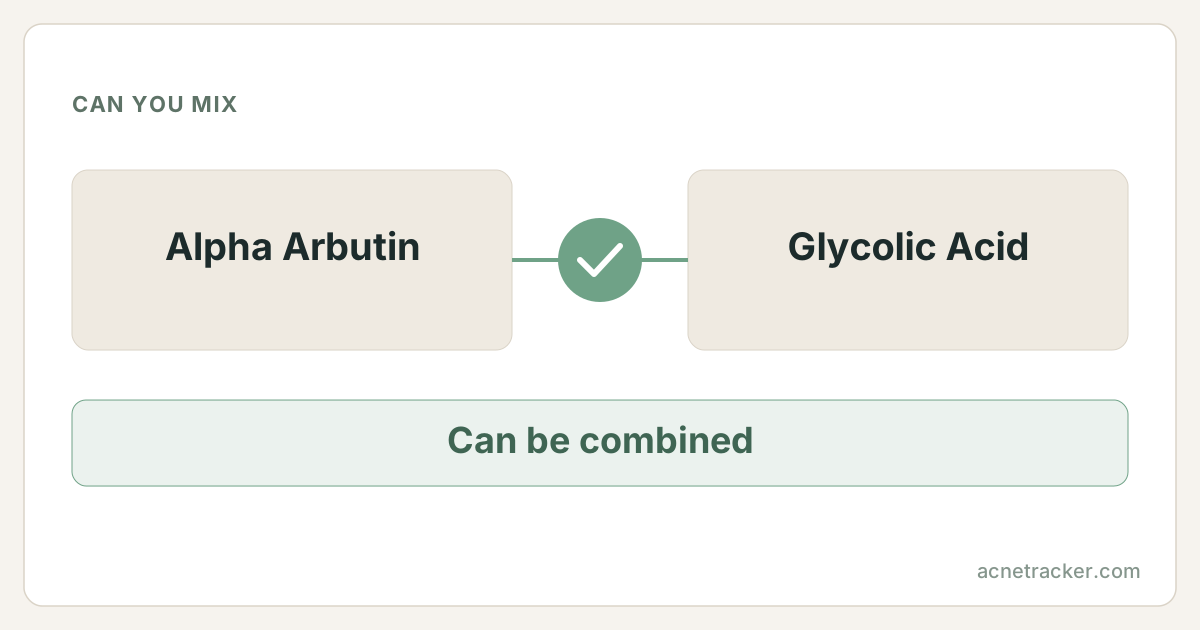
Yes. Glycolic acid and alpha arbutin are a complementary brightening pair. Alpha arbutin blocks pigment production while glycolic acid exfoliates away already-pigmented surface cells, so together they fade dark marks faster than either alone. The main thing to manage is irritation: introduce them gradually, keep the glycolic step limited, and always wear daily sunscreen, since sun undoes brightening work.
How this pairing resolves
The two ingredients, their published numbers, and where they land together.
The numbers beside each ingredient are its published comedogenic rating and effective pH window, taken from its own profile page.
Show the numbers
| Ingredients | Metric | 0–5 |
|---|---|---|
| Alpha Arbutin | Comedogenic rating | 0/5 |
| Alpha Arbutin | Effective pH | 4.0–6.0 |
| Glycolic Acid | Comedogenic rating | 0/5 |
| Glycolic Acid | Effective pH | 3.0–4.0 |
Why
These two attack uneven tone from opposite ends of the pigment process. Alpha arbutin is a stable derivative of hydroquinone that gently inhibits tyrosinase, the enzyme that makes melanin, so it slows the creation of new pigment. Glycolic acid does not touch that enzyme; instead it is an AHA that accelerates surface turnover, sloughing off cells that already hold excess melanin, such as post-acne marks and sun spots. One reduces incoming pigment, the other clears out the pigment already there, which is a genuinely additive strategy for hyperpigmentation. There is also a penetration angle: by thinning the dead-cell layer, glycolic can help alpha arbutin reach living cells more effectively. The pairing is well tolerated because alpha arbutin is one of the gentlest brighteners, but glycolic still brings sting, dryness and raised UV sensitivity. Irritation is counterproductive here, because inflamed skin can produce more pigment (post-inflammatory hyperpigmentation), so the goal is steady, low-irritation use rather than aggressive layering.
How to combine them
A simple, effective split is alpha arbutin in the morning and glycolic acid at night. Morning: cleanse, apply alpha arbutin, moisturise, then broad-spectrum SPF 30+, which is essential because sun exposure drives the very pigment you are treating. Evening: cleanse, apply glycolic acid to dry skin two to three nights a week, then moisturiser; on the other nights you can apply alpha arbutin again. If you prefer one routine, layer alpha arbutin after the glycolic has settled, applying glycolic first and arbutin a few minutes later. Introduce one product at a time, keep everything else bland and hydrating, and give pigmentation eight to twelve weeks of consistent use before judging results, as fading is gradual.
Example routine
| When | Steps |
|---|---|
| Morning | Cleanser → Alpha arbutin → Moisturiser → SPF 30+ |
| Evening (Mon/Wed/Fri) | Cleanser → Glycolic acid → Moisturiser |
| Evening (other days) | Cleanser → Alpha arbutin → Moisturiser |
| Timeline | Expect visible fading over 8 to 12 weeks of steady use |
Warning signs
Frequently asked questions
How do glycolic acid and alpha arbutin work together?
Alpha arbutin slows new pigment by inhibiting tyrosinase, while glycolic acid exfoliates away cells that already carry excess melanin. One prevents, the other clears, which fades dark marks faster together.
Is alpha arbutin irritating like glycolic acid?
No. Alpha arbutin is one of the gentlest brightening ingredients and rarely stings. In this pair, any irritation comes from the glycolic step, so that is what you moderate.
Can I use both in the same routine?
Yes, once your skin is used to each. Apply glycolic first on dry skin, wait a few minutes, then alpha arbutin. Splitting them into morning and evening is even gentler.
Why is sunscreen so important with this combination?
Sun exposure stimulates the pigment you are trying to fade, so skipping SPF undoes the work of both ingredients. Daily broad-spectrum SPF 30+ is what makes the results stick.
Sources & further reading
There is no single study of this exact question. The guidance here is reasoned from the ingredient profiles below, each of which carries its own references:
- Alpha-Arbutin3 refs
- Glycolic Acid3 refs
Show every reference behind this page (5)
- European Commission CosIng database — Alpha-Arbutincited by Alpha-Arbutin, Glycolic Acid
- PubChem — Arbutincited by Alpha-Arbutin
- A comprehensive review of the therapeutic potential of α-arbutin (PubMed)cited by Alpha-Arbutin
- PubChem — Glycolic acid compound summarycited by Glycolic Acid
- DermNet — Alpha hydroxy acidscited by Glycolic Acid
Medical disclaimer
Ingredients mentioned on this page
Find your personal acne triggers
Our free Acne Tracker lets you log breakouts, sleep, stress and diet, and shows you which factors correlate with your flare-ups.