Blackheads Around the Mouth
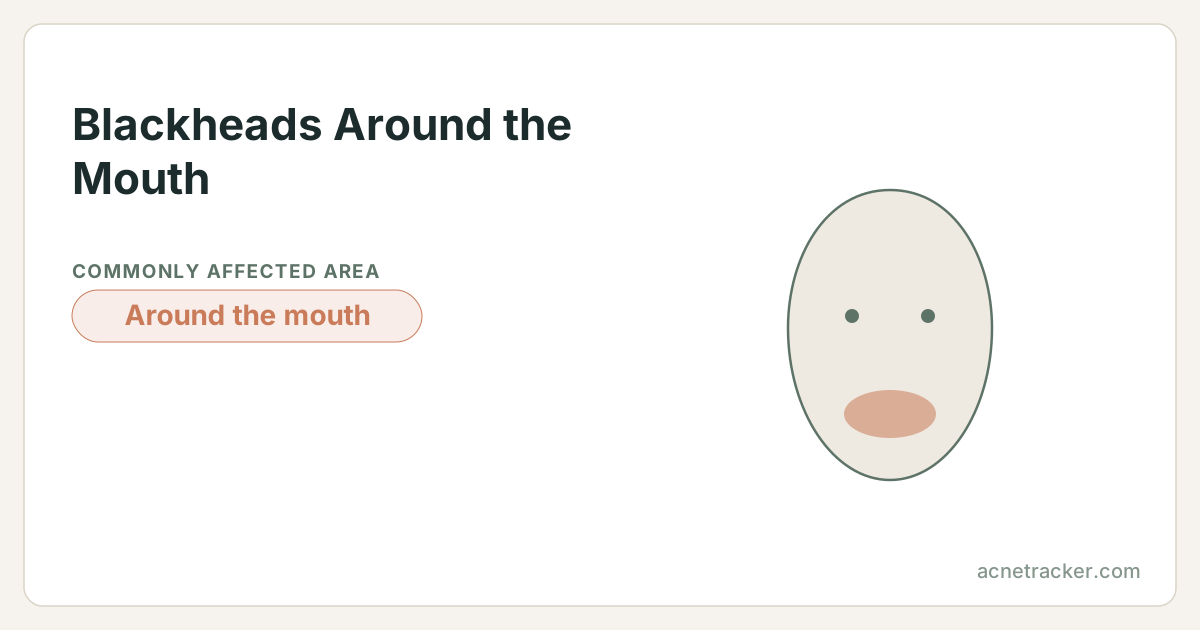
Blackheads around the mouth are open comedones: pores plugged with oil and dead cells whose surface stays open to the air, so the plug oxidizes and darkens. The dark colour is oxidized oil, not trapped dirt — an important point, because it means scrubbing harder never washes it out. This zone gathers blackheads because the lower face is oil-rich and collects lip balm, food film and makeup that feed the plug. They are less common right at the lips than whiteheads but do appear on the upper lip, chin side and corners. The fix is an oil-soluble exfoliant that dissolves the plug, used gently on skin that irritates easily.
How to recognize it
A blackhead around the mouth is a small, flat or slightly raised dark dot sitting visibly in a pore, varying a little in size. Press gently and a firm plug may lift; the dark tip is oxidation, not dirt. They differ from sebaceous filaments, which are the tiny, uniform grey dots that normally line oily skin and simply refill after cleaning. And they differ from perioral dermatitis, which is an inflamed, sometimes scaly rash of bumps rather than dark open pores. Uneven, dark and comedonal points to blackheads; uniform grey means filaments; red, bumpy and cream-aggravated means see a doctor.
What causes it
Oil meeting slow-shedding cells
Blackheads start when sebum binds with dead cells that shed too slowly inside the pore. The plug then reaches the surface, oxidizes and darkens, which is why oily lower-face skin collects them.
Lip balm and cosmetic residue
Waxy balms, greasy food films and heavy makeup around the mouth add material to the pore and slow its clearing, so open comedones form and refill faster here.
Incomplete cleansing
The skin bordering the lips is often cleansed lightly, leaving sunscreen, makeup and food to accumulate in pores and darken into blackheads over time.
Squeezing and pore strips
Removing the visible top of a plug by squeezing or stripping stretches the pore and injures its lining, making blackheads refill faster and the opening look larger.
Ingredients with evidence
| Ingredient | Role |
|---|---|
| Salicylic acid (BHA) | Oil-soluble, so it penetrates the pore and dissolves the oxidized plug itself; the core treatment for blackheads around the mouth, used a few evenings a week. |
| Adapalene | A retinoid that keeps pores shedding normally so new open comedones do not form; start slowly and avoid the lip margin. |
| Niacinamide | Helps moderate oil output and calms the skin, supporting tolerance of the exfoliants that clear blackheads. |
| Glycolic acid | A surface AHA that smooths and loosens plugs; use it cautiously on the thin skin near the mouth and not on the same night as other strong actives. |
| Clay-based masks | An occasional clay mask can absorb surface oil and help loosen plugs on the lower face, a gentle adjunct rather than a main treatment. |
Building the routine
Dissolve blackheads rather than forcing them out. Cleanse gently twice a day and clean the lip zone properly to stop residue building up. In the evening, use salicylic acid a few nights a week and a retinoid on alternate nights, both kept back from the lip border. A weekly clay mask can help. Moisturize lightly each time and wear SPF daily, since exfoliants raise sun sensitivity. Swap waxy balms for lighter ones and check products against comedogenic lists. Skip pore strips and squeezing — they injure the pore and speed refilling. Blackheads clear gradually over weeks, so judge results after a couple of months of steady use.
When to see a doctor
Frequently asked questions
Are the dark dots on my upper lip blackheads or sebaceous filaments?
Blackheads are uneven, vary in size and lift a firm plug; sebaceous filaments are tiny, uniform grey dots that line oily skin and refill after cleaning. Treat blackheads with salicylic acid, but leave filaments alone — over-treating them just irritates the skin.
Why do blackheads around my mouth keep coming back?
The lower face is oily and collects balm, food and makeup, and pores refill once emptied. Only consistent exfoliation and a retinoid slow the cycle; squeezing and strips make refilling faster, so they return quicker.
Do pore strips work on blackheads near the mouth?
They pull off the visible tops but leave the plug behind and stretch and injure the pore, so blackheads return quickly and pores can look larger. A dissolving oil-soluble exfoliant is a better long-term approach.
Can I use glycolic acid around my mouth for blackheads?
Cautiously. Glycolic acid can smooth and loosen plugs, but the thin skin near the lips irritates easily, so use a lower strength, keep it off the lip margin and do not layer it with other strong actives the same night.
Sources & further reading
What this page cites about the condition itself:
There is no single study of this exact question. The guidance here is reasoned from the ingredient profiles below, each of which carries its own references:
- Salicylic Acid2 refs
- Adapalene3 refs
- Niacinamide2 refs
- Glycolic Acid3 refs
Show every reference behind this page (8)
- Salicylic acid as a peeling agent: a comprehensive review (PubMed)cited by Salicylic Acid
- FDA OTC monograph — acne drug products (salicylic acid 0.5–2%)cited by Salicylic Acid, Adapalene
- PubChem — Adapalene compound summarycited by Adapalene
- DermNet — Adapalenecited by Adapalene
- Niacinamide: mechanisms of action and its topical use in dermatology (PubMed)cited by Niacinamide
- European Commission CosIng database — Niacinamidecited by Niacinamide, Glycolic Acid
- PubChem — Glycolic acid compound summarycited by Glycolic Acid
- DermNet — Alpha hydroxy acidscited by Glycolic Acid
Medical disclaimer
Ingredients mentioned on this page
Find your personal acne triggers
Our free Acne Tracker lets you log breakouts, sleep, stress and diet, and shows you which factors correlate with your flare-ups.