Can You Mix Bakuchiol and Glycolic Acid?
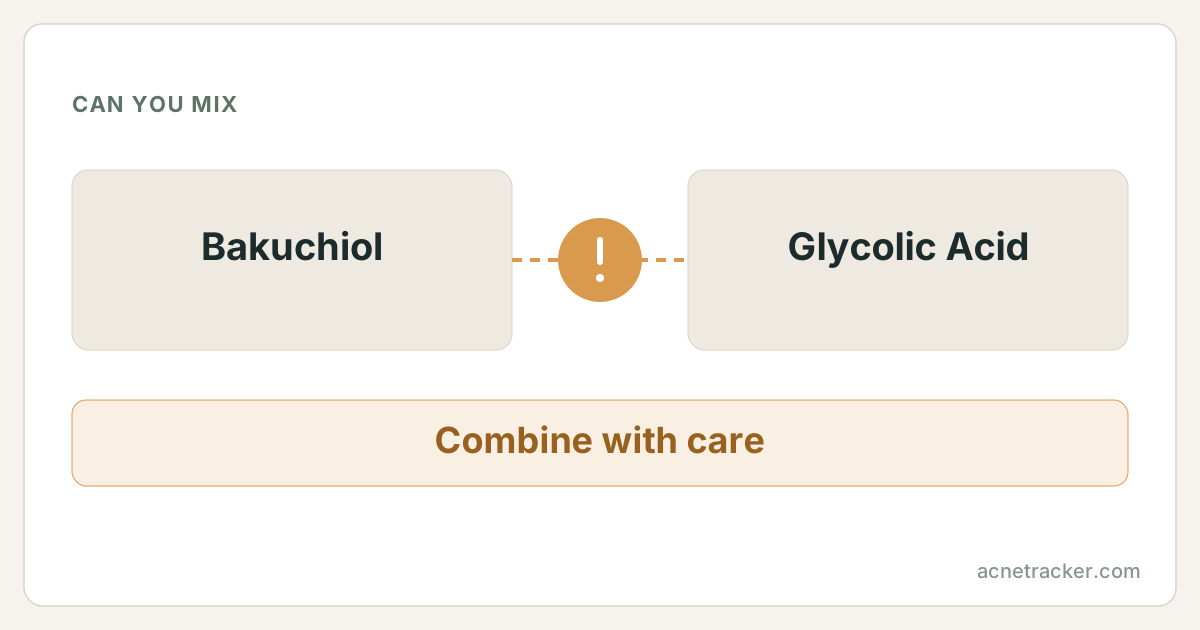
Use mild caution. Bakuchiol is a plant-derived alternative to retinol that is much gentler, so combining it with glycolic acid is far less risky than mixing glycolic with a true retinoid. Many people tolerate them together well. Still, bakuchiol and glycolic both work on cell renewal, so introduce them gradually and monitor for irritation rather than assuming bakuchiol is completely inert.
How this pairing resolves
The two ingredients, their published numbers, and where they land together.
The numbers beside each ingredient are its published comedogenic rating and effective pH window, taken from its own profile page.
Show the numbers
| Ingredients | Metric | 0–5 |
|---|---|---|
| Bakuchiol | Comedogenic rating | 0/5 |
| Bakuchiol | Effective pH | no published pH |
| Glycolic Acid | Comedogenic rating | 0/5 |
| Glycolic Acid | Effective pH | 3.0–4.0 |
Why
Bakuchiol is a compound from the babchi plant that produces retinol-like effects on the skin, appearing to switch on some of the same collagen and renewal pathways, but without the classic retinoid sting, dryness and peeling. Because it is not a retinoid and is not pH sensitive in the same way, it does not clash with glycolic acid the way retinol can. Glycolic remains a surface AHA exfoliant, and bakuchiol supports renewal and has antioxidant and calming properties, so on paper they are a comfortable, complementary pair, with bakuchiol potentially soothing some of the exfoliation stress. The reason for a note of caution rather than a flat yes is that both nudge the skin toward faster turnover, and stacking any two actives raises the total load. Individual tolerance varies, and glycolic still lowers surface pH and increases sun sensitivity. Treating bakuchiol as gentle but not weightless, and building the routine gradually, gets you the benefits without provoking the barrier.
How to combine them
You have flexibility because bakuchiol is not deactivated by light or low pH. A simple option is bakuchiol in the morning and glycolic acid at night, but you can also layer them in the evening once tolerant, applying glycolic to dry skin first, letting it settle, then bakuchiol. Start glycolic at two nights a week and use bakuchiol daily, watching how your skin responds before increasing the acid. Keep a barrier moisturiser in the routine and, because glycolic raises UV sensitivity, use broad-spectrum SPF 30+ each morning. If you chose bakuchiol specifically as a gentler alternative to retinol, keep the glycolic modest so you do not simply reintroduce the irritation you were trying to avoid.
Example routine
| When | Steps |
|---|---|
| Morning | Cleanser → Bakuchiol → Moisturiser → SPF 30+ |
| Evening (Mon/Thu) | Cleanser → Glycolic acid → Moisturiser |
| Evening (other days) | Cleanser → Bakuchiol → Moisturiser |
| Adjust | Increase glycolic only if skin stays comfortable |
Warning signs
Frequently asked questions
Is bakuchiol a retinoid, and does that make it risky with glycolic acid?
No. Bakuchiol is a plant-derived compound that mimics some of retinol's renewal effects without being chemically related to retinoids, which is why it is far gentler and easier to pair with glycolic acid.
Can I use bakuchiol and glycolic in the same routine?
Yes, once your skin is used to each. Apply glycolic to dry skin first, let it settle, then bakuchiol. Because bakuchiol is not light or pH sensitive, timing is flexible.
Is bakuchiol safe in pregnancy with glycolic acid?
Bakuchiol is often marketed as a pregnancy-friendly retinol alternative and topical glycolic is low risk, but evidence is limited, so confirm your specific products with your doctor or midwife.
Why caution if bakuchiol is so gentle?
Because both ingredients speed cell turnover and any two actives add up. Bakuchiol is gentle, not inert, so gradual introduction and monitoring still protect your barrier.
Sources & further reading
There is no single study of this exact question. The guidance here is reasoned from the ingredient profiles below, each of which carries its own references:
- Bakuchiol3 refs
- Glycolic Acid3 refs
Show every reference behind this page (6)
- PubChem — Bakuchiol compound summarycited by Bakuchiol
- Bakuchiol: a retinol-like functional compound (PubMed)cited by Bakuchiol
- DermNet — Cosmeceuticalscited by Bakuchiol
- PubChem — Glycolic acid compound summarycited by Glycolic Acid
- DermNet — Alpha hydroxy acidscited by Glycolic Acid
- European Commission CosIng database — Glycolic Acidcited by Glycolic Acid
Medical disclaimer
Ingredients mentioned on this page
Find your personal acne triggers
Our free Acne Tracker lets you log breakouts, sleep, stress and diet, and shows you which factors correlate with your flare-ups.