Vitamin C: Comedogenic Rating & Ingredient Analysis
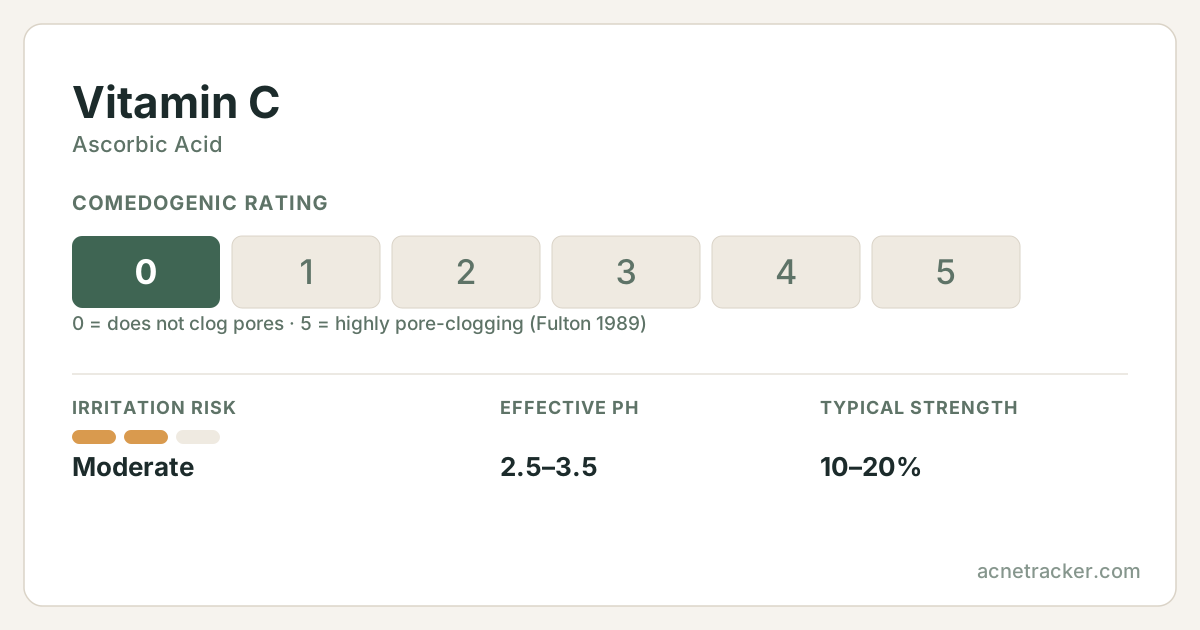
Vitamin C is the reference antioxidant of modern skincare, and L-ascorbic acid is its most researched, most potent form. Applied topically at 10–20%, it neutralizes the free radicals generated by sun exposure and pollution before they can damage collagen and trigger pigment production. Over weeks it visibly brightens a dull complexion, softens the brown marks left behind by healed acne, and gives skin a fresher, more even tone. It is not an exfoliating acid despite its low pH; its job is to protect and repair rather than to shed the surface. Because ascorbic acid is famously unstable in water, formulation quality matters more here than with almost any other active — a well-made serum in an airtight, opaque bottle is worth far more than a high number on the label.
Quick facts
- Comedogenic rating
- our estimate — not measured
- Irritation risk
- Moderate
- Effective pH
- 2.5–3.5
- Typical strength
- 10–20%
- Pregnancy
- Considered safe
- Suits skin types
- oilydrycombinationnormalacne-pronemature
Where this number comes from
No one has published a comedogenic rating for this ingredient. Fulton's 1989 table tested about 250 raw materials and this was not among them, and we found no later study measuring it. The figure shown is our own reasoning from the ingredient's chemistry and how it is used — treat it as an estimate, not a measurement.
Fulton read his own scale as 0-1 not significant, 2-3 borderline, 4-5 positive. The assay is the rabbit ear at 10% dilution, which the paper itself calls extremely sensitive and not fully predictive of human skin. Ratings describe the raw ingredient; concentration and formulation change real-world behaviour.
Caution profile
The four published fields on this page, on one 0–5 scale. Further from the centre means more care is needed — never that the ingredient is worse.
Derived, not measured: pore-clogging is the published comedogenic rating; irritation maps low/moderate/high to 1/3/5; pregnancy maps safe/caution/avoid to 0/3/5; skin-type limits is how many of the seven skin types this entry does NOT list. Every input is printed in words in the quick-facts card above.
Show the numbers
| Metric | 0–5 | Published field |
|---|---|---|
| Pore-clogging | 0 | 0/5 |
| Irritation | 3 | Moderate |
| Skin-type limits | 0.7 | 6/7 |
| Pregnancy | 0 | Considered safe |
Working pH and typical strength
Where this ingredient is formulated to sit, and at what concentration.
Both bars come from the fields above: the pH window and the typical strength range published for this ingredient. The tinted column is healthy skin's surface pH (about 4.7–5.75).
Show the numbers
| Metric | 0–5 |
|---|---|
| Working pH | 2.5–3.5 |
| Typical strength | 10–20% |
What is it?
L-ascorbic acid is the pure, water-soluble form of vitamin C and the same molecule your body cannot synthesize on its own. In the skin it works as an electron donor, sacrificing itself to quench reactive oxygen species so they never reach your DNA, lipids or collagen fibres. It is also a required cofactor for the enzymes that build collagen, which is why sustained use is associated with firmer-feeling skin, and it interrupts melanin synthesis by inhibiting tyrosinase, the enzyme that drives dark spots. To stay active it needs an acidic environment (pH below about 3.5) and protection from light, air and heat; once a serum turns deep yellow or brown it has oxidized and lost most of its potency. Pairing it with vitamin E and ferulic acid measurably stabilizes the formula and extends how long it stays effective on the skin.
Benefits
Brightens and evens tone
By inhibiting tyrosinase, vitamin C slows new pigment formation. Studies on 10% and higher concentrations show a measurable reduction in the appearance of dark spots and overall dullness over 8–12 weeks.
Fades post-acne marks
The brown and grey marks that linger after a breakout are localized pigment. Vitamin C's effect on melanin transfer helps these post-inflammatory spots fade faster than they would on their own.
Defends against daily damage
As a potent antioxidant it mops up the free radicals produced by UV light and pollution, reducing the cumulative oxidative stress that ages skin and worsens hyperpigmentation.
Supports collagen and firmness
Vitamin C is an essential cofactor for collagen-building enzymes. Consistent morning use is linked in studies with firmer-feeling skin and a smoother surface over several months.
How to use
Use vitamin C in the morning, after cleansing and before moisturizer and sunscreen, so its antioxidant protection works alongside your SPF through the day. Start with a 10% serum every other morning if your skin is reactive, building to daily as tolerated; 15–20% suits resilient skin but offers diminishing returns and more sting above 20%. Give it a minute to absorb before layering. Store the bottle away from light and heat, and replace it once the liquid darkens noticeably. A well-formulated L-ascorbic acid serum paired with vitamin E and ferulic acid is the gold-standard combination for stability and effect.
Side effects
The most common complaint is a brief tingling or warmth on application, which comes from the acidic pH the pure form needs and usually settles as skin adapts. Higher concentrations can cause dryness or a stinging sensation on sensitive skin. Genuine allergy is uncommon. The bigger practical issue is oxidation: an old or badly stored serum not only loses potency but the brown, oxidized product can temporarily stain the skin a faint orange until washed off. Patch test a new formula for a few days if your skin flushes easily.
Who should avoid it
Very sensitive or rosacea-prone skin may find high-strength L-ascorbic acid too stinging; gentler derivatives such as sodium ascorbyl phosphate or magnesium ascorbyl phosphate are a lower-irritation alternative. Do not layer it in the same routine as benzoyl peroxide, which oxidizes ascorbic acid and wastes both. If your barrier is currently irritated from over-exfoliation, let it recover before adding a low-pH vitamin C.
Pairs well with
Avoid combining with
Frequently asked questions
When should I apply vitamin C, morning or night?
Morning is ideal. Its antioxidant action complements sunscreen by neutralizing the free radicals that UV light generates through the day, giving you better daytime defence than either product alone.
Can I use vitamin C and niacinamide together?
Yes. The old warning that they cancel out comes from unstable lab conditions decades ago. In modern formulations the two are compatible, and many people use them in the same routine without issue.
Why did my vitamin C serum turn orange or brown?
That colour change means the ascorbic acid has oxidized from exposure to air, light or heat. An oxidized serum has lost most of its potency and should be replaced; store the next bottle in a cool, dark place.
What strength of vitamin C is best?
Studies show meaningful antioxidant and brightening effects from about 10% upward, with 15–20% common for resilient skin. Going above 20% adds irritation without much extra benefit, so more is not better.
Is vitamin C safe during pregnancy?
Topical vitamin C is generally considered safe to use during pregnancy and breastfeeding and is a common pregnancy-friendly choice for brightening. Since it is usually the brightener people switch to when other pigment actives come off the shelf, mention that swap to your doctor so the whole routine is reviewed at once.
Where this ingredient shows up here
Counted across this database, not the web — these are the pages on this site that reason about this ingredient.
Combination guides 17
+9 more on the site
Condition pages 1
Sources & further reading
Medical disclaimer
Find your personal acne triggers
Our free Acne Tracker lets you log breakouts, sleep, stress and diet, and shows you which factors correlate with your flare-ups.