Mandelic Acid: Comedogenic Rating & Ingredient Analysis
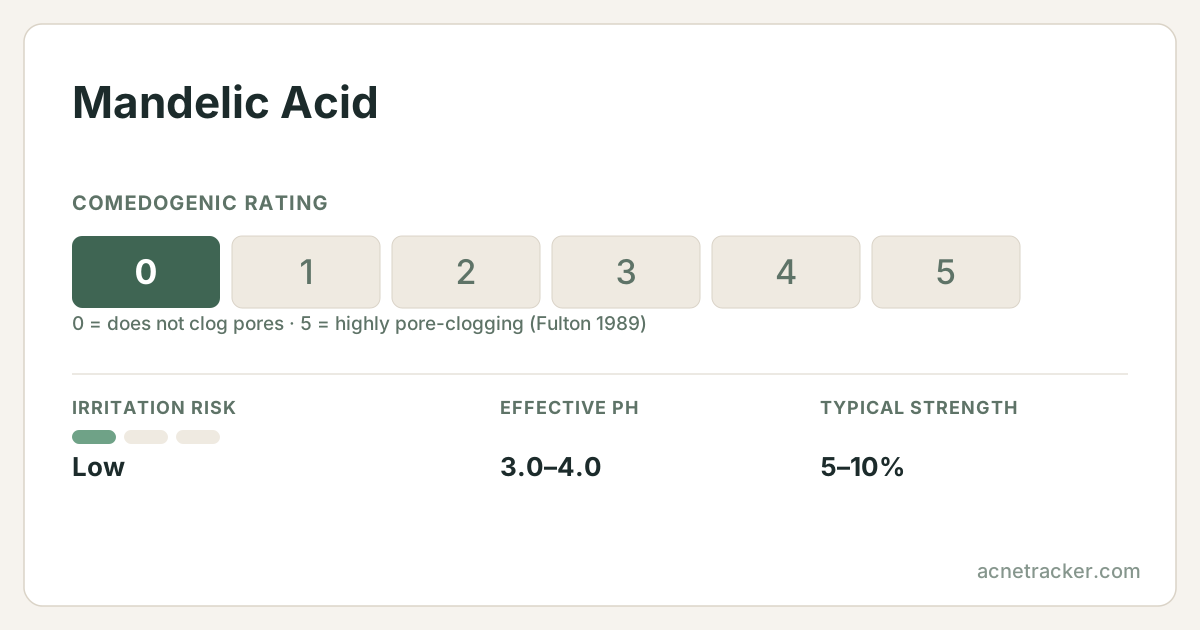
Mandelic acid is an alpha hydroxy acid (AHA) derived from bitter almonds, and it is widely considered the gentlest member of the family. What sets it apart is molecular size: its molecule is roughly twice as large as glycolic acid, so it penetrates the skin more slowly and evenly. That single property changes everything for reactive skin — you get meaningful exfoliation, clearer pores and a brighter tone with far less of the stinging, flushing and peeling that stronger AHAs cause. It has become a favourite for people with sensitive or acne-prone skin, and for deeper skin tones where harsher acids carry a higher risk of post-inflammatory marks. Typical leave-on products sit between 5% and 10%.
Quick facts
- Comedogenic rating
- our estimate — not measured
- Irritation risk
- Low
- Effective pH
- 3.0–4.0
- Typical strength
- 5–10%
- Pregnancy
- Ask your doctor
- Suits skin types
- oilycombinationsensitiveacne-pronemature
Where this number comes from
No one has published a comedogenic rating for this ingredient. Fulton's 1989 table tested about 250 raw materials and this was not among them, and we found no later study measuring it. The figure shown is our own reasoning from the ingredient's chemistry and how it is used — treat it as an estimate, not a measurement.
Fulton read his own scale as 0-1 not significant, 2-3 borderline, 4-5 positive. The assay is the rabbit ear at 10% dilution, which the paper itself calls extremely sensitive and not fully predictive of human skin. Ratings describe the raw ingredient; concentration and formulation change real-world behaviour.
Caution profile
The four published fields on this page, on one 0–5 scale. Further from the centre means more care is needed — never that the ingredient is worse.
Derived, not measured: pore-clogging is the published comedogenic rating; irritation maps low/moderate/high to 1/3/5; pregnancy maps safe/caution/avoid to 0/3/5; skin-type limits is how many of the seven skin types this entry does NOT list. Every input is printed in words in the quick-facts card above.
Show the numbers
| Metric | 0–5 | Published field |
|---|---|---|
| Pore-clogging | 0 | 0/5 |
| Irritation | 1 | Low |
| Skin-type limits | 1.4 | 5/7 |
| Pregnancy | 3 | Ask your doctor |
Working pH and typical strength
Where this ingredient is formulated to sit, and at what concentration.
Both bars come from the fields above: the pH window and the typical strength range published for this ingredient. The tinted column is healthy skin's surface pH (about 4.7–5.75).
Show the numbers
| Metric | 0–5 |
|---|---|
| Working pH | 3.0–4.0 |
| Typical strength | 5–10% |
What is it?
Mandelic acid is a water-soluble exfoliant that works by loosening the bonds holding dull, dead cells to the skin surface, encouraging them to shed so fresher skin is revealed underneath. Because the molecule is large and lipophilic compared with other AHAs, it diffuses gradually rather than flooding the skin all at once, which is the mechanical reason it is so well tolerated. Beyond plain exfoliation, it has a mild antibacterial reputation that makes it useful against breakouts, and it interferes with the pigment pathway that leaves brown marks behind after a blemish heals. Like all AHAs, it needs a low, acidic pH of roughly 3 to 4 to be effective, and it does make skin temporarily more sensitive to ultraviolet light.
Benefits
Gentle enough for sensitive skin
Its large molecular size slows penetration, so mandelic acid delivers real exfoliation with markedly less stinging, redness and flaking than glycolic or lactic acid at the same strength.
Fades post-acne dark marks
By speeding cell turnover and dampening excess pigment production, it gradually softens the brown and grey marks left after blemishes — a common reason it is chosen for deeper skin tones.
Helps clear breakouts
Mandelic acid unsticks the dead cells that block pores and carries a mild antibacterial reputation, making it a low-irritation option for mild inflammatory and comedonal acne.
Smooths and brightens texture
Regular use lifts away the built-up surface layer that makes skin look dull and feel rough, leaving a smoother, more even and more luminous complexion within a few weeks.
How to use
Start with a 5% leave-on product two evenings a week, applied to clean, dry skin, then follow with moisturizer. Build up to every other night as your skin adapts, and only move to 8–10% once lower strengths feel comfortable. Because it is an exfoliating acid, do not stack it in the same routine as retinol, other AHAs or salicylic acid — alternate nights instead to avoid over-exfoliation. Mandelic acid is a good daytime-free active: reserve it for evenings and always wear a broad-spectrum SPF 30 or higher the next morning, since fresh skin burns more easily. A light tingle on application is normal; a lasting burn is not.
Side effects
Mandelic acid is one of the best-tolerated exfoliants, but no acid is side-effect free. Expect a brief tingle when you apply it. Using it too often causes the classic signs of over-exfoliation: tightness, dryness, flaking and a barrier that starts to sting from products that never bothered you before. Reduce frequency at the first sign. Because it increases sun sensitivity, skipping sunscreen while using it can worsen the very dark marks you are trying to fade.
Who should avoid it
If your skin barrier is already compromised — raw, peeling or stinging from over-exfoliation — pause all acids until it recovers. During pregnancy, low-strength AHAs are generally viewed as low risk, but the sensible approach is caution and a quick word with your doctor. Anyone using prescription retinoids or on an active acne regimen should check before adding another exfoliant on top.
Pairs well with
Avoid combining with
Frequently asked questions
Is mandelic acid good for sensitive skin?
Yes — it is usually the first AHA recommended for sensitive or reactive skin. Its larger molecule penetrates slowly, so you get exfoliation with far less stinging and redness than glycolic acid.
Mandelic acid vs glycolic acid — what's the difference?
Glycolic acid has a small molecule that penetrates fast and strong, giving quicker results but more irritation. Mandelic acid is larger and slower, making it gentler and better suited to sensitive skin and deeper skin tones.
Can I use mandelic acid every day?
Most people do best starting at two nights a week and building to every other night. Daily use is only for resilient skin that tolerates it; watch for tightness or flaking and cut back if they appear.
Does mandelic acid help with dark spots?
It can. By accelerating cell turnover and reducing excess pigment production, it gradually fades post-acne marks and uneven tone, though results take several weeks of consistent use plus daily sunscreen.
Is mandelic acid safe during pregnancy?
Low-strength AHAs are generally regarded as low risk during pregnancy, but the cautious approach is to keep concentrations modest and confirm with your doctor or midwife before use.
Where this ingredient shows up here
Counted across this database, not the web — these are the pages on this site that reason about this ingredient.
Combination guides 23
+15 more on the site
Condition pages 19
- Acne on the Temples
- Blackheads Along the Hairline
- Blackheads on the Chin
- Blackheads on the Neck
- Closed Comedones on the Cheeks
- Closed Comedones on the Chin
+13 more on the site
Buying guides 16
- How to Choose a Body Wash for Shoulder Acne
- How to Choose a Chemical Exfoliant for Acne-Prone Skin
- How to Choose a Chemical Exfoliant for Blackheads
- How to Choose a Chemical Exfoliant for Body Acne
- How to Choose a Chemical Exfoliant for Combination Skin
- How to Choose a Chemical Exfoliant for Dark Skin Tones
+10 more on the site
Sources & further reading
Medical disclaimer
Find your personal acne triggers
Our free Acne Tracker lets you log breakouts, sleep, stress and diet, and shows you which factors correlate with your flare-ups.