How to Choose a Body Wash for Keratosis Pilaris
Keratosis pilaris — the rough, small bumps often called 'chicken skin' on the upper arms, thighs and cheeks — is a genetic tendency for keratin to plug the follicles. It is harmless, extremely common, and, importantly, chronic: it is managed, not cured, and it often eases with age. A body wash cannot fix it, both because it rinses off in seconds and because KP responds mainly to leave-on keratolytics and moisturisers. What a keratolytic wash can do is gently and consistently soften the plugs as part of a routine. This page sets out the ingredient profile worth looking for and the honest expectations to hold about smoothing, not clearing, KP.
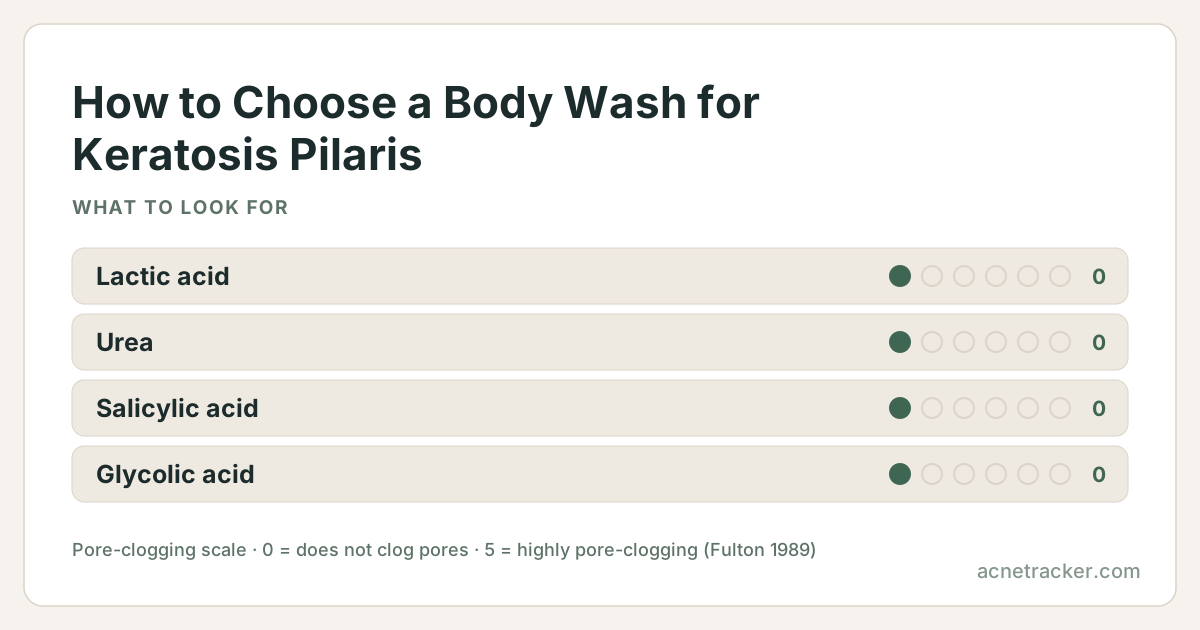
Ingredients to look for
| Ingredient | Why it matters |
|---|---|
| Lactic acid | An AHA that both exfoliates the keratin plugs and humectant-hydrates the dry skin KP sits on; one of the best-studied ingredients for smoothing the bumps. |
| Urea | Softens and dissolves built-up keratin while drawing in water; a keratolytic and humectant in one, well matched to the dry, rough KP surface. |
| Salicylic acid | A keratolytic BHA that helps unplug the follicle openings; useful in a wash alongside an AHA for the roughness. |
| Glycolic acid | A small AHA that exfoliates the surface layer; effective for texture, though it can be more irritating than lactic acid on already-dry limbs. |
| Glycerin | KP skin is dry underneath, so a humectant in the wash helps prevent the tightness that acids alone can cause. |
Ingredients to avoid
| Ingredient | Why it matters |
|---|---|
| Harsh physical scrubbing to 'buff off' the bumps | It irritates and reddens KP without removing the cause, and can trigger post-inflammatory marks; chemical keratolytics are gentler and more effective. |
| Hot water and long showers | They strip the already-dry skin KP sits on, leaving it rougher and itchier once out of the shower. |
| Stripping, high-pH bar soaps | They worsen the underlying dryness, and dry KP skin looks and feels rougher and more prominent. |
| Fragranced washes on inflamed, red KP | The redder, keratosis-pilaris-rubra variant is easily irritated, and fragrance adds nothing but risk on top of the acids. |
How to choose
Set expectations first: a wash smooths KP a little and supports a routine, but daily leave-on lactic-acid or urea lotion plus consistent moisturising does the real work, and even then KP is managed rather than cured. For the wash itself, look for a keratolytic — lactic acid or urea for the dual exfoliating-and-hydrating action, salicylic acid to help unplug follicles, sometimes glycolic acid for texture — in a gentle, non-stripping base with glycerin. Skip anything built around scrubbing beads or a rough mitt; friction is a common mistake with KP and makes red bumps redder. Keep water lukewarm and showers short. If KP is inflamed and red rather than skin-coloured, favour the gentlest keratolytic and a fragrance-free formula, and pair the wash with generous moisturiser to counter the dryness that makes the bumps stand out.
How to apply
Use the keratolytic wash a few times a week rather than aggressively daily, giving the acids a short contact time before rinsing in lukewarm water. The most important step comes after: moisturise the still-damp skin with a lactic-acid or urea lotion to keep softening the plugs and holding in water. Consistency over months, not intensity, is what visibly smooths KP; scrubbing for fast results backfires.
Frequently asked questions
Can a body wash cure keratosis pilaris?
No. Keratosis pilaris is a chronic, genetic tendency, so it is managed rather than cured, and it often improves with age. A keratolytic wash helps smooth the bumps as part of a routine, but daily leave-on lactic-acid or urea lotion and moisturising do most of the work.
Which ingredient is best in a body wash for KP?
Lactic acid and urea are the standouts because they both exfoliate the keratin plugs and hydrate the dry skin underneath. Salicylic acid helps unplug follicles, and glycerin offsets dryness. Look for these rather than scrubbing particles.
Should I scrub KP bumps in the shower to smooth them?
No. Physical scrubbing irritates KP, can redden it and may cause marks, without removing the underlying keratin plugs. Gentle chemical exfoliation with lactic acid, urea or salicylic acid is both kinder and more effective.
Why does my keratosis pilaris get worse in winter?
KP sits on dry skin, and cold, dry air and hot showers strip it further, so the bumps look and feel rougher and redder in winter. Lukewarm showers, a gentle keratolytic wash and consistent moisturising help most in the cold months.
Sources & further reading
There is no single study of this exact question. The guidance here is reasoned from the ingredient profiles below, each of which carries its own references:
- Lactic Acid3 refs
- Urea2 refs
- Salicylic Acid2 refs
- Glycolic Acid3 refs
- Glycerin3 refs
Show every reference behind this page (10)
- PubChem — Lactic acid compound summarycited by Lactic Acid
- DermNet — Alpha hydroxy acidscited by Lactic Acid, Glycolic Acid
- European Commission CosIng database — Lactic Acidcited by Lactic Acid, Glycolic Acid, Glycerin
- PubChem — Ureacited by Urea
- DermNet — Emollients and moisturiserscited by Urea
- Salicylic acid as a peeling agent: a comprehensive review (PubMed)cited by Salicylic Acid
- FDA OTC monograph — acne drug products (salicylic acid 0.5–2%)cited by Salicylic Acid
- PubChem — Glycolic acid compound summarycited by Glycolic Acid
- PubChem — Glycerol compound summarycited by Glycerin
- DermNet — Moisturiserscited by Glycerin
Medical disclaimer
Ingredients mentioned on this page
Find your personal acne triggers
Our free Acne Tracker lets you log breakouts, sleep, stress and diet, and shows you which factors correlate with your flare-ups.