Back Acne Scars and Dark Marks
Once back acne settles, it often leaves a reminder: flat brown or purple marks, or textured scars where deeper spots healed. It helps to separate the two honestly, because they respond very differently. Dark marks — post-inflammatory pigmentation and lingering redness — are not true scars and usually fade over months, and topical ingredients can speed that up. True scars, where the skin's texture is dented or raised, are permanent changes that skincare can soften only modestly; meaningful improvement there generally requires in-office procedures. Knowing which you have sets realistic expectations and points you toward treatment that can actually help.
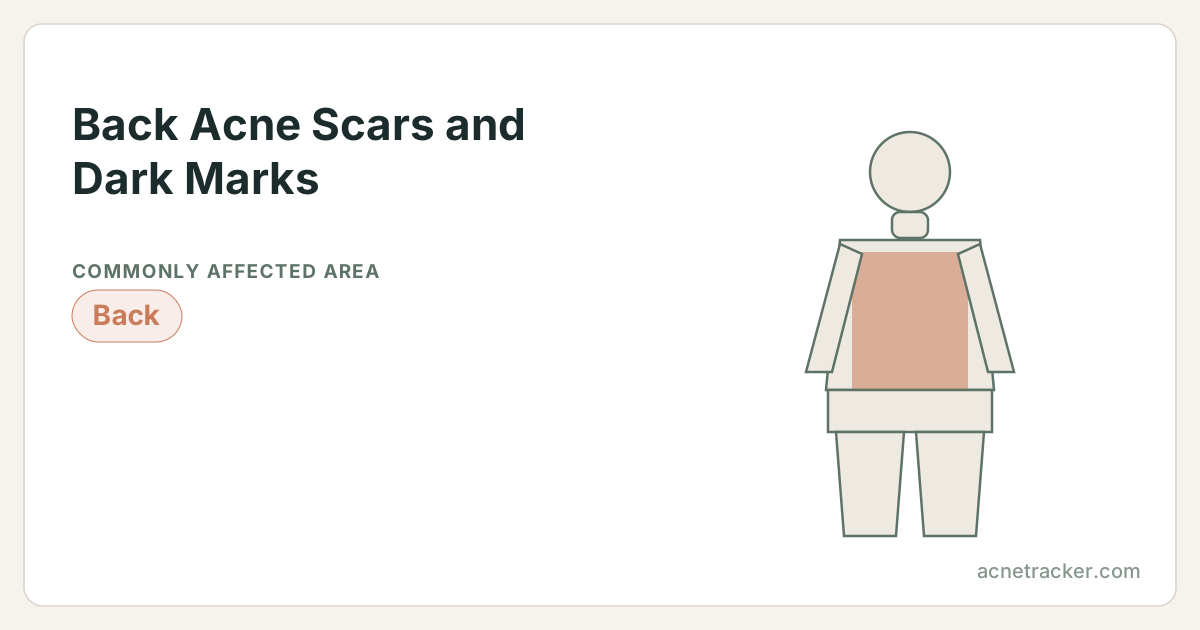
How to recognize it
Dark marks after back acne are flat and smooth to the touch — brown, grey or purple patches where spots used to be, most visible after inflammatory papules and cysts. True scars change the surface: shallow or deep depressions where tissue was lost, or firm raised and sometimes larger keloid scars, which are more common on the back and chest than the face. Run a finger over the area: if it is flat, it is a mark that will fade; if you can feel a dent or a raised ridge, it is a scar needing different treatment.
What causes it
Post-inflammatory pigmentation
Inflammation from a back spot can leave excess pigment behind as it heals, showing as a flat brown or grey mark. This is not a scar and gradually fades, though it lingers longer on the back and in deeper skin tones.
Post-inflammatory erythema
Lingering pink or purple flat marks are trapped redness from the healed spot's blood vessels. Like pigmentation, this is temporary discolouration rather than a change in the skin's texture.
Atrophic (depressed) scars
When deep inflammation destroys collagen, the healed skin sits lower than the surface, creating pitted or depressed scars. These are permanent texture changes that topicals cannot rebuild.
Raised and keloid scars
The back and shoulders are especially prone to raised hypertrophic and keloid scars, where healing overproduces collagen. These firm, raised scars often need medical treatment rather than skincare.
Ingredients with evidence
| Ingredient | Role |
|---|---|
| Azelaic acid | Helps fade post-inflammatory pigmentation and calm residual redness on the body; works on marks, not on texture. |
| Glycolic acid (AHA) | Exfoliates and speeds turnover so surface dark marks fade faster; a body lotion or spray suits the back. |
| Niacinamide | Helps even tone and reduce discolouration over time while supporting the barrier during exfoliation. |
| Adapalene | A retinoid that improves marks and mild texture with long-term use and helps prevent the new breakouts that would add more marks. |
| In-office procedures (doctor-led) | True scars often need professional treatment — resurfacing, microneedling, subcision or laser; assessed and performed by a dermatologist, not achievable with creams. |
Building the routine
First, keep new acne from adding fresh marks: continue a maintenance routine of a benzoyl-peroxide or salicylic-acid wash and, ideally, a retinoid. For flat dark marks, use azelaic acid and a glycolic-acid body product to fade discolouration over months, and apply SPF to any back skin exposed to sun, since UV deepens and prolongs pigmentation. Be realistic about true scars: topicals can soften mild texture a little but cannot rebuild lost collagen or flatten raised scars, so for those the effective options are in-office procedures a dermatologist provides. Consistency and patience matter — marks fade slowly, and no cream erases an established scar.
When to see a doctor
Frequently asked questions
Do back acne scars go away on their own?
Flat dark marks usually fade on their own over months, and topicals can speed that up. True textured scars — pitted or raised — are permanent and do not resolve by themselves; they need in-office procedures for meaningful improvement.
Can creams remove back acne scars?
Creams can fade dark marks and slightly soften very mild texture, but they cannot rebuild the lost collagen of a depressed scar or flatten a raised one. For genuine scars, dermatological procedures are what actually make a difference.
Why does my back scar more than my face?
The back and shoulders are prone to raised hypertrophic and keloid scarring because skin there heals with more collagen. Deep truncal acne also causes more tissue damage, so treating back acne early is the best way to limit scarring.
How do I fade dark marks on my back?
Use azelaic acid and a glycolic-acid body product consistently, protect the area from sun, and keep new acne under control so no fresh marks form. Flat marks fade over months; sun exposure is the main thing that prolongs them.
Sources & further reading
What this page cites about the condition itself:
There is no single study of this exact question. The guidance here is reasoned from the ingredient profiles below, each of which carries its own references:
- Azelaic Acid3 refs
- Glycolic Acid3 refs
- Niacinamide2 refs
- Adapalene3 refs
Show every reference behind this page (9)
- PubChem — Azelaic acid compound summarycited by Azelaic Acid
- DermNet — Azelaic acidcited by Azelaic Acid
- European Commission CosIng database — Azelaic Acidcited by Azelaic Acid, Glycolic Acid, Niacinamide
- PubChem — Glycolic acid compound summarycited by Glycolic Acid
- DermNet — Alpha hydroxy acidscited by Glycolic Acid
- Niacinamide: mechanisms of action and its topical use in dermatology (PubMed)cited by Niacinamide
- PubChem — Adapalene compound summarycited by Adapalene
- DermNet — Adapalenecited by Adapalene
- FDA — Drugs (over-the-counter acne products)cited by Adapalene
Medical disclaimer
Ingredients mentioned on this page
Find your personal acne triggers
Our free Acne Tracker lets you log breakouts, sleep, stress and diet, and shows you which factors correlate with your flare-ups.