Can You Mix Adapalene and Glycolic Acid?
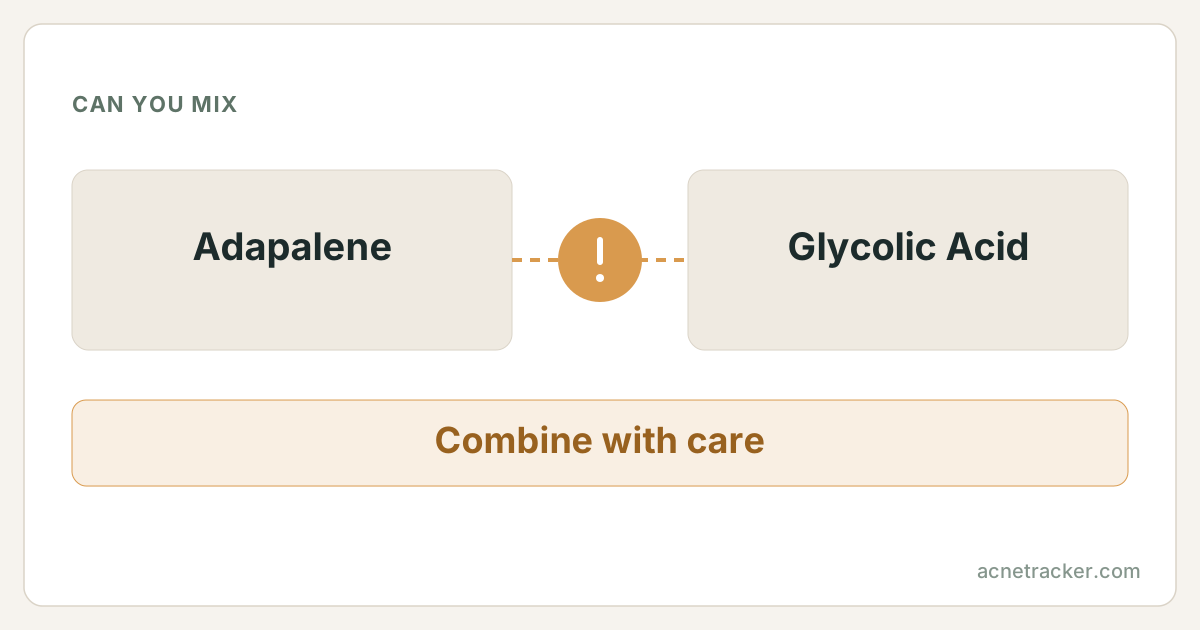
Use caution. Adapalene is a retinoid and glycolic acid is an AHA, and both drive faster skin renewal, so using them together often causes too much dryness, peeling and irritation, especially in the first weeks of adapalene. The safest approach is to keep them on separate nights rather than layering, and to let your skin fully adjust to adapalene before adding an acid.
How this pairing resolves
The two ingredients, their published numbers, and where they land together.
The numbers beside each ingredient are its published comedogenic rating and effective pH window, taken from its own profile page.
Show the numbers
| Ingredients | Metric | 0–5 |
|---|---|---|
| Adapalene | Comedogenic rating | 1/5 |
| Adapalene | Effective pH | 5.0–6.5 |
| Glycolic Acid | Comedogenic rating | 0/5 |
| Glycolic Acid | Effective pH | 3.0–4.0 |
Why
Adapalene is a third-generation retinoid available over the counter for acne. It normalises how skin cells shed inside the pore, which prevents the clogs that become spots, and it takes several weeks of consistent use to work, often with an initial purge and dryness. Glycolic acid is an AHA that exfoliates the surface. Both are effective for congestion and texture, but they act on renewal from different directions, and combining them multiplies the irritation each causes on its own: redness, flaking, tightness and stinging. Unlike older retinoids, adapalene is relatively pH stable and photostable, so the classic worry about an acid deactivating a retinoid is less of an issue here; the real limiting factor is cumulative irritation and a compromised barrier. Glycolic also raises UV sensitivity, adding to adapalene's own sun caution. Because adapalene needs consistency to work and irritation tempts people to quit, the priority is protecting tolerance, which usually means not stacking a strong acid on top.
How to combine them
Give adapalene priority and keep glycolic light. First, use adapalene alone every night (or every other night if drying) for at least eight to twelve weeks until your skin is fully adjusted. Only then consider adding glycolic, and use it on separate nights rather than layered on top of adapalene, for example glycolic on one or two nights when you skip the retinoid. Apply to dry skin, always follow with a barrier moisturiser, and use broad-spectrum SPF 30+ every morning, since both increase sun sensitivity. Adapalene is sold over the counter for acne but is not for use in pregnancy; if your acne is severe or scarring, a dermatologist can advise on stronger or combined prescription options. Do not chase speed by layering the two, as irritation sets progress back.
Example routine
| When | Steps |
|---|---|
| Evening (most nights) | Cleanser → Adapalene (pea-size) → Moisturiser |
| Evening (1 to 2 nights) | Cleanser → Glycolic acid → Moisturiser (skip adapalene) |
| Every morning | Cleanser → Moisturiser → SPF 30+ |
| First 8 to 12 weeks | Adapalene alone until fully adjusted, then add acid |
Warning signs
Frequently asked questions
Can I layer glycolic acid over adapalene at night?
It is best not to. Stacking a retinoid and an AHA in one layer usually causes too much irritation. Use them on separate nights so your barrier can handle each without overload.
Does glycolic acid stop adapalene from working?
Adapalene is relatively pH and light stable, so an acid does not deactivate it the way it might older retinoids. The real limit is combined irritation, not chemical breakdown.
Should I use adapalene or glycolic first?
Establish adapalene alone for eight to twelve weeks until your skin adjusts, then add glycolic on separate nights. Introducing both at once almost always leads to irritation and dropout.
Is this combination safe in pregnancy?
No. Adapalene and other retinoids are not recommended during pregnancy. If you are pregnant or trying to conceive, stop adapalene and speak to your doctor about safer acne options.
Sources & further reading
There is no single study of this exact question. The guidance here is reasoned from the ingredient profiles below, each of which carries its own references:
- Adapalene3 refs
- Glycolic Acid3 refs
Show every reference behind this page (6)
- PubChem — Adapalene compound summarycited by Adapalene
- DermNet — Adapalenecited by Adapalene
- FDA — Drugs (over-the-counter acne products)cited by Adapalene
- PubChem — Glycolic acid compound summarycited by Glycolic Acid
- DermNet — Alpha hydroxy acidscited by Glycolic Acid
- European Commission CosIng database — Glycolic Acidcited by Glycolic Acid
Medical disclaimer
Ingredients mentioned on this page
Find your personal acne triggers
Our free Acne Tracker lets you log breakouts, sleep, stress and diet, and shows you which factors correlate with your flare-ups.