Benzoyl Peroxide: Comedogenic Rating & Ingredient Analysis
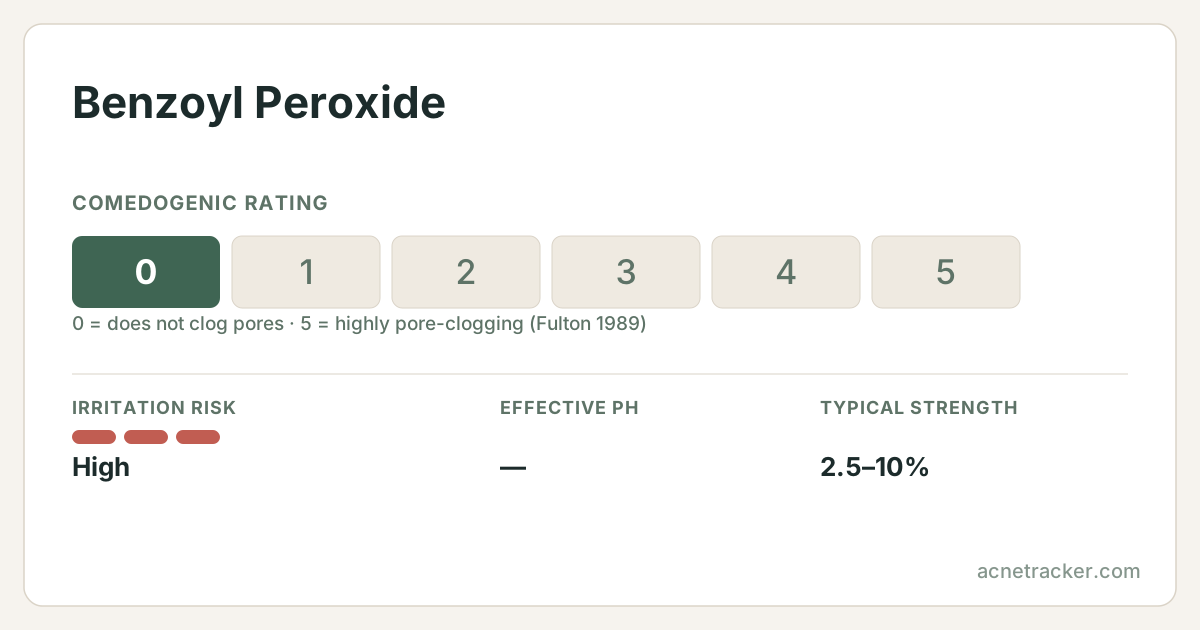
Benzoyl peroxide is one of the oldest and most reliable over-the-counter treatments for inflammatory acne — the red, angry pimples rather than simple blackheads. It works primarily by reducing the bacteria that contribute to acne, and because it acts through oxygen rather than antibiotics, those bacteria do not develop resistance to it. That reliability, plus decades of use, keeps it a first-line option in many acne routines, often paired with other treatments. The trade-off is tolerability: benzoyl peroxide is drying and can irritate, it bleaches fabric on contact, and it needs to be introduced carefully, especially on sensitive skin.
Quick facts
- Comedogenic rating
- our estimate — not measured
- Irritation risk
- High
- Effective pH
- —
- Typical strength
- 2.5–10%
- Pregnancy
- Ask your doctor
- Suits skin types
- oilycombinationacne-prone
Where this number comes from
No one has published a comedogenic rating for this ingredient. Fulton's 1989 table tested about 250 raw materials and this was not among them, and we found no later study measuring it. The figure shown is our own reasoning from the ingredient's chemistry and how it is used — treat it as an estimate, not a measurement.
Fulton read his own scale as 0-1 not significant, 2-3 borderline, 4-5 positive. The assay is the rabbit ear at 10% dilution, which the paper itself calls extremely sensitive and not fully predictive of human skin. Ratings describe the raw ingredient; concentration and formulation change real-world behaviour.
Caution profile
The four published fields on this page, on one 0–5 scale. Further from the centre means more care is needed — never that the ingredient is worse.
Derived, not measured: pore-clogging is the published comedogenic rating; irritation maps low/moderate/high to 1/3/5; pregnancy maps safe/caution/avoid to 0/3/5; skin-type limits is how many of the seven skin types this entry does NOT list. Every input is printed in words in the quick-facts card above.
Show the numbers
| Metric | 0–5 | Published field |
|---|---|---|
| Pore-clogging | 0 | 0/5 |
| Irritation | 5 | High |
| Skin-type limits | 2.9 | 3/7 |
| Pregnancy | 3 | Ask your doctor |
Working pH and typical strength
Where this ingredient is formulated to sit, and at what concentration.
Both bars come from the fields above: the pH window and the typical strength range published for this ingredient. The tinted column is healthy skin's surface pH (about 4.7–5.75).
Show the numbers
| Metric | 0–5 |
|---|---|
| Typical strength | 2.5–10% |
What is it?
Benzoyl peroxide is an organic peroxide that breaks down on the skin to release oxygen. The bacteria implicated in acne are sensitive to that oxygen-rich environment, so their numbers drop — the core of how it reduces inflamed breakouts. It also has a mild effect on keeping pores clear and reducing surface oil. Its great practical advantage over topical antibiotics is that bacteria cannot build resistance to it, which is why dermatologists often combine it with antibiotic or retinoid treatments to protect their effectiveness. It is available over the counter, typically from 2.5% to 10%, in washes, gels, leave-on lotions and spot treatments. Studies have found that lower strengths such as 2.5% can be nearly as effective as higher ones while causing less irritation.
Benefits
Reduces acne-causing bacteria
By releasing oxygen into the pore, benzoyl peroxide lowers the population of the bacteria involved in inflammatory acne, directly targeting the red, swollen pimples that other exfoliants do not clear as well.
No bacterial resistance
Because it works through oxidation rather than as an antibiotic, bacteria do not become resistant to it, so it stays effective over time and is often paired with antibiotics to protect them.
Helps keep pores clear
Alongside its antibacterial action it has a mild effect on unclogging pores and reducing surface oil, addressing both the bacteria and some of the buildup behind breakouts.
Effective at low strengths
Research suggests that 2.5% can be nearly as effective as higher concentrations for many people while causing noticeably less dryness and irritation, making a gentle start worthwhile.
How to use
Start low and slow: a 2.5% product, once daily or even every other day, is the sensible entry point rather than jumping to 10%. A wash rinsed off after a short contact time is gentler than a leave-on gel and a good way to begin. Apply to clean, dry skin and always follow with a moisturizer, since dryness is the main obstacle to sticking with it. Do not layer it in the same routine as retinol or vitamin C, which it can oxidize and inactivate — use one in the morning and the other at night, or on alternate days. Be aware that benzoyl peroxide bleaches fabric, so keep it away from coloured towels, pillowcases and clothing, and let it dry fully before dressing.
Side effects
Dryness, redness, peeling and a stinging or burning sensation are the most common effects, especially in the first weeks and at higher strengths — starting low and moisturizing well keeps them manageable. It bleaches hair and fabric on contact, a practical nuisance to plan around. Less commonly, some people react more strongly with significant redness, swelling or itching; a genuine allergic contact reaction is possible and, if it occurs, means you should stop. Overdoing benzoyl peroxide damages the barrier and can make skin worse rather than better, so more is not better here.
Who should avoid it
People with very dry, sensitive skin, eczema or rosacea often find benzoyl peroxide too harsh and may do better with gentler options like azelaic acid. Anyone who has had a strong reaction to it before should avoid it. During pregnancy, topical benzoyl peroxide is generally considered low risk because very little is absorbed, but you should discuss it with your doctor before use and consider pregnancy-established alternatives. If your barrier is already compromised, repair it before introducing such a drying active.
Pairs well with
Frequently asked questions
Should I start with 2.5% or 10% benzoyl peroxide?
Starting at 2.5% is usually best. Research suggests it can be nearly as effective as 5% or 10% for many people while causing much less dryness and irritation, so there is little reason to begin with the strongest product.
Can I use benzoyl peroxide with retinol or vitamin C?
Not at the same time in the same routine, because benzoyl peroxide can oxidize and inactivate them. Use them at different times of day or on alternate days to keep both effective.
Why does benzoyl peroxide bleach towels and clothing?
It is a strong oxidizer, which lifts colour from fabric and hair on contact. Use white towels and pillowcases, let it dry fully before dressing, and keep it off coloured clothing.
Is benzoyl peroxide safe during pregnancy?
Topical benzoyl peroxide is generally considered low risk in pregnancy because very little is absorbed through the skin, but you should confirm with your doctor before using it and consider well-established alternatives.
Why is benzoyl peroxide so drying?
It works by releasing oxygen and reducing surface oil and bacteria, which also strips moisture from the skin. Starting at a low strength, using a wash-off format and always following with moisturizer keeps the dryness manageable.
Where this ingredient shows up here
Counted across this database, not the web — these are the pages on this site that reason about this ingredient.
Combination guides 18
+10 more on the site
Sources & further reading
Medical disclaimer
Find your personal acne triggers
Our free Acne Tracker lets you log breakouts, sleep, stress and diet, and shows you which factors correlate with your flare-ups.