How to Choose a Body Wash for Body Acne
Body acne on the back, chest and shoulders is common, but it is not always the same condition as facial acne, and a body wash plays a smaller role than most people expect. A wash sits on the skin for seconds before it rinses away, so it works as maintenance and prevention rather than as a treatment — the heavy lifting is done by leave-on products. This page describes the ingredient profile that makes a body wash genuinely useful for congestion-prone body skin, which claims are meaningful, and where a wash reaches its honest limits, so you can judge any bottle on its formula rather than its front label.
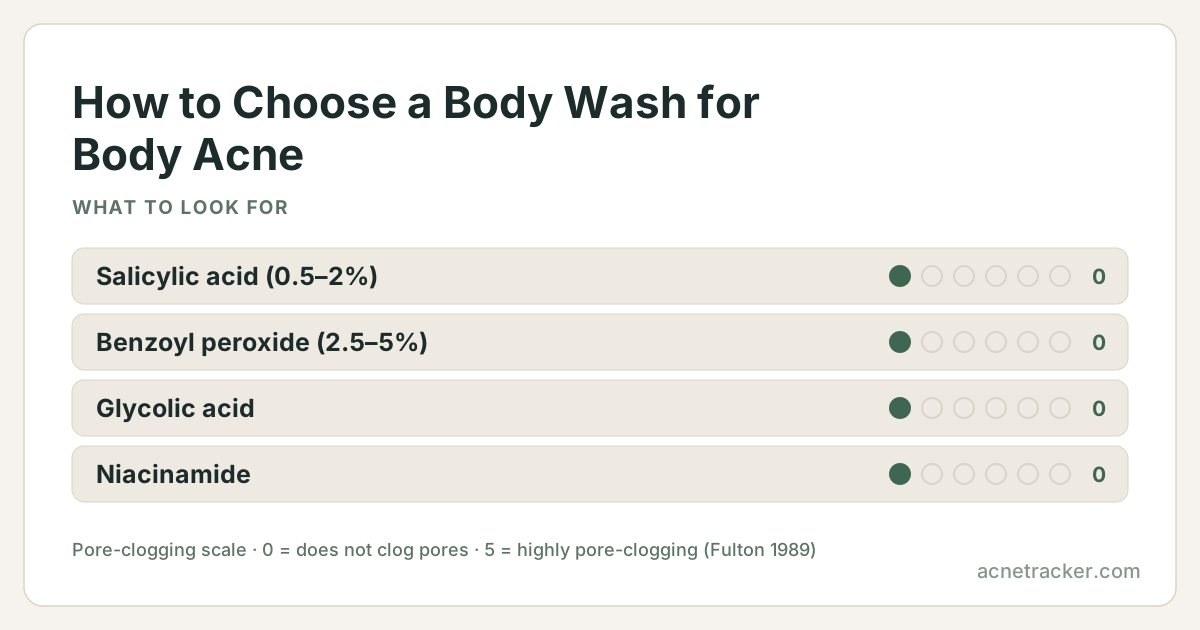
Ingredients to look for
| Ingredient | Why it matters |
|---|---|
| Salicylic acid (0.5–2%) | Oil-soluble, so even in the brief contact time of a shower it begins loosening the keratin and sebum plugs inside body follicles. The most useful single active in a wash for congestion. |
| Benzoyl peroxide (2.5–5%) | Reduces acne-causing bacteria; in a wash it needs a genuine one to two minutes of contact to matter, and it bleaches coloured towels and fabric, so rinse well and use white linens. |
| Glycolic acid | An alpha-hydroxy acid that helps shed dead surface cells across large body areas; useful where congestion sits alongside rough texture. |
| Niacinamide | A bonus rather than a treatment given the short contact time, but it points to a formula built to calm rather than strip. |
| Glycerin | Keeps a foaming body wash from over-drying, which matters because tight, stripped body skin flakes and can worsen congestion. |
Ingredients to avoid
| Ingredient | Why it matters |
|---|---|
| Heavy fragrance and coloured dyes | Common irritants on the larger surface area of the body, especially the back where sweat and friction already stress the skin. |
| Coconut-oil-rich or very greasy bar formulas | Can leave an occlusive film on body skin that lingers in follicles between showers. |
| Harsh physical scrubs and rough loofahs | Abrading inflamed spots spreads bacteria and can turn simple congestion into scarring; let the actives, not friction, do the work. |
| Very hot, long showers with any wash | Hot water and prolonged soaping strip barrier lipids and leave body skin dry and reactive. |
How to choose
Start by being honest about what a wash can do: because it rinses off in seconds, treat it as the maintenance layer around a leave-on routine, not the routine itself. If your body congestion is inflamed and pus-topped, a benzoyl-peroxide wash used with a real one-to-two-minute contact time is the evidence-backed choice — lather it on, wash something else while it sits, then rinse. If your skin is more clogged than inflamed, a salicylic-acid wash suits the oil-soluble job better. Match strength to tolerance: start a few times a week and build up, because both actives can dry and irritate body skin that is drier than the face. Look for a gentle surfactant base, glycerin to offset the actives, and a fragrance-free label. Ignore 'purifying' and 'detox' — neither has a regulated meaning — and read the actives list instead.
How to apply
Use once daily to start, ideally in an evening shower, and always after heavy sweating. Lather over the affected areas and, if the wash contains benzoyl peroxide or an acid, leave it on for one to two minutes while you wash your hair, then rinse thoroughly. Pat — do not rub — dry with a clean towel, and swap in fresh towels often. If skin gets tight or flaky, drop to every other day and apply a light, non-greasy body lotion afterwards.
Frequently asked questions
Can a body wash clear body acne on its own?
Rarely. Because it rinses away in seconds, a body wash is prevention and maintenance; clearing established body acne usually needs a leave-on treatment such as an adapalene or benzoyl-peroxide lotion. Think of the wash as support for that, not a replacement.
How long should I leave a benzoyl-peroxide body wash on?
Around one to two minutes. Benzoyl peroxide needs contact time to reach the bacteria in the follicle, so lather it on early in your shower, leave it while you do something else, then rinse. A three-second wash-and-rinse does very little.
Does a benzoyl-peroxide body wash really bleach towels?
Yes. Benzoyl peroxide is an oxidiser that lifts colour from fabric, so it can bleach coloured towels, sheets and clothing it touches while damp. Use white towels and bedding, and rinse thoroughly before dressing.
Should I scrub body acne with a loofah in the shower?
No. Scrubbing inflamed spots with a loofah or gritty exfoliant spreads bacteria and can cause marks and scarring. Let a salicylic-acid or benzoyl-peroxide wash do the chemical work and skip the mechanical friction.
Why do I break out on my body but not my face?
Body skin has different, often larger follicles and faces friction from clothing, backpacks and sweat that the face does not. Some body 'acne' is actually folliculitis or a fungal-driven condition, which is why a treatment that works on your face may not work on your back.
Sources & further reading
There is no single study of this exact question. The guidance here is reasoned from the ingredient profiles below, each of which carries its own references:
- Salicylic Acid2 refs
- Benzoyl Peroxide3 refs
- Glycolic Acid3 refs
- Niacinamide2 refs
- Glycerin3 refs
Show every reference behind this page (10)
- Salicylic acid as a peeling agent: a comprehensive review (PubMed)cited by Salicylic Acid
- FDA OTC monograph — acne drug products (salicylic acid 0.5–2%)cited by Salicylic Acid, Benzoyl Peroxide
- PubChem — Benzoyl peroxide compound summarycited by Benzoyl Peroxide
- DermNet — Benzoyl peroxidecited by Benzoyl Peroxide
- PubChem — Glycolic acid compound summarycited by Glycolic Acid
- DermNet — Alpha hydroxy acidscited by Glycolic Acid
- European Commission CosIng database — Glycolic Acidcited by Glycolic Acid, Niacinamide, Glycerin
- Niacinamide: mechanisms of action and its topical use in dermatology (PubMed)cited by Niacinamide
- PubChem — Glycerol compound summarycited by Glycerin
- DermNet — Moisturiserscited by Glycerin
Medical disclaimer
Ingredients mentioned on this page
Find your personal acne triggers
Our free Acne Tracker lets you log breakouts, sleep, stress and diet, and shows you which factors correlate with your flare-ups.