Adapalene: Comedogenic Rating & Ingredient Analysis
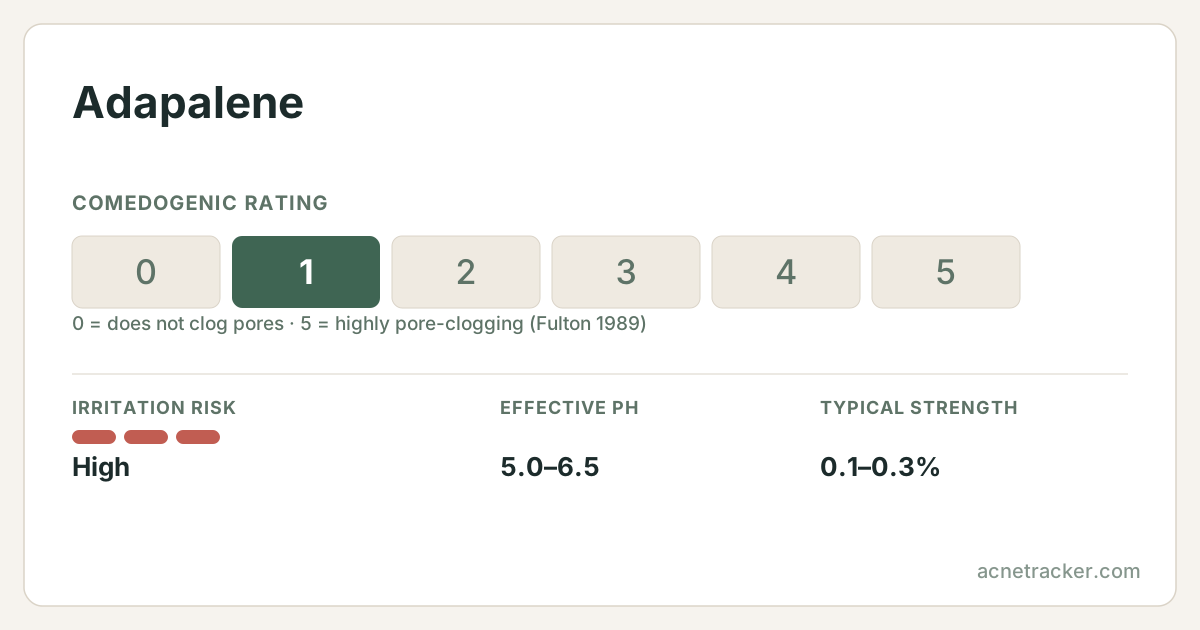
Adapalene is a topical retinoid that has become one of the most widely used acne ingredients since a 0.1% version became available over the counter in several markets, with higher strengths remaining prescription-only. Like other retinoids it is a vitamin A derivative, but it was engineered to be more selective and more stable than older molecules, which gives it a somewhat gentler tolerance profile than tretinoin while still working on the underlying causes of acne. It targets both the clogged pores that start breakouts and the inflammation that turns them red and painful. As a retinoid, however, it carries the same important caution as retinol: it must not be used during pregnancy.
Quick facts
- Comedogenic rating
- our estimate — not measured
- Irritation risk
- High
- Effective pH
- 5.0–6.5
- Typical strength
- 0.1–0.3%
- Pregnancy
- Avoid
- Suits skin types
- oilycombinationnormalacne-prone
Where this number comes from
No one has published a comedogenic rating for this ingredient. Fulton's 1989 table tested about 250 raw materials and this was not among them, and we found no later study measuring it. The figure shown is our own reasoning from the ingredient's chemistry and how it is used — treat it as an estimate, not a measurement.
Fulton read his own scale as 0-1 not significant, 2-3 borderline, 4-5 positive. The assay is the rabbit ear at 10% dilution, which the paper itself calls extremely sensitive and not fully predictive of human skin. Ratings describe the raw ingredient; concentration and formulation change real-world behaviour.
Caution profile
The four published fields on this page, on one 0–5 scale. Further from the centre means more care is needed — never that the ingredient is worse.
Derived, not measured: pore-clogging is the published comedogenic rating; irritation maps low/moderate/high to 1/3/5; pregnancy maps safe/caution/avoid to 0/3/5; skin-type limits is how many of the seven skin types this entry does NOT list. Every input is printed in words in the quick-facts card above.
Show the numbers
| Metric | 0–5 | Published field |
|---|---|---|
| Pore-clogging | 1 | 1/5 |
| Irritation | 5 | High |
| Skin-type limits | 2.1 | 4/7 |
| Pregnancy | 5 | Avoid |
Working pH and typical strength
Where this ingredient is formulated to sit, and at what concentration.
Both bars come from the fields above: the pH window and the typical strength range published for this ingredient. The tinted column is healthy skin's surface pH (about 4.7–5.75).
Show the numbers
| Metric | 0–5 |
|---|---|
| Working pH | 5.0–6.5 |
| Typical strength | 0.1–0.3% |
What is it?
Adapalene is described chemically as a third-generation retinoid — a naphthoic acid derivative that binds selectively to specific retinoic acid receptors in the skin. That selectivity is the point: it normalizes the way cells lining the pore mature and shed, which prevents the microcomedones that every blackhead and pimple grows from, while producing less of the broad irritation associated with earlier retinoids. Unlike cosmetic retinol, adapalene does not need to be converted by skin enzymes into an active form, so it acts directly. It is also more photostable than retinol and comparatively resistant to being deactivated when layered with benzoyl peroxide, which is why the two are sometimes formulated together in acne products under professional guidance.
Benefits
Unclogs pores at the source
Adapalene normalizes how skin cells shed inside the follicle, dismantling the microcomedones that precede blackheads, whiteheads and inflamed pimples, so it works preventively rather than just on spots already visible.
Calms inflammatory acne
Beyond its comedolytic action, adapalene has a documented anti-inflammatory effect that helps reduce the redness and swelling of papules and pustules over a course of consistent use.
Smooths tone and texture over time
By steadily increasing cell turnover it can soften rough texture and help fade the dark marks left behind after blemishes heal, though this develops gradually over months rather than days.
More stable than older retinoids
Its engineered structure makes it resistant to light and oxidation and comparatively gentle for a retinoid, which is part of why a low-strength version is available without prescription in many regions.
How to use
Adapalene is applied at night as directed on the product, on clean dry skin, using only a thin pea-sized amount for the whole face — more does not work faster and only increases irritation. Introduce it slowly, a few nights a week, and build up as your skin adjusts. Buffering it with a plain moisturizer before or after application, and pairing it with barrier-supporting ingredients like niacinamide, ceramides or hyaluronic acid, makes the adjustment easier. Daily broad-spectrum sunscreen is essential because retinoids leave fresh skin more sun-sensitive. Follow the directions on your specific product or your clinician's advice; this is general information, not a dosing regimen.
Side effects
As a retinoid, adapalene commonly causes an adjustment phase of dryness, redness, peeling, tightness and stinging, usually most pronounced in the first few weeks and easing as the skin acclimatizes. Some people experience an initial flare of breakouts as existing clogs surface. Overapplication or using it too often worsens irritation and can damage the barrier. It also increases sun sensitivity. If irritation is severe or persistent, reducing frequency, buffering with moisturizer, or pausing to let the skin recover are the usual approaches; persistent problems warrant a clinician's input.
Who should avoid it
Do not use adapalene during pregnancy or while breastfeeding — it is a retinoid, and topical retinoids are avoided in pregnancy as a precaution. It is not suited to skin with an actively damaged barrier, eczema flares or open irritation until those settle. Anyone already using a prescription acne treatment should not add another retinoid without professional advice. Azelaic acid and niacinamide are the usual pregnancy-safe alternatives for acne.
Pairs well with
Avoid combining with
Frequently asked questions
Is adapalene a retinoid?
Yes. Adapalene is a third-generation topical retinoid, a vitamin A derivative. It works on the same pathways as retinol and tretinoin but was designed to be more selective and more stable.
Can I use adapalene while pregnant or breastfeeding?
No. As a retinoid, adapalene is avoided during pregnancy and breastfeeding as a precaution. Pregnancy-safe alternatives for acne include azelaic acid and niacinamide. Discuss options with your doctor.
Can I use adapalene and benzoyl peroxide together?
Adapalene is unusually stable with benzoyl peroxide, and some products combine them, but layering two strong actives at the same time can be very drying. Many people use one in the morning and the other at night, ideally on a clinician's advice.
How long does adapalene take to work?
Retinoids generally act gradually. Many users see a possible worsening before improvement and meaningful change over roughly 8 to 12 weeks of consistent nightly use, so patience and gentleness matter more than speed.
Can I use adapalene with exfoliating acids?
Stacking adapalene with glycolic or salicylic acid in the same routine multiplies irritation because both increase cell turnover. It is gentler to alternate nights or separate them into different times of day once your skin is well adjusted.
Where this ingredient shows up here
Counted across this database, not the web — these are the pages on this site that reason about this ingredient.
Combination guides 10
- Bakuchiol
- Benzoyl Peroxide
- Hyaluronic Acid
- Azelaic Acid
- Glycolic Acid
- Lactic Acid
- Mandelic Acid
- Niacinamide
+2 more on the site
Sources & further reading
Medical disclaimer
Find your personal acne triggers
Our free Acne Tracker lets you log breakouts, sleep, stress and diet, and shows you which factors correlate with your flare-ups.