How to Choose a Spot Treatment for Cystic Acne
Cystic acne sits deep, well below the surface a topical can reach, so the honest starting point is that no spot treatment dissolves a cyst overnight. A deep, tender bump inflamed for days is driven by processes underneath the skin, and dabbing a strong active on top mostly irritates the surface without touching the core. That does not make treatment pointless — the right ingredient can calm the surrounding inflammation and shorten a flare — but expectations matter. This guide describes which actives are worth using on a deep lesion, which ones do more harm than good, and the point at which a dermatologist, not a drugstore tube, is the sensible next step.
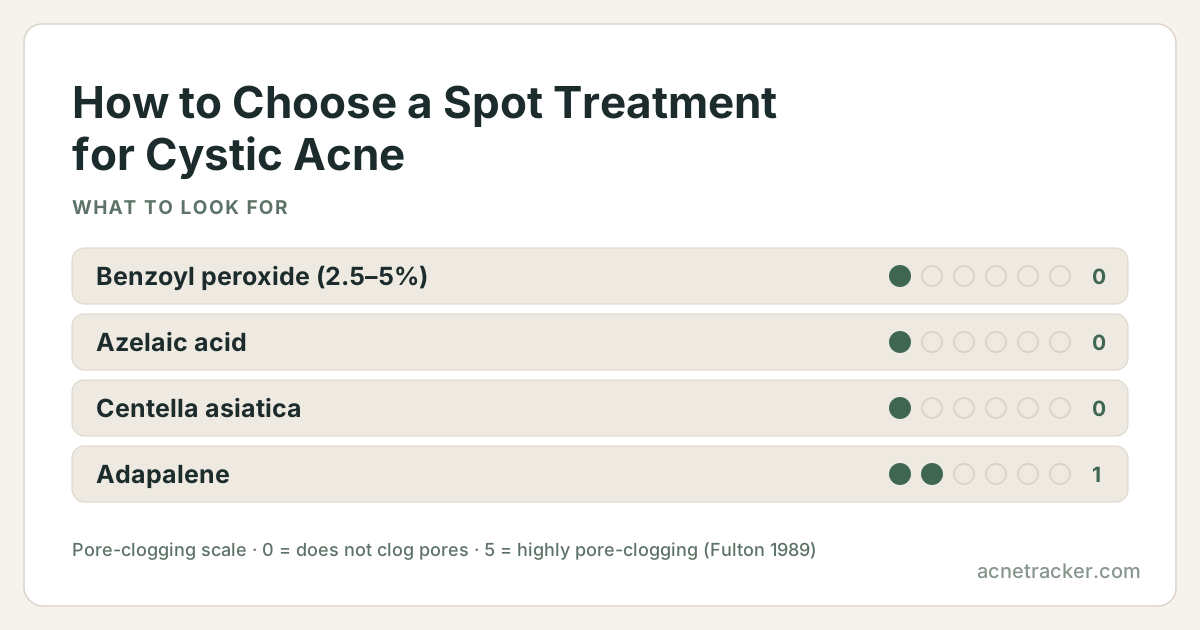
Ingredients to look for
| Ingredient | Why it matters |
|---|---|
| Benzoyl peroxide (2.5–5%) | Reduces the bacteria and inflammation feeding a deep lesion; a lower strength calms without the excess dryness that makes a cyst redder. |
| Azelaic acid | Anti-inflammatory and well tolerated on angry skin, and it helps fade the mark a healed cyst tends to leave behind. |
| Centella asiatica | Soothes the surrounding redness and supports recovery without provoking a lesion that is already inflamed. |
| Adapalene | A retinoid used across the whole area rather than as a single dab, it keeps pores clear over time so fewer cysts form in the first place. |
| Hydrocolloid patch (only once a head has formed) | Useless on a closed deep bump, but if a cyst finally surfaces and opens, a patch absorbs fluid and protects it from picking. |
Ingredients to avoid
| Ingredient | Why it matters |
|---|---|
| Toothpaste, alcohol and other DIY 'drying' tricks | They burn the surface, damage the barrier and inflame the skin around a cyst, making the visible redness worse rather than better. |
| Squeezing or trying to extract a deep lesion | There is nothing to extract from a closed cyst; pressure ruptures it deeper, spreads inflammation and greatly raises the scarring risk. |
| Stacking several strong acids on one spot | Piling acids and peroxide on tender skin causes an irritant burn that outlasts the cyst and can leave a lasting mark. |
| High-strength benzoyl peroxide left on for hours | On deep inflamed skin, 10% strengths mostly add dryness and stinging without reaching the depth where the cyst actually sits. |
How to choose
Choose based on an honest read of what you are dealing with. If the bump is a closed, deep, painful lump with no head, accept that topicals play a supporting role: a lower-strength benzoyl peroxide or azelaic acid to calm inflammation, a soothing agent like centella around it, and time. A warm compress held gently against the area for ten minutes a few times a day encourages a deep lesion to come to a head naturally, which is far safer than forcing it. Think of adapalene as prevention used across the whole zone rather than a rescue for one spot. The single most useful decision, though, is recognising when to stop reaching for tubes: recurrent cysts, or a single one that is large and lingering, are best assessed by a dermatologist, who can consider options such as a cortisone injection that flattens a stubborn cyst quickly and reduces the scarring you cannot fix later.
How to apply
For a deep lesion, less is more. Cleanse gently, pat dry, and if you use benzoyl peroxide or azelaic acid apply a thin film over the bump and just around it, not a thick blob. Follow with a plain moisturiser so the surrounding skin stays calm. A warm — not hot — compress for around ten minutes, two or three times a day, is often more helpful than any product, easing pressure and coaxing a head to form. Do not press, squeeze or pick. If a cyst opens on its own, switch to a hydrocolloid patch to keep it clean while it heals.
Frequently asked questions
Can a spot treatment get rid of a cyst overnight?
No. A cyst forms deep in the skin, below where a topical acts, so nothing dabbed on top clears it in a night. A gentle active can reduce surface redness, but a deep lesion simply needs time — and a dermatologist if it is large or recurrent.
Why does drying out a cystic pimple make it worse?
Cysts are not on the surface, so 'drying' tricks like toothpaste or alcohol never reach them. They only burn and inflame the skin on top, adding redness and barrier damage while the cyst underneath is untouched.
What is a cortisone injection for cystic acne?
It is an in-clinic treatment where a dermatologist injects a diluted anti-inflammatory into a stubborn cyst to settle it quickly and lower the scarring risk. It is not something to attempt at home, and dosing is decided by the clinician.
Should I use benzoyl peroxide on a deep cyst?
A lower strength such as 2.5–5% can calm the inflammation around it, but do not expect it to clear the cyst, and skip the harsh 10% products, which mostly add dryness. If cysts keep coming, see a dermatologist rather than escalating strength.
When should I see a dermatologist for cystic acne?
Whenever cysts recur, scar, or one is large and painful for more than a few days. Cystic acne responds best to prescription treatment, and early care meaningfully reduces the permanent scarring that topicals cannot reverse.
Sources & further reading
There is no single study of this exact question. The guidance here is reasoned from the ingredient profiles below, each of which carries its own references:
- Benzoyl Peroxide3 refs
- Azelaic Acid3 refs
- Centella Asiatica2 refs
- Adapalene3 refs
Show every reference behind this page (9)
- PubChem — Benzoyl peroxide compound summarycited by Benzoyl Peroxide
- DermNet — Benzoyl peroxidecited by Benzoyl Peroxide
- FDA — Drugs (OTC acne products)cited by Benzoyl Peroxide, Adapalene
- PubChem — Azelaic acid compound summarycited by Azelaic Acid
- DermNet — Azelaic acidcited by Azelaic Acid
- European Commission CosIng database — Azelaic Acidcited by Azelaic Acid, Centella Asiatica
- Bylka W et al. Centella asiatica in dermatology: an overview. Phytother Res 2014 Aug (PubMed)cited by Centella Asiatica
- PubChem — Adapalene compound summarycited by Adapalene
- DermNet — Adapalenecited by Adapalene
Medical disclaimer
Ingredients mentioned on this page
Find your personal acne triggers
Our free Acne Tracker lets you log breakouts, sleep, stress and diet, and shows you which factors correlate with your flare-ups.