Can You Mix Azelaic Acid and Adapalene?
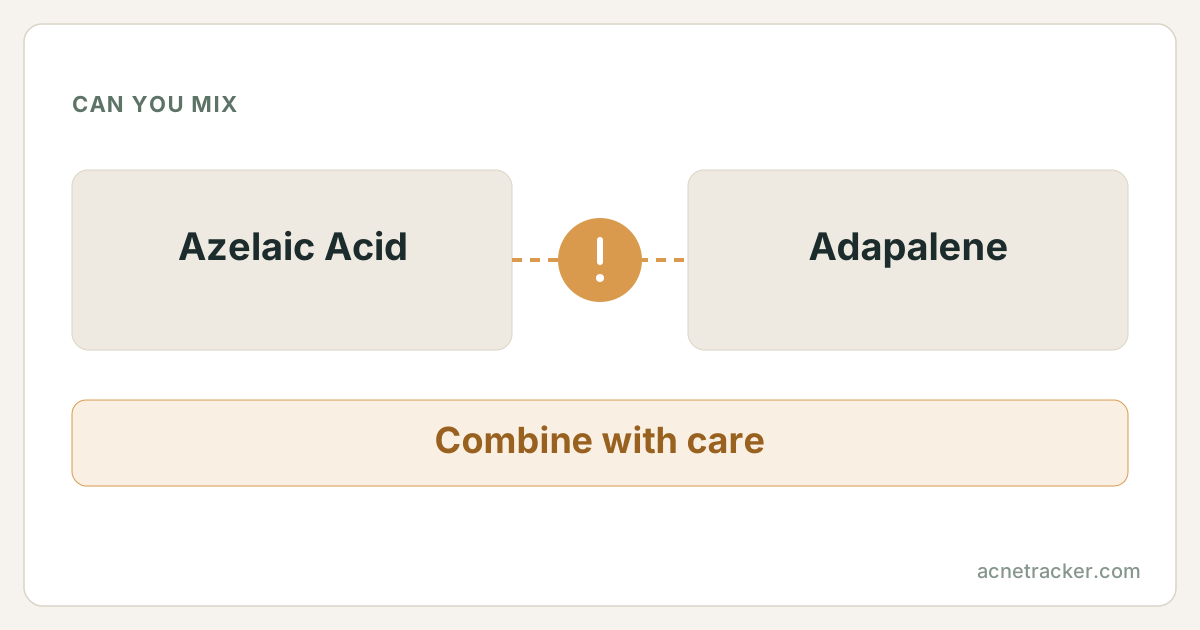
Usually yes, but stagger the start. Nothing in these two molecules reacts with the other, and dermatologists routinely run them together. The caution is entirely about tolerance: adapalene puts skin through a peeling adjustment phase, azelaic acid stings on its own, and starting both in the same fortnight is how people end up abandoning both. Add adapalene first, let it settle, then bring azelaic acid in.
How this pairing resolves
The two ingredients, their published numbers, and where they land together.
The numbers beside each ingredient are its published comedogenic rating and effective pH window, taken from its own profile page.
Show the numbers
| Ingredients | Metric | 0–5 |
|---|---|---|
| Azelaic Acid | Comedogenic rating | 0/5 |
| Azelaic Acid | Effective pH | 4.0–5.0 |
| Adapalene | Comedogenic rating | 1/5 |
| Adapalene | Effective pH | 5.0–6.5 |
Why
These two work through completely unrelated machinery, which is why the combination is additive rather than conflicting. Adapalene is a naphthoic acid derivative — a third-generation retinoid engineered to bind the retinoic acid receptors RAR-beta and RAR-gamma in the follicle wall, switching on the gene programme that stops dead keratinocytes gluing themselves into a plug. It was designed for stability: unlike tretinoin it is photostable and does not oxidise readily, which is why it survives next to strong oxidisers. Azelaic acid has no receptor at all. It is a nine-carbon saturated diacid that acts on enzymes and free radicals directly — competitively inhibiting tyrosinase, dampening the reactive oxygen species neutrophils release into an inflamed lesion, and exerting a mild antibacterial effect on Cutibacterium acnes. So adapalene rebuilds how the pore sheds, while azelaic acid manages inflammation and the pigment that inflammation leaves behind. Reviews of azelaic acid's pharmacology (Fitton & Goa, Drugs 1991) describe it as poorly absorbed systemically and unusually well tolerated for an active — but 'well tolerated alone' and 'well tolerated on top of a retinising face' are different claims. Note that adapalene's regulatory status differs by market: 0.1% is sold over the counter in some countries and only on prescription in others, including Norway.
How to combine them
Sequence, do not stack. If you are new to adapalene, use it alone at night — a pea-sized amount for the whole face, three nights a week — and keep the rest of the routine to a plain cleanser and moisturiser for at least four to six weeks. The flaking, tightness and mild redness of that period are expected and they resolve. Only once adapalene is boring should you add azelaic acid, and add it in the morning rather than layering it over the retinoid: cleanse, azelaic acid, moisturiser, SPF 30+. That split gives each active a clean face and means a bad reaction has an obvious culprit. If you already tolerate both and want them in one evening routine, adapalene goes on dry skin first, then azelaic acid on top once it has absorbed, then moisturiser. Do not increase adapalene frequency and add azelaic acid in the same week. Prescription-strength azelaic acid (15–20%) alongside a retinoid is a conversation for your dermatologist, not a self-service upgrade.
Example routine
| When | Steps |
|---|---|
| Weeks 1–6 | Cleanser → Adapalene (3 nights/week) → Moisturiser. No azelaic acid yet |
| Morning (from week 6) | Cleanser → Azelaic acid 10% → Moisturiser → SPF 30+ |
| Evening (from week 6) | Cleanser → Adapalene → Moisturiser |
| One-routine option | Adapalene → absorb → Azelaic acid → Moisturiser (tolerant skin only) |
Warning signs
Frequently asked questions
Does azelaic acid deactivate adapalene?
No. Adapalene is deliberately photostable and resistant to oxidation, and azelaic acid is neither an oxidiser nor a strong acid at use concentrations. There is no reported degradation between them — the limit is your skin's tolerance, not the chemistry.
Should I use them on alternate nights instead?
That is a reasonable middle option if a morning azelaic acid slot does not suit you. Alternating means neither active is applied to skin that is already stinging from the other, though you lose azelaic acid's daily consistency for pigment work.
Why add azelaic acid if adapalene already treats acne?
They cover different gaps. Adapalene works on the plug and prevents new comedones; it does not inhibit tyrosinase. Azelaic acid does, which matters if brown marks from healed spots bother you more than the spots did.
Can I use this pair while pregnant?
No. Azelaic acid is widely regarded as one of the few pregnancy-compatible actives, but topical retinoids including adapalene are not recommended in pregnancy. This is exactly the decision to bring to your doctor rather than to a comment thread.
Which one should I put on first if I layer them?
Adapalene first on dry skin, azelaic acid after it absorbs. Adapalene is a thin gel that spreads over a whole area; azelaic acid formulas are thick and pill if anything is applied on top of them.
Sources & further reading
There is no single study of this exact question. The guidance here is reasoned from the ingredient profiles below, each of which carries its own references:
- Azelaic Acid3 refs
- Adapalene3 refs
Show every reference behind this page (6)
- PubChem — Azelaic acid compound summarycited by Azelaic Acid
- DermNet — Azelaic acidcited by Azelaic Acid
- European Commission CosIng database — Azelaic Acidcited by Azelaic Acid
- PubChem — Adapalene compound summarycited by Adapalene
- DermNet — Adapalenecited by Adapalene
- FDA — Drugs (over-the-counter acne products)cited by Adapalene
Medical disclaimer
Ingredients mentioned on this page
Find your personal acne triggers
Our free Acne Tracker lets you log breakouts, sleep, stress and diet, and shows you which factors correlate with your flare-ups.