Can You Mix Adapalene and Bakuchiol?
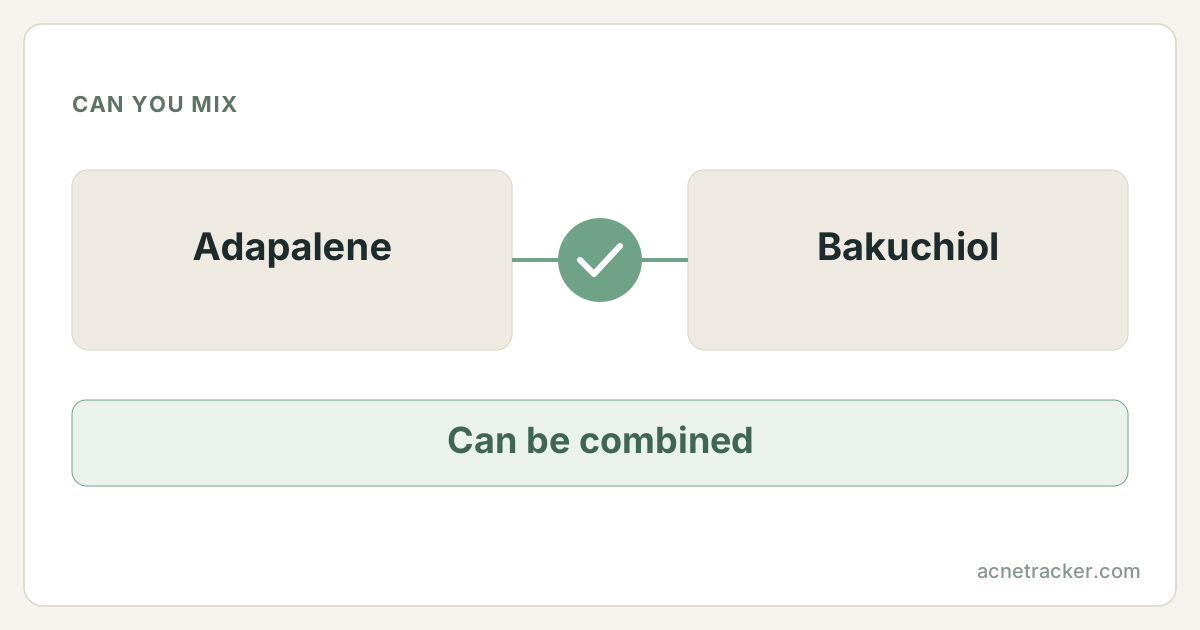
Yes, chemically they are compatible, but this is a tolerance question rather than a clash. Adapalene is a potent prescription-strength retinoid; bakuchiol is a gentle retinol-like antioxidant. Layering both stacks two turnover-driving actives, so the risk is additive irritation, not a chemical reaction. Many people use bakuchiol on the nights they skip adapalene to keep renewal going more gently.
How this pairing resolves
The two ingredients, their published numbers, and where they land together.
The numbers beside each ingredient are its published comedogenic rating and effective pH window, taken from its own profile page.
Show the numbers
| Ingredients | Metric | 0–5 |
|---|---|---|
| Adapalene | Comedogenic rating | 1/5 |
| Adapalene | Effective pH | 5.0–6.5 |
| Bakuchiol | Comedogenic rating | 0/5 |
| Bakuchiol | Effective pH | no published pH |
Why
Adapalene is a true retinoid — a stable, receptor-binding molecule that is unusually effective against acne and photoageing but also reliably causes the retinisation phase of dryness, peeling and redness. Bakuchiol mimics some retinoid effects such as collagen signalling and faster turnover without binding retinoic-acid receptors, so on its own it is far gentler. Chemically the two coexist without any destabilising reaction: bakuchiol is pH-tolerant and, unlike adapalene, not degraded by the acid mantle. The genuine issue is cumulative irritation. Using two ingredients that both accelerate cell turnover in the same routine can overwhelm the barrier, especially while your skin is still adapting to adapalene. That is a matter of tolerance and frequency, not incompatibility. The most useful framing is that bakuchiol can be the gentler stand-in: keep adapalene as your main retinoid on tolerated nights, and use bakuchiol on off-nights to maintain renewal without doubling the peeling. Bakuchiol has also been studied as a soothing companion that may ease retinoid tolerance.
How to combine them
The safest structure is alternation, not stacking. Use adapalene on its scheduled nights, often every second or third night while adjusting and building up as tolerated, and reserve bakuchiol for the nights in between, so renewal continues without piling two actives onto the same skin. If you want them in one routine, apply adapalene to clean, dry skin first — it is the prescription active and needs direct contact — then buffer with bakuchiol in a moisturiser, but only once your skin fully tolerates adapalene alone. Always pair adapalene with morning SPF, since retinoids increase sun sensitivity even though bakuchiol does not. Introduce only one of the two at a time, and give adapalene several weeks before adding anything.
Example routine
| When | Steps |
|---|---|
| Evening (adapalene nights) | Cleanser → Adapalene → Moisturiser |
| Evening (off nights) | Cleanser → Bakuchiol serum → Moisturiser |
| Every morning | Cleanser → Moisturiser → SPF 30+ (non-negotiable with adapalene) |
| Advanced | Adapalene, then bakuchiol buffer — only if fully tolerated |
Warning signs
Frequently asked questions
Can I use bakuchiol and adapalene on the same night?
You can once your skin fully tolerates adapalene, applying adapalene first and buffering with bakuchiol. Most people do better alternating them on separate nights, because stacking two turnover actives adds irritation.
Does bakuchiol make adapalene less irritating?
It may help. Bakuchiol is soothing and non-irritating itself, and using it on off-nights keeps renewal going gently, which can make an adapalene routine feel more sustainable — but it will not cancel adapalene's own dryness.
Is bakuchiol a good replacement for adapalene?
For mild concerns or sensitive skin, bakuchiol is a gentler alternative, but it is not as potent as adapalene for active acne. Many people step down from adapalene to bakuchiol for maintenance rather than replacing it outright.
Do I need sunscreen if I use adapalene and bakuchiol?
Yes, especially because of the adapalene. Retinoids raise sun sensitivity, so daily SPF 30+ is essential. Bakuchiol itself is not photosensitising, but the adapalene in the routine makes sunscreen non-negotiable.
Sources & further reading
There is no single study of this exact question. The guidance here is reasoned from the ingredient profiles below, each of which carries its own references:
Show every reference behind this page (6)
- PubChem — Adapalene compound summarycited by Adapalene
- DermNet — Adapalenecited by Adapalene
- FDA — Drugs (over-the-counter acne products)cited by Adapalene
- PubChem — Bakuchiol compound summarycited by Bakuchiol
- Bakuchiol: a retinol-like functional compound (PubMed)cited by Bakuchiol
- DermNet — Cosmeceuticalscited by Bakuchiol
Medical disclaimer
Ingredients mentioned on this page
Find your personal acne triggers
Our free Acne Tracker lets you log breakouts, sleep, stress and diet, and shows you which factors correlate with your flare-ups.