Hydroxypinacolone Retinoate: Comedogenic Rating & Ingredient Analysis
Hydroxypinacolone retinoate, or HPR, is a next-generation retinoid usually sold under the marketing name Granactive Retinoid. It stands out from classic retinol because it is an ester of retinoic acid that is thought to bind directly to the skin's retinoid receptors, without needing the two-step conversion that retinol undergoes. Brands promote it as delivering retinoid results — smoother texture, fewer breakouts, softened fine lines — with noticeably less dryness and irritation than traditional retinol or prescription tretinoin. It has become a popular choice for people who want the benefits of vitamin A derivatives but whose skin struggles with the flaking and redness of retinol.
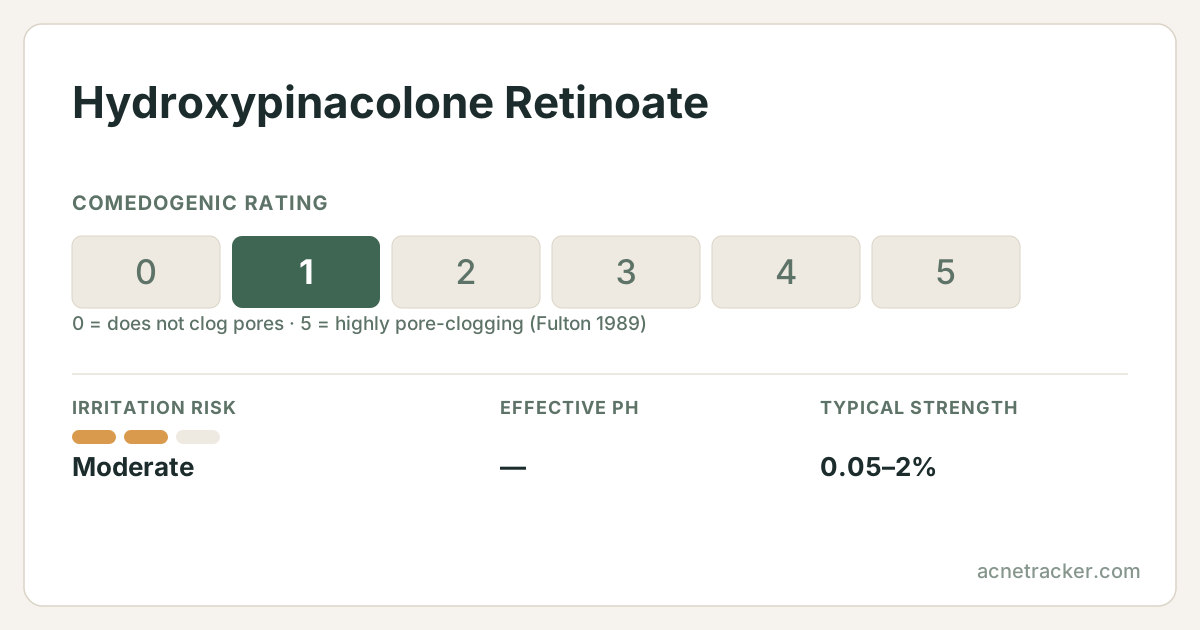
Quick facts
- Comedogenic rating
- our estimate — not measured
- Irritation risk
- Moderate
- Effective pH
- —
- Typical strength
- 0.05–2%
- Pregnancy
- Avoid
- Suits skin types
- oilycombinationnormalmatureacne-pronesensitive
Where this number comes from
No one has published a comedogenic rating for this ingredient. Fulton's 1989 table tested about 250 raw materials and this was not among them, and we found no later study measuring it. The figure shown is our own reasoning from the ingredient's chemistry and how it is used — treat it as an estimate, not a measurement.
Fulton read his own scale as 0-1 not significant, 2-3 borderline, 4-5 positive. The assay is the rabbit ear at 10% dilution, which the paper itself calls extremely sensitive and not fully predictive of human skin. Ratings describe the raw ingredient; concentration and formulation change real-world behaviour.
Caution profile
The four published fields on this page, on one 0–5 scale. Further from the centre means more care is needed — never that the ingredient is worse.
Derived, not measured: pore-clogging is the published comedogenic rating; irritation maps low/moderate/high to 1/3/5; pregnancy maps safe/caution/avoid to 0/3/5; skin-type limits is how many of the seven skin types this entry does NOT list. Every input is printed in words in the quick-facts card above.
Show the numbers
| Metric | 0–5 | Published field |
|---|---|---|
| Pore-clogging | 1 | 1/5 |
| Irritation | 3 | Moderate |
| Skin-type limits | 0.7 | 6/7 |
| Pregnancy | 5 | Avoid |
Working pH and typical strength
Where this ingredient is formulated to sit, and at what concentration.
Both bars come from the fields above: the pH window and the typical strength range published for this ingredient. The tinted column is healthy skin's surface pH (about 4.7–5.75).
Show the numbers
| Metric | 0–5 |
|---|---|
| Typical strength | 0.05–2% |
What is it?
HPR belongs to the retinoid family, the group of vitamin A derivatives that also includes retinol, retinal and prescription tretinoin. Unlike retinol, which the skin must convert into retinaldehyde and then into active retinoic acid, HPR is an ester designed to interact with retinoic acid receptors more directly, which may explain its gentler reputation. It is usually combined with a stabilised form of retinol in commercial products, so a bottle of 'Granactive Retinoid' often contains both. While marketing claims are enthusiastic, independent long-term studies on HPR are more limited than the decades of evidence behind retinol and tretinoin, so it is best viewed as a promising, well-tolerated retinoid rather than a proven replacement for the gold standards.
Benefits
Gentler than retinol
HPR is designed to deliver retinoid effects with less of the dryness, flaking and redness that make classic retinol hard to tolerate, which suits sensitive and retinoid-nervous skin.
Helps clear and prevent breakouts
As a retinoid, HPR supports normal cell turnover inside the pore, helping to reduce clogged pores and the microcomedones that acne begins as, with a lower irritation cost.
Smooths texture and fine lines
Retinoid activity encourages fresher, more organised skin renewal, which over time can soften rough texture and the appearance of fine lines for a smoother surface.
Fades post-acne marks
By speeding cell turnover, HPR can help fade the lingering dark or red marks left after blemishes heal, contributing to a more even-looking complexion.
How to use
Apply HPR at night, as retinoids are best used away from sunlight. Start two or three evenings a week on clean, dry skin, then build up frequency as tolerated. Although it is gentler than retinol, the sensible cautions still apply: introduce it slowly, moisturise well, and wear broad-spectrum sunscreen every morning. Avoid layering it in the same routine with strong exfoliating acids or benzoyl peroxide, which multiply irritation; alternate nights instead. Many products combine HPR with retinol, so check the label to avoid unknowingly stacking multiple retinoids. Give it eight to twelve weeks of consistent use before judging results.
Side effects
HPR is marketed for its tolerability, and many people do experience less dryness and flaking than with retinol, but it is still a retinoid and can cause irritation, redness or peeling, especially early on or at higher strengths. A purge of small breakouts is possible in the first weeks. Because it increases the skin's sensitivity to sunlight, daily sunscreen is essential. If irritation becomes severe, reduce frequency and let the skin recover.
Who should avoid it
Do not use HPR during pregnancy or breastfeeding — as a retinoid, it is avoided as a precaution, and azelaic acid or niacinamide are the standard alternatives during this time. People with an actively damaged barrier, eczema or rosacea flares should repair the skin first. Anyone already using a prescription retinoid should not add HPR without a dermatologist's guidance.
Pairs well with
Avoid combining with
Frequently asked questions
What is Granactive Retinoid?
Granactive Retinoid is a trade name for a complex that contains hydroxypinacolone retinoate (HPR), often blended with stabilised retinol. HPR is the active retinoid ester the name usually refers to.
Is HPR stronger than retinol?
Not necessarily stronger, but it is designed to work more directly on retinoid receptors with less irritation. Retinol still has far more long-term evidence behind its results.
Is hydroxypinacolone retinoate good for beginners?
Yes, its gentler profile makes it a good entry point into retinoids for sensitive skin, though you should still introduce it slowly and use daily sunscreen.
Can I use HPR with acids?
Not in the same routine when starting out, as retinoids plus strong acids multiply irritation. Alternate nights, or separate them into morning and evening once your skin is well adjusted.
Is HPR safe during pregnancy?
No. Like all retinoids, hydroxypinacolone retinoate is avoided during pregnancy and breastfeeding. Niacinamide and azelaic acid are the usual pregnancy-safe alternatives.
Sources & further reading
Medical disclaimer
Find your personal acne triggers
Our free Acne Tracker lets you log breakouts, sleep, stress and diet, and shows you which factors correlate with your flare-ups.