Acne Around the Mouth
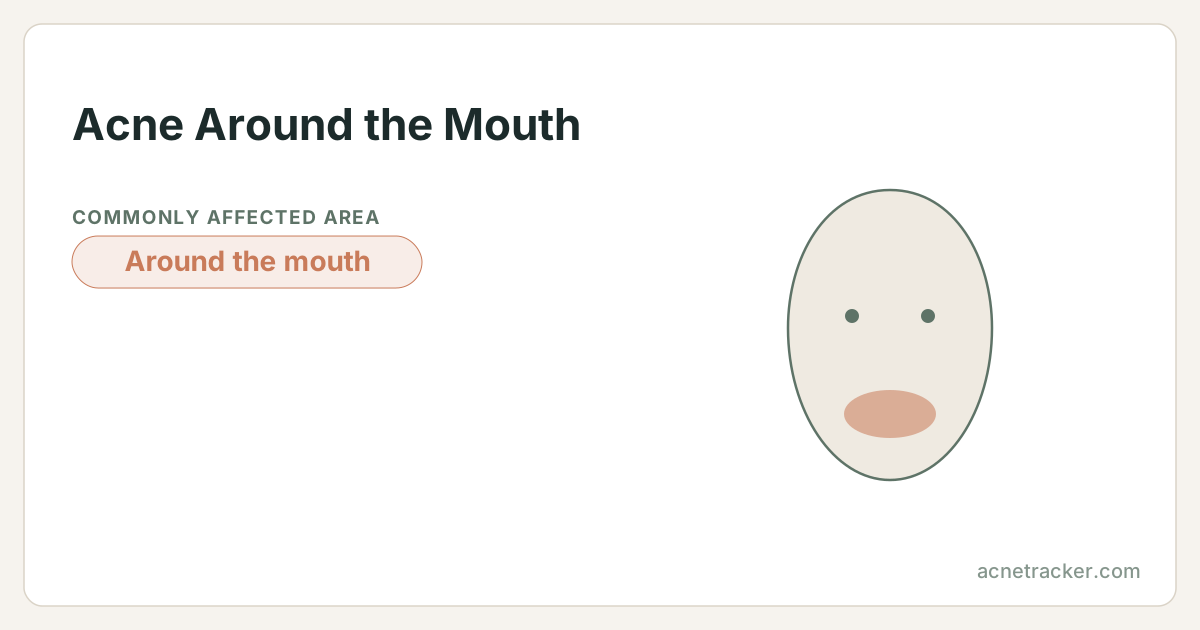
Breakouts around the mouth sit in a busy, sensitive patch of skin that faces daily friction, food, saliva and product transfer, which is why spots here can feel especially persistent. The lower face is also rich in oil glands that respond to hormones, so this zone overlaps with the chin as a classic site for cyclical, hormonally influenced acne. Before treating it, though, one distinction matters more than any other: true acne is not the same as perioral dermatitis, a rash around the mouth that worsens with the rich creams and actives acne needs. Sorting out which you have shapes the whole plan, because the two conditions call for almost opposite routines.
How to recognize it
True acne around the mouth shows the usual mix: blackheads and whiteheads where pores clog, inflamed red papules and pustules, and sometimes deeper tender bumps near the chin. Lesions vary in size and you can often see comedones. The key lookalike is perioral dermatitis, which forms crops of small uniform bumps and pustules that spare a clear rim right at the lip border, tend to flake, and flare after steroid creams. If your spots have visible clogged pores and respond to gentle acne care, acne fits; if a scaly rash rings the mouth and worsens with creams, get assessed for perioral dermatitis instead.
What causes it
Hormonal oil production
The lower face carries oil glands that are sensitive to androgens, so hormonal shifts around the menstrual cycle or stress can drive deeper spots around the mouth and chin at the same times each month.
Friction and contact
Wiping the mouth, resting a hand there, instruments, phones and repetitive touching press oil and bacteria into follicles in exactly this zone, aggravating spots that were already forming.
Product and food transfer
Occlusive lip balms, greasy foods, and residue that lingers around the lips can add to pore-clogging, especially when the area is not cleansed as thoroughly as the rest of the face.
Comedogenic cosmetics
Heavy foundations and rich creams applied over the whole lower face can tip clog-prone skin around the mouth into more breakouts; checking products against comedogenic lists helps here.
Ingredients with evidence
| Ingredient | Role |
|---|---|
| Salicylic acid (BHA) | An oil-soluble exfoliant that clears the clogged pores driving whiteheads and blackheads around the mouth; use it a few evenings a week rather than daily on this delicate area. |
| Azelaic acid | Calms inflammation and helps with post-spot marks, and is gentle enough for the thin skin near the lips — a useful all-rounder when you are unsure of the diagnosis. |
| Niacinamide | Reduces oiliness and redness while supporting the barrier, so the stronger actives are better tolerated close to the mouth. |
| Adapalene | A topical retinoid that normalizes pore shedding to stop clogs forming; start slowly and keep it off the lip margin, where it stings. |
| Benzoyl peroxide | Short-contact wash-off use lowers acne bacteria in inflamed spots; be sparing near the mouth to avoid drying and irritation. |
Building the routine
Cleanse gently morning and night, taking care to remove food, balm and makeup residue from around the lips without scrubbing. Apply niacinamide daily, then build in a retinoid two or three nights a week and salicylic acid on one or two other evenings, keeping actives a few millimetres back from the lip border where skin is thinnest. Moisturize every time and use SPF each morning, since acids and retinoids raise sun sensitivity. Avoid heavy occlusive balms if spots persist. If the area is a scaly, burning rash rather than clogged spots, stop the actives and have it assessed — piling on treatment can worsen perioral dermatitis.
When to see a doctor
Frequently asked questions
Why do I keep breaking out around my mouth specifically?
This zone combines hormone-sensitive oil glands with constant friction, food and product contact. Together they clog and inflame follicles around the mouth, so spots here can be more persistent than elsewhere even when the rest of your face is clear.
Is my breakout around the mouth acne or perioral dermatitis?
Look for comedones and varied spot sizes, which suggest acne, versus a scaly rash of uniform small bumps that spares the lip border and flares with creams, which suggests perioral dermatitis. If in doubt, or if creams make it worse, get it assessed before treating.
Can greasy food or lip balm cause spots around my mouth?
They can contribute. Occlusive balms and food residue add pore-clogging material to an area that is often under-cleansed, so wiping the area and cleansing thoroughly, and choosing lighter balms, can reduce breakouts here.
Should I use benzoyl peroxide right up to my lips?
No. The skin at the lip margin is thin and dries easily, so keep benzoyl peroxide and other strong actives a few millimetres back and use short-contact wash-off forms to limit irritation around the mouth.
Sources & further reading
What this page cites about the condition itself:
There is no single study of this exact question. The guidance here is reasoned from the ingredient profiles below, each of which carries its own references:
- Salicylic Acid2 refs
- Azelaic Acid3 refs
- Niacinamide2 refs
- Adapalene3 refs
- Benzoyl Peroxide3 refs
Show every reference behind this page (10)
- Salicylic acid as a peeling agent: a comprehensive review (PubMed)cited by Salicylic Acid
- FDA OTC monograph — acne drug products (salicylic acid 0.5–2%)cited by Salicylic Acid, Adapalene, Benzoyl Peroxide
- PubChem — Azelaic acid compound summarycited by Azelaic Acid
- DermNet — Azelaic acidcited by Azelaic Acid
- European Commission CosIng database — Azelaic Acidcited by Azelaic Acid, Niacinamide
- Niacinamide: mechanisms of action and its topical use in dermatology (PubMed)cited by Niacinamide
- PubChem — Adapalene compound summarycited by Adapalene
- DermNet — Adapalenecited by Adapalene
- PubChem — Benzoyl peroxide compound summarycited by Benzoyl Peroxide
- DermNet — Benzoyl peroxidecited by Benzoyl Peroxide
Medical disclaimer
Ingredients mentioned on this page
Find your personal acne triggers
Our free Acne Tracker lets you log breakouts, sleep, stress and diet, and shows you which factors correlate with your flare-ups.