How to Choose a Spot Treatment for Hormonal Acne
Hormonal acne has a recognisable pattern: deep, tender bumps clustered along the jaw, chin and lower cheeks that flare in a monthly rhythm and tend to be inflamed rather than simple blackheads. Because the trigger is internal, a topical spot treatment manages the surface of a flare — it does not switch off the hormonal signal driving it. That is an important honesty: the most effective answers to persistent hormonal acne are often systemic and prescribed. Still, the right active can calm an individual lesion, ease redness, and limit the marks left behind. This guide covers the topicals worth using between breakouts and on a flare, what tends to backfire, and when the pattern is better managed with a doctor.
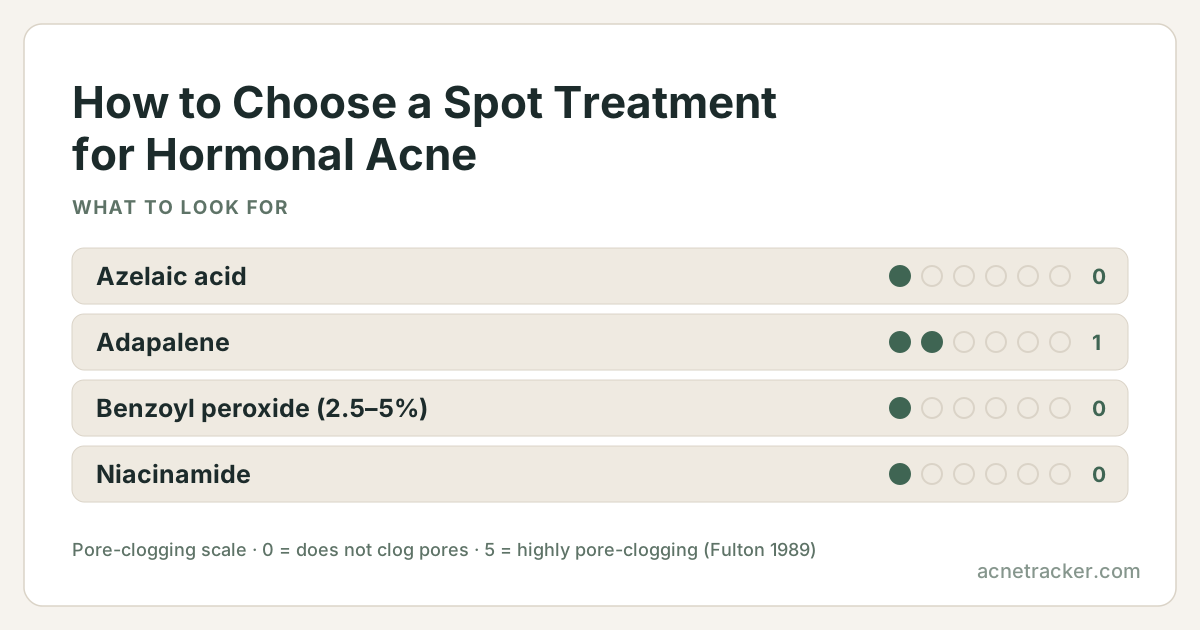
Ingredients to look for
| Ingredient | Why it matters |
|---|---|
| Azelaic acid | Anti-inflammatory and gentle enough for the deep, tender lesions of hormonal acne, and it fades the post-spot marks they commonly leave. |
| Adapalene | A retinoid used across the jaw and chin nightly keeps pores clear so fewer hormonal lesions form, working as prevention rather than a single dab. |
| Benzoyl peroxide (2.5–5%) | Reduces inflammation and bacteria on an angry hormonal spot; the lower strengths calm without over-drying tender skin. |
| Niacinamide | Regulates oil and soothes, a low-irritation support that suits the reactive skin hormonal breakouts often bring. |
| Centella asiatica | Calms the redness of an inflamed lesion and supports recovery without provoking already-sensitised skin. |
Ingredients to avoid
| Ingredient | Why it matters |
|---|---|
| Harsh drying spot gels on deep bumps | Hormonal lesions sit deep, so strong drying agents mostly irritate the surface and redden the spot without reaching what is inflamed. |
| Over-exfoliating the whole face in frustration | Aggressive acids on skin that is already reactive damage the barrier and can make a hormonal flare look and feel worse. |
| Picking or squeezing jawline cysts | Deep hormonal bumps have nothing to extract; pressure spreads inflammation and raises the risk of the scarring these lesions can leave. |
| Constantly switching products mid-flare | Hormonal acne runs on a cycle, so chopping and changing every few days prevents anything from working and adds irritation. |
How to choose
Start by reading the pattern honestly. If breakouts are deep, cyclical and locked to the jaw and chin, a spot treatment is a supporting tool, not the fix — so choose gentle, anti-inflammatory actives you can use consistently rather than harsh drying gels that fight tender skin. Azelaic acid is a strong default because it calms inflammation and fades marks at once, and it suits reactive skin. For prevention, an adapalene used nightly across the affected zone keeps pores clear so fewer lesions form. On a single angry spot, a low-strength benzoyl peroxide settles the inflammation. Keep textures light and fragrance-free, and give any routine a full cycle or two before judging it, since hormonal acne rises and falls on its own schedule. The most important criterion, though, is recognising when topicals are not enough: persistent hormonal acne is frequently best managed with a doctor, who can assess options beyond what any cream offers.
How to apply
Treat hormonal acne as a whole-zone routine, not just single dots. Apply azelaic acid or a nightly adapalene across the jaw, chin and lower cheeks where lesions cluster, and reserve a low-strength benzoyl peroxide for calming an individual inflamed spot. Always moisturise afterwards, since tender skin tolerates actives better when the barrier is supported. Keep the routine steady through a flare rather than reacting day to day. Do not pick deep bumps. If breakouts are severe, scarring, or unmoved by consistent topical care, see a doctor to discuss the internal drivers a cream cannot address.
Frequently asked questions
Can a spot treatment fix hormonal acne?
It can manage individual flares — calming a spot, easing redness, fading marks — but it cannot change the internal hormonal signal driving the pattern. Persistent hormonal acne is often best managed with a doctor, who can consider treatments a topical cannot replace.
Why do spot treatments disappoint on my jaw and chin breakouts?
Because you are treating the wrong depth. That lower-face pattern of deep, tender, cyclical bumps is characteristic of hormonally influenced acne, and those bumps sit far below where a dab of surface product reaches — there is no plug near the top of the pore for it to act on. Topicals like azelaic acid and a nightly adapalene help manage it as leave-on treatment across the whole area, but a recurring pattern is worth discussing with a doctor.
Is benzoyl peroxide good for hormonal breakouts?
A lower strength can calm an individual inflamed lesion, but it does not address the internal cause, so it works best as part of a gentle, consistent routine rather than a standalone answer to a recurring hormonal pattern.
Should I change my routine when a hormonal flare starts?
No — consistency matters more than reacting. Hormonal acne runs on a cycle, and constantly switching products adds irritation without giving anything time to work. Keep a steady, gentle routine and give it a full cycle or two.
Sources & further reading
There is no single study of this exact question. The guidance here is reasoned from the ingredient profiles below, each of which carries its own references:
- Azelaic Acid3 refs
- Adapalene3 refs
- Benzoyl Peroxide3 refs
- Niacinamide2 refs
- Centella Asiatica2 refs
Show every reference behind this page (10)
- PubChem — Azelaic acid compound summarycited by Azelaic Acid
- DermNet — Azelaic acidcited by Azelaic Acid
- European Commission CosIng database — Azelaic Acidcited by Azelaic Acid, Niacinamide, Centella Asiatica
- PubChem — Adapalene compound summarycited by Adapalene
- DermNet — Adapalenecited by Adapalene
- FDA — Drugs (over-the-counter acne products)cited by Adapalene, Benzoyl Peroxide
- PubChem — Benzoyl peroxide compound summarycited by Benzoyl Peroxide
- DermNet — Benzoyl peroxidecited by Benzoyl Peroxide
- Niacinamide: mechanisms of action and its topical use in dermatology (PubMed)cited by Niacinamide
- Bylka W et al. Centella asiatica in dermatology: an overview. Phytother Res 2014 Aug (PubMed)cited by Centella Asiatica
Medical disclaimer
Ingredients mentioned on this page
Find your personal acne triggers
Our free Acne Tracker lets you log breakouts, sleep, stress and diet, and shows you which factors correlate with your flare-ups.