How to Choose a Spot Treatment for Teen Skin
Teenage skin breaks out because puberty ramps up oil production, so blackheads, whiteheads and inflamed spots are common and completely normal. The instinct is often to attack them hard — scrubbing, drying, layering every product a friend recommends — but teen skin responds far better to a simple, consistent routine built around one or two proven actives. Over-treating is the classic teenage mistake: it strips the barrier, causes flaking and redness, and can make breakouts worse rather than better. This guide covers the straightforward actives with real evidence behind them, why less is genuinely more at this age, and how to build habits that treat spots without damaging the skin.
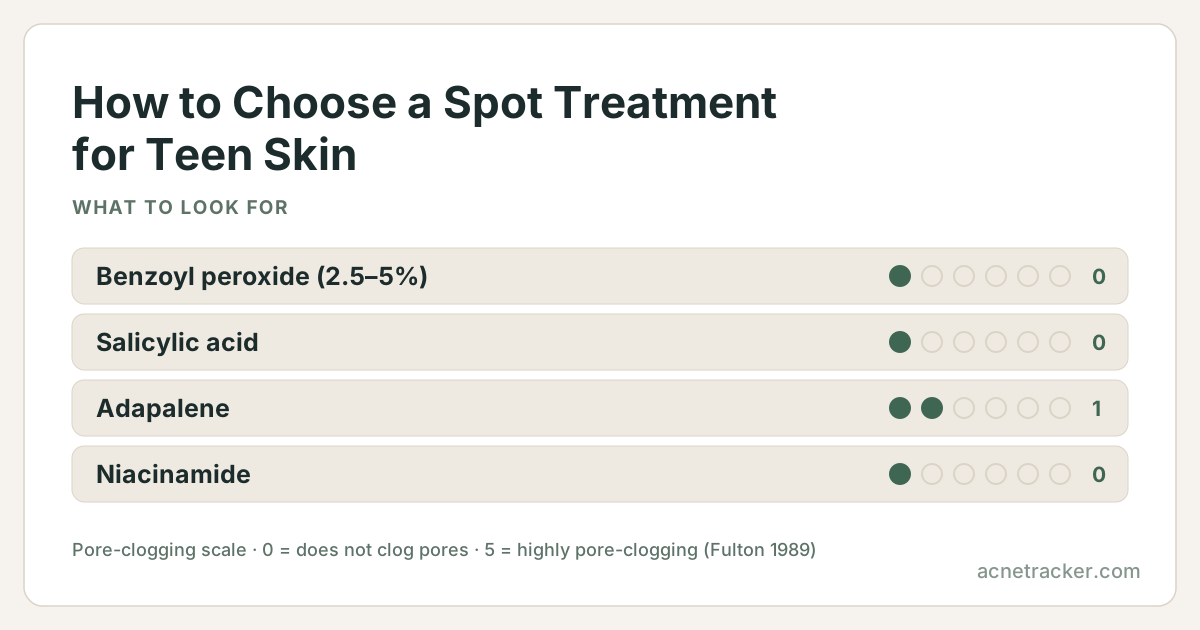
Ingredients to look for
| Ingredient | Why it matters |
|---|---|
| Benzoyl peroxide (2.5–5%) | A proven, accessible active for inflamed teenage spots; the lower strengths work well and cause less dryness than the harshest versions. |
| Salicylic acid | Ideal for the blackheads and whiteheads that dominate teen skin, dissolving the pore congestion that stronger drying gels miss. |
| Adapalene | An accessible retinoid used nightly across the area that prevents blackheads and whiteheads forming, tackling the cause over time. |
| Niacinamide | Regulates oil and calms redness gently, a low-risk support for oily, breakout-prone teenage skin. |
| Azelaic acid | A gentle all-rounder that clears spots and fades marks, useful when stronger actives prove too drying for young skin. |
Ingredients to avoid
| Ingredient | Why it matters |
|---|---|
| Over-scrubbing and harsh cleansers | Aggressive washing and scrubbing strip oily teen skin, damage the barrier and often trigger more oil and more breakouts in response. |
| Layering too many products at once | Teenagers frequently pile on actives from different sources, which over-strips the skin and causes flaking, redness and irritation. |
| Alcohol and toothpaste drying hacks | Popular among teens but damaging: they burn the surface, harm the barrier and leave marks rather than clearing spots. |
| Picking and squeezing spots | Tempting at this age, but it spreads inflammation and drives the dark marks and scars that can outlast the acne itself. |
How to choose
Keep it simple, because teen skin does best with one or two proven actives used consistently rather than a cabinet of products. Match the active to the spot: salicylic acid for the blackheads and whiteheads that dominate at this age, and a low-strength benzoyl peroxide for inflamed red spots. For prevention, an accessible adapalene used nightly across the area keeps pores clear so fewer spots form, which beats treating each one after it appears. Choose lower strengths and gentle formulas, since young skin is easily over-dried, and add niacinamide or azelaic acid if you want a calmer option. The single most important principle is that more is not better: over-treating strips the barrier and worsens breakouts, so a steady, gentle routine wins. If acne is severe, widespread or distressing, seeing a doctor early is sensible and can prevent scarring.
How to apply
Build a simple routine: a gentle cleanser twice a day, one matched active on the spots — salicylic acid on congestion or a low-strength benzoyl peroxide on inflamed spots — and a light moisturiser, which even oily skin needs. If using adapalene for prevention, apply it at night across the area, starting a few nights a week to let the skin adjust. Do not scrub hard, layer lots of products, or use drying hacks, and resist picking, since it drives marks and scars. Give any routine several weeks to work, and see a doctor early if acne is severe or upsetting.
Frequently asked questions
What is the best spot treatment for a teenager?
A simple routine with one or two proven actives: salicylic acid for blackheads and whiteheads, and a low-strength benzoyl peroxide for inflamed spots. A nightly adapalene helps prevent them. Simplicity and consistency beat piling on many products.
Why is my teenage acne getting worse with more products?
Over-treating is the likely cause. Layering many actives, scrubbing and drying hacks strip the barrier of oily teen skin, causing flaking, redness and often more breakouts. Cutting back to one gentle active used consistently usually helps more than adding products.
Is benzoyl peroxide safe for teen skin?
Yes, a low strength such as 2.5–5% is a proven, widely used option for inflamed teenage spots, and the lower strengths cause less dryness. Pair it with a moisturiser, avoid over-applying, and patch test if the skin is sensitive.
When has a teenager's acne outgrown spot treatment?
Spot treatment answers the occasional individual pimple. It is the wrong tool once acne is severe, widespread, painful, scarring or causing real distress — and in any of those cases, seeing a doctor early is sensible rather than working through more products. Effective treatments are available, and early care can prevent the scarring and marks that are harder to fix later. Dabbing at one bump at a time while the overall picture worsens mainly costs time.
Sources & further reading
There is no single study of this exact question. The guidance here is reasoned from the ingredient profiles below, each of which carries its own references:
- Benzoyl Peroxide3 refs
- Salicylic Acid2 refs
- Adapalene3 refs
- Niacinamide2 refs
- Azelaic Acid3 refs
Show every reference behind this page (10)
- PubChem — Benzoyl peroxide compound summarycited by Benzoyl Peroxide
- DermNet — Benzoyl peroxidecited by Benzoyl Peroxide
- FDA — Drugs (OTC acne products)cited by Benzoyl Peroxide, Salicylic Acid, Adapalene
- Salicylic acid as a peeling agent: a comprehensive review (PubMed)cited by Salicylic Acid
- PubChem — Adapalene compound summarycited by Adapalene
- DermNet — Adapalenecited by Adapalene
- Niacinamide: mechanisms of action and its topical use in dermatology (PubMed)cited by Niacinamide
- European Commission CosIng database — Niacinamidecited by Niacinamide, Azelaic Acid
- PubChem — Azelaic acid compound summarycited by Azelaic Acid
- DermNet — Azelaic acidcited by Azelaic Acid
Medical disclaimer
Ingredients mentioned on this page
Find your personal acne triggers
Our free Acne Tracker lets you log breakouts, sleep, stress and diet, and shows you which factors correlate with your flare-ups.