Can You Mix Mandelic Acid and Adapalene?
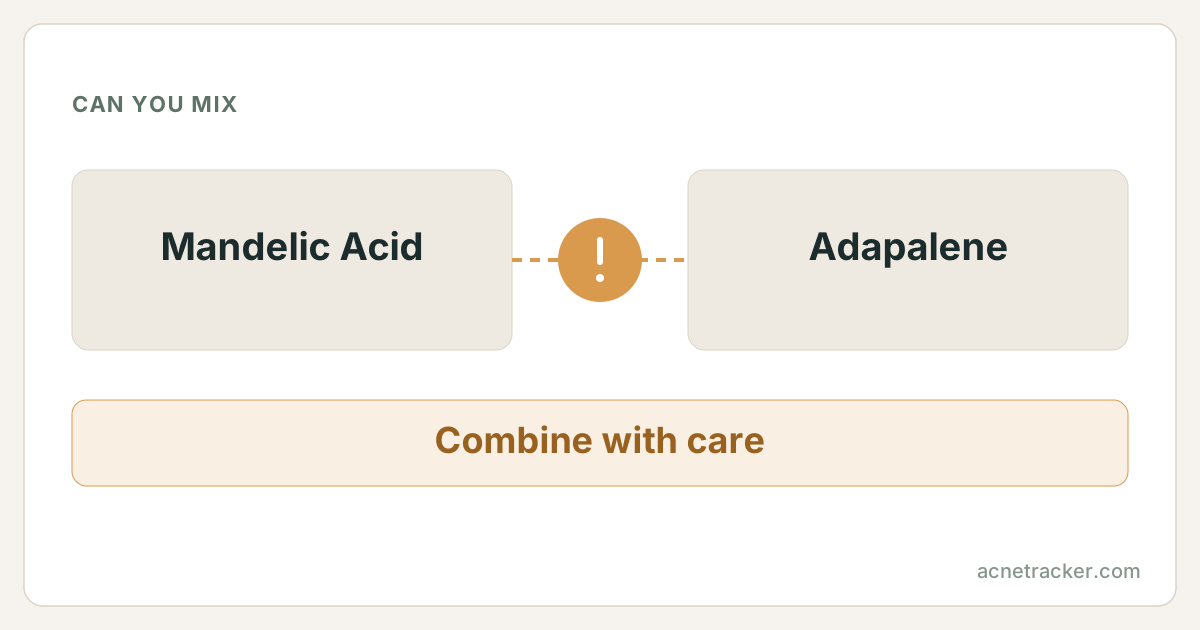
Use caution — not because they react badly, but because both speed cell turnover, so using them together can over-irritate. Adapalene is a retinoid and mandelic acid is an exfoliating acid; there is no chemical clash, but stacking them nightly can leave skin dry, red and flaky. The safe approach is to alternate nights or let adapalene lead and use mandelic acid sparingly.
How this pairing resolves
The two ingredients, their published numbers, and where they land together.
The numbers beside each ingredient are its published comedogenic rating and effective pH window, taken from its own profile page.
Show the numbers
| Ingredients | Metric | 0–5 |
|---|---|---|
| Mandelic Acid | Comedogenic rating | 0/5 |
| Mandelic Acid | Effective pH | 3.0–4.0 |
| Adapalene | Comedogenic rating | 1/5 |
| Adapalene | Effective pH | 5.0–6.5 |
Why
Adapalene is a stable, receptor-selective retinoid that normalises how skin cells shed inside the pore, which is why it works so well for comedonal and inflammatory acne. Mandelic acid works on the surface, loosening dead cells so they slough off. Both are legitimate turnover boosters, and that is exactly the issue: doing both jobs at once asks a lot of the barrier, and the classic result is retinoid-style dryness and peeling amplified by the acid. The good news is there is no true incompatibility — the old worry that acids deactivate retinoids applies mainly to unstable retinol, and adapalene is notably pH-stable and robust, so mandelic acid will not chemically neutralise it. This is why the verdict is caution rather than no: the risk is purely tolerance, and it is manageable. Mandelic acid is also the safest acid to attempt this with, since its slow, large molecule is far gentler than glycolic. Still, most people do not need both — adapalene alone is a complete acne treatment, and mandelic acid is best reserved for extra help with texture or marks once adapalene is well tolerated.
How to combine them
Get adapalene established first: use it alone for six to eight weeks until the initial dryness and purging settle, because adding an acid during that window almost guarantees irritation. Once your skin is stable, add mandelic acid on separate evenings — adapalene on some nights, mandelic acid on others, never layered in the same session to start. If you later want them closer, keep them on alternating nights rather than stacked. Moisturise generously on both, use a buffering technique (moisturiser before adapalene) if you are dry, and apply broad-spectrum SPF 30+ every morning, since both ingredients increase sun sensitivity. Introduce nothing else new at the same time. If irritation flares, drop the mandelic acid entirely and return to adapalene alone — it is the more important treatment of the two.
Example routine
| When | Steps |
|---|---|
| Evening A | Cleanser → (optional moisturizer buffer) → Adapalene → Moisturizer |
| Evening B | Cleanser → Mandelic acid → wait 5–10 min → Moisturizer |
| Every morning | Cleanser → Moisturizer → SPF 30+ |
Warning signs
Frequently asked questions
Does mandelic acid deactivate adapalene?
No. The deactivation worry applies mainly to unstable retinol; adapalene is pH-stable and robust, so mandelic acid will not neutralise it. The real concern is combined irritation, not chemistry.
Can I use mandelic acid and adapalene on the same night?
It is best avoided at first. Both boost turnover, so layering them nightly often over-irritates. Alternate them on separate evenings, and only consider same-night use once your skin is fully adjusted.
Do I even need mandelic acid if I use adapalene?
Often not. Adapalene alone is a complete acne treatment. Add mandelic acid only if you want extra help with texture or dark marks, and only once adapalene is well tolerated.
Which should I start first, adapalene or mandelic acid?
Start adapalene alone for six to eight weeks until dryness and purging settle, then add mandelic acid on separate nights. Introducing both together almost always causes avoidable irritation.
Sources & further reading
There is no single study of this exact question. The guidance here is reasoned from the ingredient profiles below, each of which carries its own references:
- Mandelic Acid2 refs
- Adapalene3 refs
Show every reference behind this page (5)
- Mandelic acid — PubChem compound summarycited by Mandelic Acid
- DermNet — Alpha hydroxy acidscited by Mandelic Acid
- PubChem — Adapalene compound summarycited by Adapalene
- DermNet — Adapalenecited by Adapalene
- FDA — Drugs (over-the-counter acne products)cited by Adapalene
Medical disclaimer
Ingredients mentioned on this page
Find your personal acne triggers
Our free Acne Tracker lets you log breakouts, sleep, stress and diet, and shows you which factors correlate with your flare-ups.