Acne on the Chin and Around the Mouth
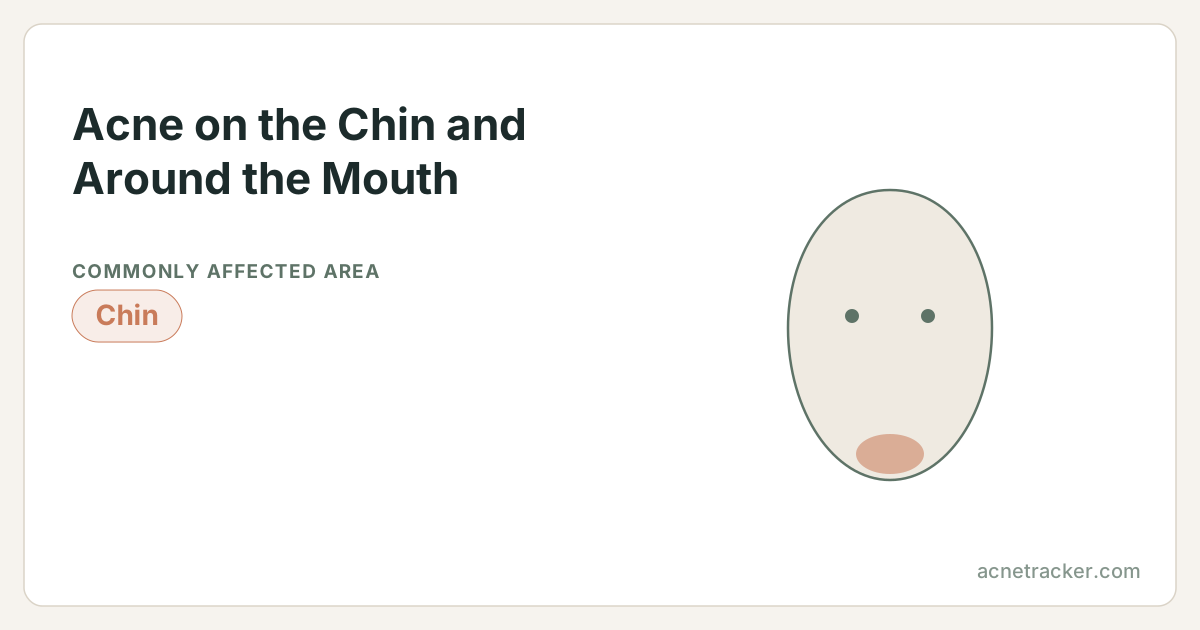
Spots that ring the mouth and settle over the chin sit in one of the busiest zones on the face. This strip of skin meets food, drink, lip balm, toothpaste foam and the friction of napkins and hands all day long, so it collects residue that ordinary cheeks never see. The oil glands here are also plentiful, which means clogged pores form readily once that residue mixes with sebum. Most of the time these are ordinary comedonal breakouts responding to a build-up of pore-blocking material, but the perioral area has a well-known lookalike, so identifying what you are actually dealing with comes first.
How to recognize it
True acne around the mouth shows up as blackheads, whiteheads and the occasional inflamed papule scattered over the chin and the fold beneath the lower lip, each spot centred on a pore. The pattern is uneven and the bumps clear and return in cycles. Watch for a different picture: small, uniform pink bumps with tiny flakes forming a ring that deliberately spares the narrow border right around the lips, often stinging or burning rather than sore. That pattern points to perioral dermatitis, not acne, and it is treated very differently, so telling them apart matters.
What causes it
Lip and mouth products
Balms, glosses, greasy lipsticks and licked-on food oils sit against the skin bordering the mouth and seep into nearby pores, seeding the comedones that cluster there rather than on the open cheeks.
Toothpaste and cleansing residue
Foaming toothpaste and cleanser that is rinsed carelessly leave a film along the mouth and chin. Sodium lauryl sulfate and flavouring agents can irritate this thin skin and contribute to breakouts in the exact ring where residue lingers.
Friction and moisture
Napkins, coffee cups, musical-instrument mouthpieces, masks and constant wiping keep the perioral skin damp and rubbed, pressing oil and debris into follicles right around the mouth.
Perioral dermatitis as a mimic
A rash of tiny bumps sparing the lip border is often perioral dermatitis rather than acne, and it is frequently triggered or worsened by topical steroids and heavy occlusive creams — a cause worth ruling out before treating.
Ingredients with evidence
| Ingredient | Role |
|---|---|
| Salicylic acid (BHA) | Oil-soluble, it clears the residue-fed plugs that gather around the mouth. Keep it to the chin and avoid the lip border, which is thin and easily irritated. |
| Adapalene / retinoids | Normalizes pore shedding so comedones around the mouth stop forming; apply carefully and skip the immediate lip margin where it can sting. |
| Niacinamide | Calms redness and steadies the barrier of this reactive perioral skin while stronger actives do the clearing. |
| Azelaic acid | Gentle and anti-inflammatory, a sensible choice if the perioral skin is easily irritated, and useful when perioral dermatitis cannot be fully excluded. |
Building the routine
Start by simplifying. Rinse thoroughly after brushing your teeth, switch to a fragrance-free foaming or SLS-free toothpaste if the ring persists, and cut back heavy balms to a plain unscented one. Cleanse gently morning and night, taking care to clear residue from the corners of the mouth. Introduce salicylic acid or a retinoid on the chin a few evenings a week, keeping both off the immediate lip border. Moisturize with a light non-comedogenic cream and wear SPF each morning. If the bumps look more like a sparing rash than clogged pores, pause the actives entirely and see a clinician before continuing, because the wrong treatment can make perioral dermatitis worse.
When to see a doctor
Frequently asked questions
Why do I keep breaking out around my mouth?
The skin bordering the mouth meets lip balms, food oils, toothpaste and constant friction, all of which clog nearby pores. Its active oil glands do the rest, so comedones and spots gather there while the cheeks stay clearer.
Is it acne or perioral dermatitis around my mouth?
Acne centres each spot on a pore and mixes blackheads with whiteheads. Perioral dermatitis is a rash of tiny uniform bumps and flakes that spares the narrow border around the lips and often stings. If it looks like the latter, see a clinician rather than reaching for acne actives.
Can toothpaste cause breakouts around the mouth?
It can contribute. Foaming agents and flavourings left on the skin after brushing irritate the thin perioral area and add to congestion. Rinsing well and trying an SLS-free toothpaste is a reasonable experiment if breakouts ring the mouth.
Should I stop using lip balm if I break out around my mouth?
Not entirely, but swap heavy, greasy or flavoured balms for a plain unscented one and avoid smearing it onto the surrounding skin. Reducing the oily film that migrates into nearby pores often calms the breakouts within a few weeks.
Sources & further reading
What this page cites about the condition itself:
There is no single study of this exact question. The guidance here is reasoned from the ingredient profiles below, each of which carries its own references:
- Salicylic Acid2 refs
- Adapalene3 refs
- Niacinamide2 refs
- Azelaic Acid3 refs
Show every reference behind this page (8)
- Salicylic acid as a peeling agent: a comprehensive review (PubMed)cited by Salicylic Acid
- FDA OTC monograph — acne drug products (salicylic acid 0.5–2%)cited by Salicylic Acid, Adapalene
- PubChem — Adapalene compound summarycited by Adapalene
- DermNet — Adapalenecited by Adapalene
- Niacinamide: mechanisms of action and its topical use in dermatology (PubMed)cited by Niacinamide
- European Commission CosIng database — Niacinamidecited by Niacinamide, Azelaic Acid
- PubChem — Azelaic acid compound summarycited by Azelaic Acid
- DermNet — Azelaic acidcited by Azelaic Acid
Medical disclaimer
Ingredients mentioned on this page
Find your personal acne triggers
Our free Acne Tracker lets you log breakouts, sleep, stress and diet, and shows you which factors correlate with your flare-ups.