Can You Mix Benzoyl Peroxide and Adapalene?
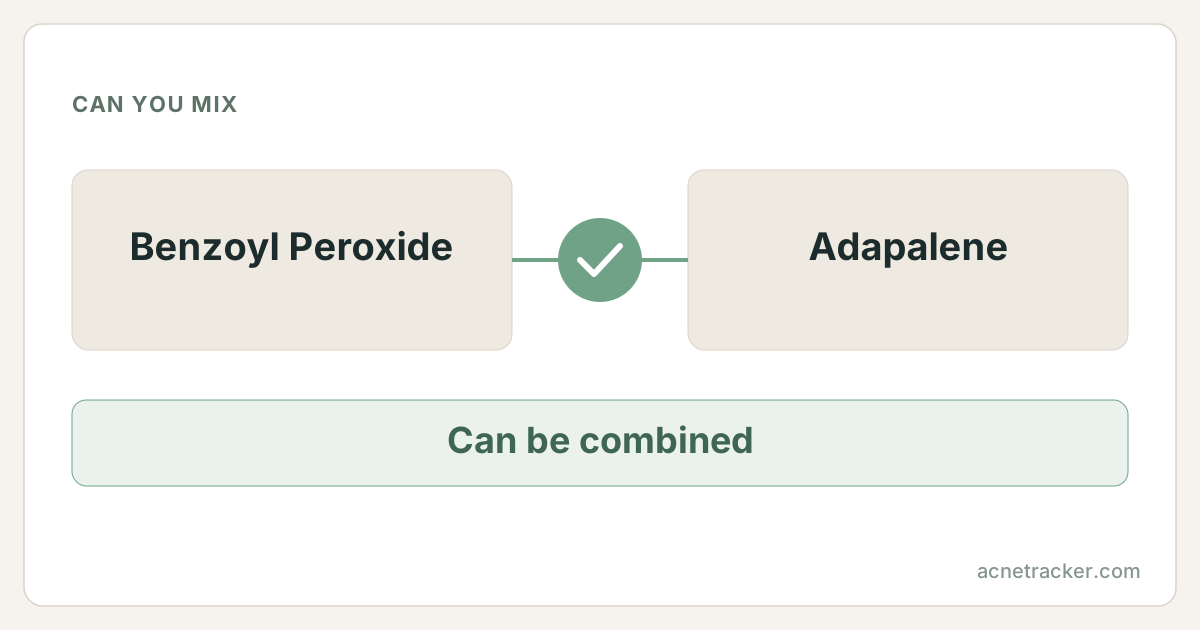
Yes. Adapalene is the exception among retinoids: unlike tretinoin, it does not oxidise when it sits next to benzoyl peroxide, and the two are sold worldwide as a single fixed-dose gel. You can apply them in the same routine. The limiting factor is not chemistry but dryness — together they are the most drying acne pairing available without a prescription in most markets.
How this pairing resolves
The two ingredients, their published numbers, and where they land together.
The numbers beside each ingredient are its published comedogenic rating and effective pH window, taken from its own profile page.
Show the numbers
| Ingredients | Metric | 0–5 |
|---|---|---|
| Benzoyl Peroxide | Comedogenic rating | 0/5 |
| Benzoyl Peroxide | Effective pH | no published pH |
| Adapalene | Comedogenic rating | 1/5 |
| Adapalene | Effective pH | 5.0–6.5 |
Why
The old rule that retinoids and benzoyl peroxide destroy each other comes from tretinoin. Tretinoin's polyene chain is easily attacked by the free-radical oxygen benzoyl peroxide releases, and stability work published in the late 1990s (Martin and colleagues, British Journal of Dermatology) measured substantial tretinoin loss within hours of contact while adapalene concentrations held essentially steady. Adapalene is a naphthoic acid derivative rather than a true vitamin A molecule: its aromatic ring system has no oxidisable double-bond chain for the peroxide to break, and it is also photostable, which is why it survives daylight as well. That stability is not a theoretical footnote — regulators approved fixed adapalene–benzoyl peroxide gels precisely because the two molecules coexist in one tube for years. Biologically they also target different links in the acne chain: adapalene normalises how follicular cells shed so plugs stop forming, while benzoyl peroxide releases oxygen into the follicle and reduces Cutibacterium acnes populations without breeding resistance. Trials of the fixed combination consistently clear more lesions than either agent alone.
How to combine them
If you have a fixed-combination gel, that decision is already made for you — follow the instructions on the tube. If you own two separate products, the simplest route is benzoyl peroxide in the morning and adapalene at night, which halves the daily dryness load while keeping both on board. If you want them in the same evening, cleanse, dry the skin fully, apply a thin pea-sized layer of adapalene to the whole affected area, wait until it is absorbed, then apply benzoyl peroxide only where you break out. Start adapalene two or three nights a week and a low-strength benzoyl peroxide wash rather than a leave-on gel; build up over six to eight weeks. Moisturiser is compulsory, not optional, and should go on top of both. Expect the first month to look worse before it looks better — adapalene commonly causes an initial flare as microcomedones surface. Adapalene above the low over-the-counter strength is prescription-only in many countries; if you have been given one, follow your dermatologist's instructions rather than a website.
Example routine
| When | Steps |
|---|---|
| Morning | Gentle cleanser → Benzoyl peroxide (2.5–5%) → Moisturiser → SPF 30+ |
| Evening | Cleanser → Adapalene (pea-size, whole face) → Moisturiser |
| First 6 weeks | Adapalene 3 nights weekly; benzoyl peroxide as a wash, not leave-on |
| If skin is peeling | Drop benzoyl peroxide to alternate mornings, keep moisturiser twice daily |
Warning signs
Frequently asked questions
Doesn't benzoyl peroxide deactivate retinoids?
It deactivates tretinoin, which oxidises on contact. Adapalene has a different, aromatic structure with nothing for the peroxide to oxidise, so it stays intact — that is why fixed adapalene and benzoyl peroxide gels exist at all.
Which one goes on first?
If you use both at night, adapalene first over the whole area, then benzoyl peroxide on the spots once it has absorbed. Most people find it easier to split them: benzoyl peroxide in the morning, adapalene at night.
Is the combination better than adapalene alone?
Trials of the fixed-dose gel report faster and greater lesion reduction than either ingredient used by itself, particularly for inflammatory spots. The trade-off is measurably more dryness and stinging in the first weeks.
Can I use them together on my back and chest?
Body skin tolerates both better than the face, and benzoyl peroxide washes are popular for back acne. Bleaching is the practical problem — use white towels and let the area dry before dressing.
Is adapalene with benzoyl peroxide safe during pregnancy?
Benzoyl peroxide is generally considered acceptable in pregnancy, but topical retinoids including adapalene are usually avoided. This is a decision for your doctor or midwife, not a routine you should self-assemble while pregnant.
Sources & further reading
There is no single study of this exact question. The guidance here is reasoned from the ingredient profiles below, each of which carries its own references:
- Benzoyl Peroxide3 refs
- Adapalene3 refs
Show every reference behind this page (5)
- PubChem — Benzoyl peroxide compound summarycited by Benzoyl Peroxide
- DermNet — Benzoyl peroxidecited by Benzoyl Peroxide
- FDA — Drugs (OTC acne products)cited by Benzoyl Peroxide, Adapalene
- PubChem — Adapalene compound summarycited by Adapalene
- DermNet — Adapalenecited by Adapalene
Medical disclaimer
Ingredients mentioned on this page
Find your personal acne triggers
Our free Acne Tracker lets you log breakouts, sleep, stress and diet, and shows you which factors correlate with your flare-ups.