Adenosine: Comedogenic Rating & Ingredient Analysis
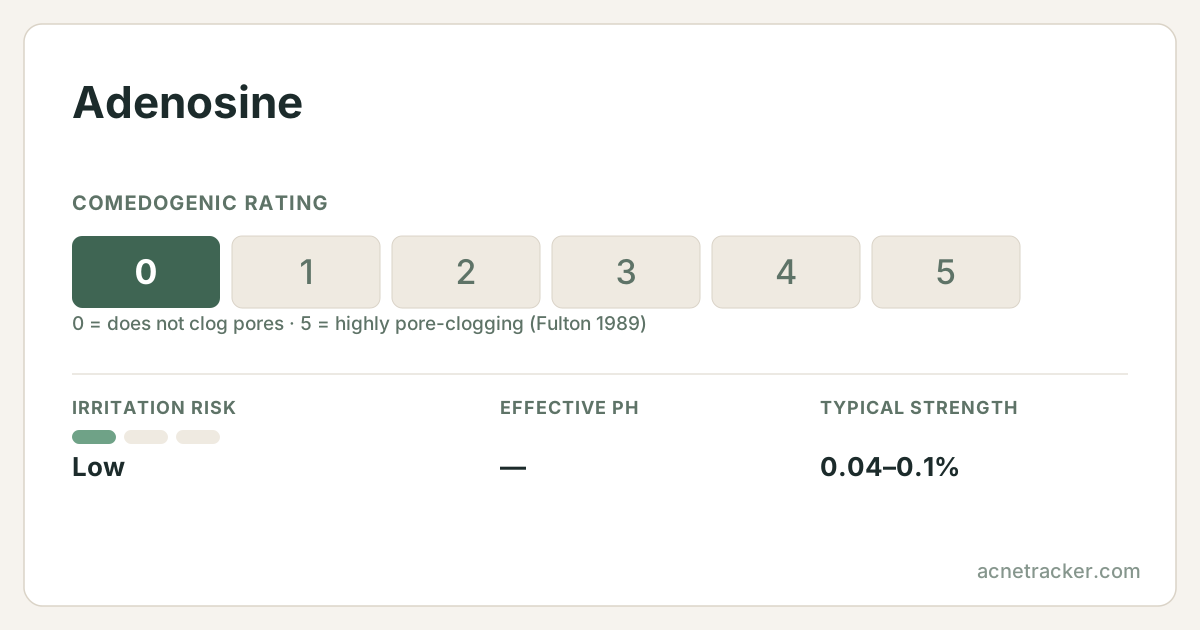
Adenosine is a small, biologically important molecule that your cells use constantly for energy and signalling, and in skincare it has become a quietly popular anti-aging and soothing ingredient. It is a naturally occurring nucleoside — a building block related to DNA and to the energy molecule ATP — and applied topically at very low concentrations it appears to send signals that support skin renewal and calm. It is best known as a gentle, well-tolerated smoothing active in serums, eye creams and firming products, and it carries approval as an anti-wrinkle active in some regulatory systems, which is unusual for a cosmetic ingredient.
Quick facts
- Comedogenic rating
- our estimate — not measured
- Irritation risk
- Low
- Effective pH
- —
- Typical strength
- 0.04–0.1%
- Pregnancy
- Considered safe
- Suits skin types
- drynormalmaturesensitivecombinationoily
Where this number comes from
No one has published a comedogenic rating for this ingredient. Fulton's 1989 table tested about 250 raw materials and this was not among them, and we found no later study measuring it. The figure shown is our own reasoning from the ingredient's chemistry and how it is used — treat it as an estimate, not a measurement.
Fulton read his own scale as 0-1 not significant, 2-3 borderline, 4-5 positive. The assay is the rabbit ear at 10% dilution, which the paper itself calls extremely sensitive and not fully predictive of human skin. Ratings describe the raw ingredient; concentration and formulation change real-world behaviour.
Caution profile
The four published fields on this page, on one 0–5 scale. Further from the centre means more care is needed — never that the ingredient is worse.
Derived, not measured: pore-clogging is the published comedogenic rating; irritation maps low/moderate/high to 1/3/5; pregnancy maps safe/caution/avoid to 0/3/5; skin-type limits is how many of the seven skin types this entry does NOT list. Every input is printed in words in the quick-facts card above.
Show the numbers
| Metric | 0–5 | Published field |
|---|---|---|
| Pore-clogging | 0 | 0/5 |
| Irritation | 1 | Low |
| Skin-type limits | 0.7 | 6/7 |
| Pregnancy | 0 | Considered safe |
Working pH and typical strength
Where this ingredient is formulated to sit, and at what concentration.
Both bars come from the fields above: the pH window and the typical strength range published for this ingredient. The tinted column is healthy skin's surface pH (about 4.7–5.75).
Show the numbers
| Metric | 0–5 |
|---|---|
| Typical strength | 0.04–0.1% |
What is it?
Chemically, adenosine is composed of the base adenine attached to a ribose sugar, and it plays a central role in cellular energy transfer and in signalling between cells. When applied to the skin, it is thought to interact with adenosine receptors on skin cells, encouraging processes linked to collagen production, wound healing and reduced inflammation. It is effective at surprisingly tiny concentrations — often around 0.04% to 0.1% — so a little goes a long way. In South Korea it is an officially recognised anti-wrinkle functional ingredient, which is one reason it appears so widely in K-beauty firming and smoothing products. It is water-soluble, stable and pleasant to formulate with.
Benefits
Smooths fine lines
Adenosine has recognised anti-wrinkle activity and is thought to support collagen production, helping to soften the look of fine lines with consistent use in serums and creams.
Soothes and calms
By influencing inflammatory signalling, adenosine has a soothing effect that helps calm the look of stressed or reactive skin, making it friendly to sensitive complexions.
Supports skin renewal
As a cell-signalling molecule involved in repair processes, adenosine encourages healthy skin renewal, contributing to a smoother, more refreshed appearance over time.
Extremely well tolerated
Adenosine works at tiny concentrations and rarely irritates, so it can be layered into almost any routine, including alongside retinoids where it may help offset dryness.
How to use
Adenosine is easy to use because it is gentle and compatible with nearly everything. Apply a serum, eye cream or moisturiser containing it once or twice daily to clean skin; there is no need for a slow introduction. It works well in the morning and at night, and it layers comfortably with niacinamide, peptides, hyaluronic acid and retinoids, where its soothing character can help counter irritation. Because it is effective at very low percentages, you will usually see it listed low on an ingredient label even in products that feature it — that is expected and not a sign of a weak formula. Consistency over weeks gives the best results.
Side effects
Adenosine is one of the most benign actives in skincare and very rarely causes any reaction. Because it is used at such low concentrations and is naturally present in the body, irritation, stinging or allergy are all uncommon. As with any product, the other ingredients in a formula are more likely to cause a reaction than adenosine itself, so a short patch test of a new product is still a reasonable precaution.
Who should avoid it
There is essentially no skin type that needs to avoid adenosine; it suits sensitive, dry, oily and mature skin alike. The only real caution is that it is not a dramatic, standalone treatment — it works best as a supportive smoothing and soothing ingredient within a broader routine. It is considered safe to use during pregnancy, though you should confirm with your doctor about your overall regimen.
Pairs well with
Frequently asked questions
What does adenosine do for skin?
Adenosine acts as a cell-signalling molecule that supports collagen production, soothes the skin and helps smooth fine lines, which is why it is used as a gentle anti-aging and calming active.
Is adenosine good for sensitive skin?
Yes. It is extremely well tolerated, works at very low concentrations and has soothing properties, making it well suited to sensitive and reactive skin.
Can I use adenosine with retinol?
Yes, and it is a helpful pairing. Adenosine's soothing character can offset some of the dryness and irritation of retinol while both support skin renewal.
Why is adenosine listed so low on the label?
Because it is effective at tiny concentrations, often around 0.04–0.1%. A low position on the ingredient list is normal and does not mean the product is under-dosed.
Is adenosine safe in pregnancy?
Adenosine is generally considered safe to use during pregnancy and breastfeeding. As always, check with your healthcare provider about your full routine to be sure.
Sources & further reading
Medical disclaimer
Find your personal acne triggers
Our free Acne Tracker lets you log breakouts, sleep, stress and diet, and shows you which factors correlate with your flare-ups.