Hot Tub Folliculitis
Hot tub folliculitis is one of the few skin problems that comes with a timestamp. It is caused by Pseudomonas aeruginosa, a bacterium that tolerates warm water and survives when disinfectant levels drop — which happens easily in a heavily used tub, a poorly maintained spa or a warm pool. The organism enters hair follicles during the soak, and the rash appears characteristically twelve hours to two days later, which is precisely why so many people fail to connect the two. The good news is that in otherwise healthy people it usually settles on its own within a week or two without any treatment at all, and the main thing this page can do is stop you treating it as acne and stop you going back in the same water.
How to recognize it
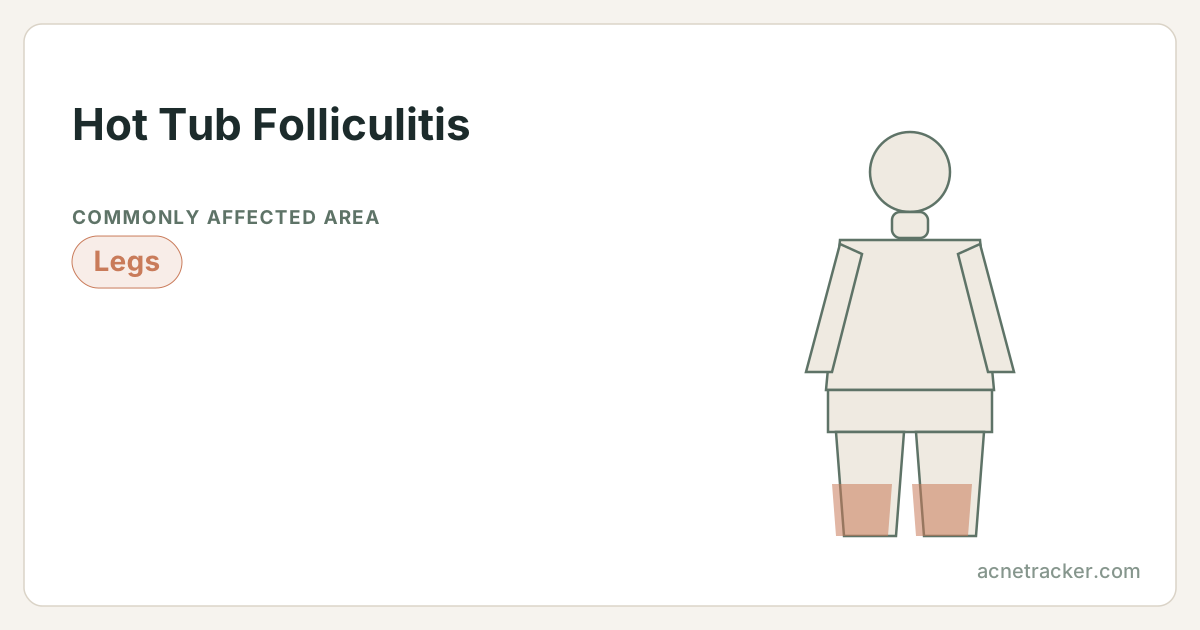
Itchy is the dominant symptom, and the pattern is the diagnosis. Expect red bumps, often with small pustules at the follicle, concentrated where a swimsuit held warm water against the skin for longest — the trunk, buttocks, hips and upper thighs — with the legs and arms typically less affected. Areas the swimsuit covered are usually worse than bare skin, which is the reverse of what people expect from a water-borne problem and is one of the strongest clues. The timing seals it: nothing at the time of the soak, then an itchy eruption a day or two later. Some people also get sore, tender lumps rather than a fine rash, and a mild fever or ear discomfort can accompany it.
What causes it
Pseudomonas in inadequately treated warm water
This bacterium is unusual in tolerating warm water and surviving where chlorine or bromine levels have fallen. Heat, heavy bather load and organic debris all consume disinfectant quickly, so a tub that was fine yesterday can be a problem today with no visible change to the water.
The swimsuit holding water against skin
A wet swimsuit keeps contaminated water in prolonged contact with the follicles beneath it, at body temperature, for as long as you stay in it. This is why the covered areas break out worse than the bare ones, and why staying in a wet costume afterwards makes it more likely.
Length and warmth of the soak
The longer and warmer the exposure, the more opportunity the organism has to enter follicles. Hot water also softens and slightly swells the follicular openings, which is thought to make entry easier than it would be in a cold pool.
Recent shaving or waxing
Skin shaved shortly before getting in has hundreds of fresh micro-openings and a compromised surface. Doing that within a day of a spa gives Pseudomonas an easier route in, which is worth knowing before a holiday where both are on the agenda.
Wooden tubs, filters and biofilm
The organism can persist in filters, pipework and porous surfaces as a biofilm that ordinary surface disinfection does not reach. This is why some tubs cause repeated outbreaks in different people and why the fix is maintenance rather than skincare.
Ingredients with evidence
| Ingredient | Role |
|---|---|
| Colloidal oatmeal | Aimed at the actual symptom, which is itch. Soothing rather than antibacterial, and a reasonable comfort measure while a self-limiting rash resolves. |
| Niacinamide | Calms residual redness and supports the barrier during recovery. Supportive only — it plays no role against the organism itself. |
| Azelaic acid | Useful later rather than during: it works on the brown marks the settled bumps can leave behind, particularly on medium and deeper skin tones. |
| Glycerin | Light hydration for skin that has been in hot water and is now itchy and dry. Comfort while the rash runs its course, not a treatment. |
| Benzoyl peroxide | Commonly reached for and largely beside the point here. This is not the ordinary skin flora and the rash usually clears without antibacterials — worth a pharmacist conversation rather than assumption. |
Building the routine
Mostly, do less. In healthy people this resolves on its own within one to two weeks, so the plan is comfort and prevention rather than treatment: shower and change out of a wet swimsuit immediately after any soak, wash the costume rather than re-wearing it damp, and use a soothing lotion for the itch. Do not scrub the rash and do not squeeze the pustules — both prolong it and add marks. Crucially, do not get back into the same water: repeat exposure is the commonest reason this recurs, and the tub, not your skin, is the thing that needs fixing. If you own the tub, that means checking disinfectant levels and filters rather than buying body wash. Avoid shaving the affected areas until it has settled.
When to see a doctor
Frequently asked questions
How long after a hot tub does the rash appear?
Typically twelve hours to two days, occasionally up to four. That delay is the reason most people blame a new body wash or their laundry detergent instead of the water. If an itchy bumpy rash appears in that window after a soak, the timing alone is highly suggestive.
Is hot tub folliculitis contagious?
Not person-to-person in ordinary contact. Everyone affected caught it from the same source — the water. That is why outbreaks hit whole groups who shared a tub on the same evening rather than spreading through a household afterwards.
Why is the rash worse where my swimsuit was?
Because the costume held contaminated warm water against those follicles for the entire soak and often for a while afterwards. Bare skin drains and dries; covered skin does not. It is counterintuitive, and it is one of the most reliable identifying features.
Does it need antibiotics?
Usually not. In otherwise healthy people it is self-limiting and clears within a week or two. Antibiotics are reserved for cases that are severe, persistent, deep or affecting someone whose immune system is compromised — which is a decision for a doctor, not a pharmacy shelf.
Sources & further reading
What this page cites about the condition itself:
There is no single study of this exact question. The guidance here is reasoned from the ingredient profiles below, each of which carries its own references:
- Colloidal Oatmeal2 refs
- Niacinamide2 refs
- Azelaic Acid3 refs
- Glycerin3 refs
- Benzoyl Peroxide3 refs
Show every reference behind this page (10)
- FDA OTC monograph — skin protectant drug products (colloidal oatmeal)cited by Colloidal Oatmeal, Benzoyl Peroxide
- PubMed — Colloidal oatmeal formulations as adjunct treatments in atopic dermatitis (J Drugs Dermatol, 2012)cited by Colloidal Oatmeal
- Niacinamide: mechanisms of action and its topical use in dermatology (PubMed)cited by Niacinamide
- European Commission CosIng database — Niacinamidecited by Niacinamide, Azelaic Acid, Glycerin
- PubChem — Azelaic acid compound summarycited by Azelaic Acid
- DermNet — Azelaic acidcited by Azelaic Acid
- PubChem — Glycerol compound summarycited by Glycerin
- DermNet — Moisturiserscited by Glycerin
- PubChem — Benzoyl peroxide compound summarycited by Benzoyl Peroxide
- DermNet — Benzoyl peroxidecited by Benzoyl Peroxide
Medical disclaimer
Ingredients mentioned on this page
Find your personal acne triggers
Our free Acne Tracker lets you log breakouts, sleep, stress and diet, and shows you which factors correlate with your flare-ups.