Can You Mix Glycerin and Lactic Acid?
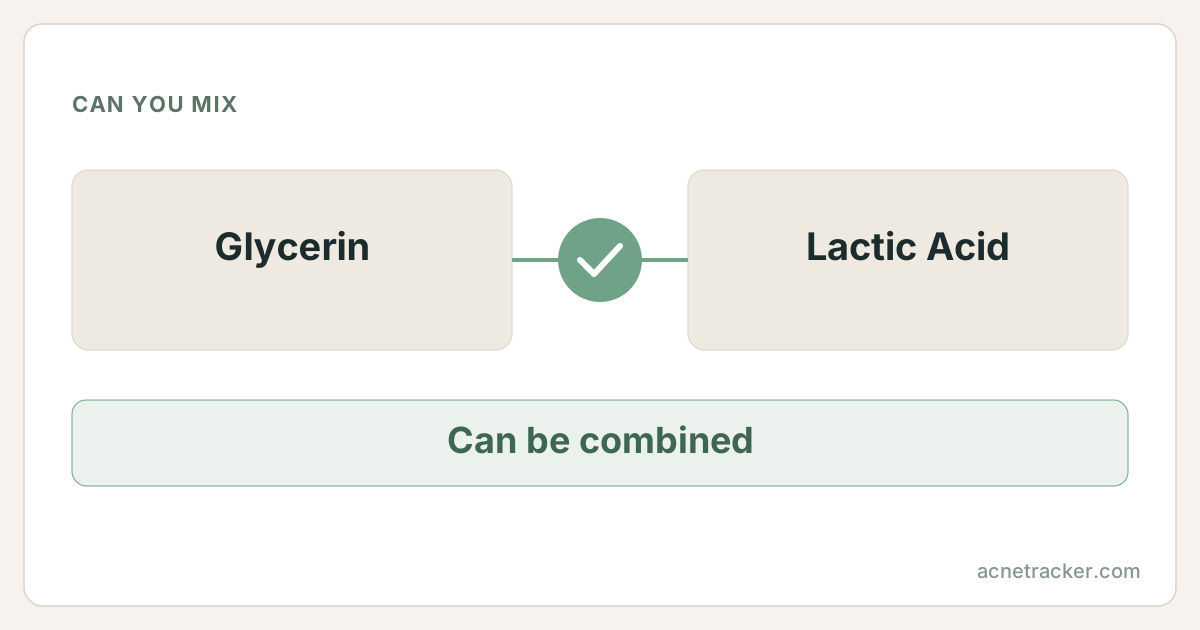
Yes, and it is one of the most complementary pairings you can build. Glycerin is a powerful humectant that pulls water into the skin, and lactic acid both exfoliates and, unusually for an acid, hydrates. Layered together they smooth and deeply moisturise at once, and glycerin softens any tightness the exfoliation might cause.
How this pairing resolves
The two ingredients, their published numbers, and where they land together.
The numbers beside each ingredient are its published comedogenic rating and effective pH window, taken from its own profile page.
Show the numbers
| Ingredients | Metric | 0–5 |
|---|---|---|
| Glycerin | Comedogenic rating | 0/5 |
| Glycerin | Effective pH | no published pH |
| Lactic Acid | Comedogenic rating | 0/5 |
| Lactic Acid | Effective pH | 3.0–4.0 |
Why
This pairing works because both ingredients love water, just in different ways. Glycerin is one of the most studied humectants in skincare: it binds water and draws it from the deeper skin and the air into the surface layers, keeping them supple. Lactic acid is unusual among exfoliating acids because it is also a humectant and a component of the skin's own natural moisturizing factor, so at low concentrations it hydrates as well as it exfoliates. Together they hit the same goal from two directions, the acid renewing and softening the surface while glycerin floods it with water. There is no chemical conflict, glycerin is inert and pH-stable, so it neither disturbs the acid's working pH nor is degraded by it. In fact, many lactic acid products already include glycerin in the formula precisely to buffer the exfoliation and keep skin comfortable. For dry, dull skin this combination is close to ideal, delivering smoother texture without the stripped, tight feeling stronger acids can leave.
How to combine them
Glycerin is rarely used alone, it usually appears in a toner, essence, serum or moisturizer, so treat it as your hydration layer around the acid. On acid nights, cleanse, apply lactic acid to dry skin, wait a few minutes, then apply your glycerin-rich hydrator or moisturizer on top. Applying glycerin products before the acid on very dry skin is also fine if you find neat acid too sharp, though it slightly slows the exfoliation. Glycerin has no frequency limit, so use it every morning and evening, while keeping lactic acid to two or three nights a week for most skin. A humectant like glycerin works best when sealed, so follow with a moisturizer or light oil in dry climates. Morning SPF 30 or higher remains essential after acid use.
Example routine
| When | Steps |
|---|---|
| Evening (2–3× per week) | Cleanser → Lactic acid → wait 5 min → Glycerin hydrator/moisturizer |
| Other evenings | Cleanser → Glycerin hydrator → Moisturizer |
| Every morning | Cleanser → Glycerin hydrator → Moisturizer → SPF 30+ |
Warning signs
Frequently asked questions
Is lactic acid hydrating like glycerin, or only exfoliating?
Lactic acid is unusual because it does both. It exfoliates and, being part of the skin's natural moisturizing factor, also acts as a humectant, so pairing it with glycerin doubles the hydration while the acid renews.
Should glycerin go before or after lactic acid?
Usually after, so the acid contacts skin first and works at low pH, then glycerin hydrates on top. Very sensitive skin can apply a glycerin layer first to soften the acid, at a slight cost to exfoliation.
Can I use a glycerin toner every day with lactic acid?
Yes. Glycerin has no frequency limit and suits daily morning and evening use. Only the lactic acid needs to stay at two or three nights a week for most skin types.
Is glycerin plus lactic acid good for dry skin?
It is close to ideal for dry, dull skin. The acid smooths flaky buildup while glycerin and the acid's own humectant action flood the surface with water, avoiding the stripped feeling stronger acids cause.
Sources & further reading
There is no single study of this exact question. The guidance here is reasoned from the ingredient profiles below, each of which carries its own references:
- Glycerin3 refs
- Lactic Acid3 refs
Show every reference behind this page (5)
- PubChem — Glycerol compound summarycited by Glycerin
- DermNet — Moisturiserscited by Glycerin
- European Commission CosIng database — Glycerincited by Glycerin, Lactic Acid
- PubChem — Lactic acid compound summarycited by Lactic Acid
- DermNet — Alpha hydroxy acidscited by Lactic Acid
Medical disclaimer
Ingredients mentioned on this page
Find your personal acne triggers
Our free Acne Tracker lets you log breakouts, sleep, stress and diet, and shows you which factors correlate with your flare-ups.