Betaine: Comedogenic Rating & Ingredient Analysis
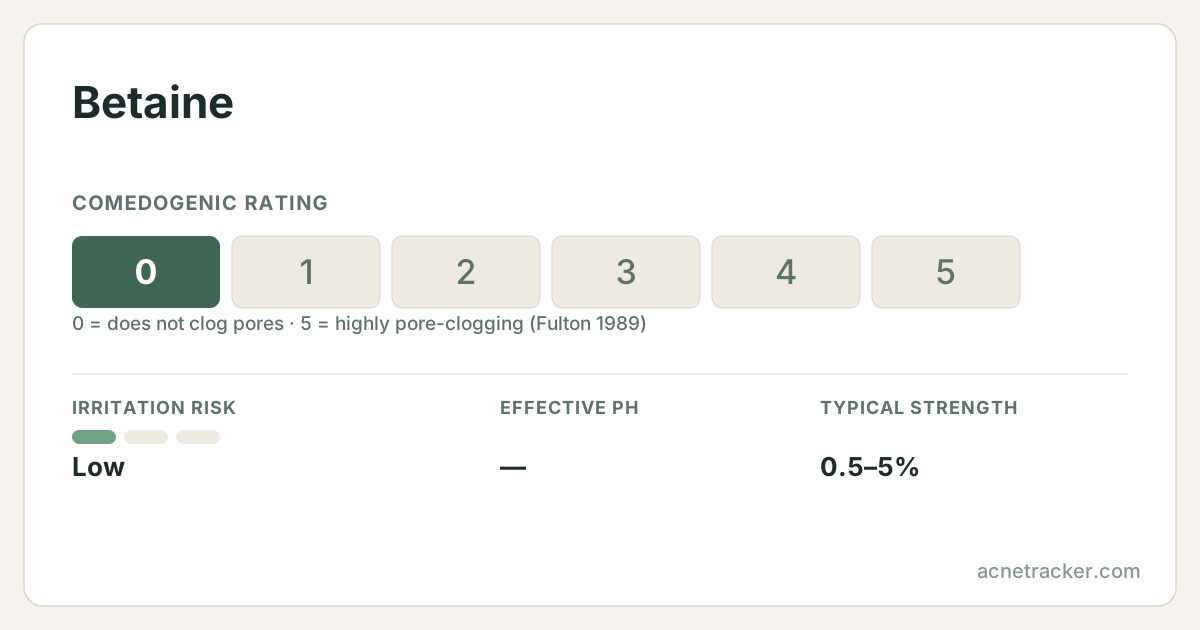
Betaine is a naturally occurring compound, usually sourced from sugar beet, that has quietly become a favourite gentle humectant. It hydrates the skin, but it also does something more interesting: it acts as an osmolyte, a molecule that helps cells maintain their internal water balance under stress. That protective quality makes betaine especially useful in products meant to calm and cushion the skin, and it is a common addition to gentle cleansers and soothing serums. Non-irritating, non-comedogenic and pleasant in feel, it is the kind of ingredient that improves comfort and hydration without any downside, which is why it shows up so widely.
Quick facts
- Comedogenic rating
- our estimate — not measured
- Irritation risk
- Low
- Effective pH
- —
- Typical strength
- 0.5–5%
- Pregnancy
- Considered safe
- Suits skin types
- drysensitivenormalcombinationoilyacne-prone
Where this number comes from
No one has published a comedogenic rating for this ingredient. Fulton's 1989 table tested about 250 raw materials and this was not among them, and we found no later study measuring it. The figure shown is our own reasoning from the ingredient's chemistry and how it is used — treat it as an estimate, not a measurement.
Fulton read his own scale as 0-1 not significant, 2-3 borderline, 4-5 positive. The assay is the rabbit ear at 10% dilution, which the paper itself calls extremely sensitive and not fully predictive of human skin. Ratings describe the raw ingredient; concentration and formulation change real-world behaviour.
Caution profile
The four published fields on this page, on one 0–5 scale. Further from the centre means more care is needed — never that the ingredient is worse.
Derived, not measured: pore-clogging is the published comedogenic rating; irritation maps low/moderate/high to 1/3/5; pregnancy maps safe/caution/avoid to 0/3/5; skin-type limits is how many of the seven skin types this entry does NOT list. Every input is printed in words in the quick-facts card above.
Show the numbers
| Metric | 0–5 | Published field |
|---|---|---|
| Pore-clogging | 0 | 0/5 |
| Irritation | 1 | Low |
| Skin-type limits | 0.7 | 6/7 |
| Pregnancy | 0 | Considered safe |
Working pH and typical strength
Where this ingredient is formulated to sit, and at what concentration.
Both bars come from the fields above: the pH window and the typical strength range published for this ingredient. The tinted column is healthy skin's surface pH (about 4.7–5.75).
Show the numbers
| Metric | 0–5 |
|---|---|
| Typical strength | 0.5–5% |
What is it?
Betaine, or trimethylglycine, is an amino-acid derivative found naturally in many plants and in the human body, where it helps cells regulate their water content. In skincare it works on two levels. As a humectant it binds water in the stratum corneum, softening and smoothing the surface. As an osmoprotectant it helps skin cells hold onto water and resist the shrivelling effect of osmotic stress — from harsh weather, cleansing or actives — which translates to a calmer, more comfortable feel. It also improves the mildness of cleansing formulas by buffering the harshness of surfactants. It is non-acidic, has a comedogenic rating of 0 and an excellent tolerance profile across all skin types.
Benefits
Comfortable hydration
As a humectant it binds water in the surface layers, relieving tightness and giving a soft, cushioned feel without heaviness.
Protects cells under stress
Its osmolyte action helps skin cells maintain water balance during environmental or chemical stress, supporting a calmer surface.
Softens harsh cleansers
Added to face washes, it buffers the stripping effect of surfactants, leaving skin less tight after cleansing.
Gentle for all skin
Non-comedogenic and low-irritation, it suits sensitive and acne-prone skin as well as dry or mature skin.
How to use
Use products containing betaine as directed. In leave-on products, apply to damp skin and seal with a moisturiser to keep the hydration it draws in from evaporating. In cleansers, betaine simply makes the wash gentler, so no special steps are needed. It layers with all common actives, including niacinamide and exfoliating acids, and pairs naturally with humectants like glycerin and hyaluronic acid. There is no adjustment period and no restriction on frequency; it is safe to use morning and night.
Side effects
Betaine is very well tolerated, with irritation and allergy being uncommon. As with any humectant, in very dry conditions it should be used under an occlusive moisturiser so it does not draw water from deeper skin to the surface. Trimethylglycine is a small, non-acidic molecule: it carries a comedogenic rating of 0, takes nothing off the surface, and leaves the skin no more sun-reactive than it was. For virtually all users it is comfortable and uneventful.
Who should avoid it
No skin type needs to avoid betaine. If your skin is very dry, bear in mind that betaine's osmolyte action helps cells hold onto the water they already have — it cannot supply the occlusive layer that stops that water leaving, so pair it with a richer cream. People with a known reaction to it can patch test first, though such reactions are rare.
Pairs well with
Frequently asked questions
What is betaine used for in skincare?
It is a gentle humectant that hydrates the skin and an osmolyte that helps cells maintain water balance under stress. It also makes cleansers milder by buffering harsh surfactants.
Is betaine good for sensitive skin?
Yes. It is soothing, non-comedogenic and low-irritation, and its cell-protecting osmolyte action makes it a good fit for sensitive and easily stressed skin.
Does betaine clog pores?
No. Betaine has a comedogenic rating of 0 and is water-loving, so it does not clog pores and is suitable for acne-prone skin.
Is cosmetic betaine the same as the supplement?
The molecule (trimethylglycine) is the same, but in skincare it is used topically as a humectant and osmolyte, not taken by mouth. Topical use has no relation to oral supplement effects.
Where this ingredient shows up here
Counted across this database, not the web — these are the pages on this site that reason about this ingredient.
Buying guides 1
Sources & further reading
Betaine's humectant and osmoprotectant behaviour is a physical-chemical property and is well established. The soothing description, though, rests on research into betaine in systemic inflammation rather than on topical skin trials. Note also that cocamidopropyl betaine, common in cleansers, is a different substance entirely.
Medical disclaimer
Find your personal acne triggers
Our free Acne Tracker lets you log breakouts, sleep, stress and diet, and shows you which factors correlate with your flare-ups.