How to Choose a Body Wash for Oily Skin
Oily body skin concentrates on the chest, back and shoulders, where the skin carries more and larger sebaceous glands than the limbs. The instinct is to scrub it clean and strip away every trace of oil, but on the body as on the face that backfires: stripping triggers rebound oil and irritation, and a body wash only touches the skin for seconds before it rinses. The goal is thorough but balanced cleansing that removes sweat and excess sebum without wrecking the barrier. This page describes the ingredient profile, texture and habits that keep oily body skin clean and comfortable, so you can judge a wash on its formula rather than a 'deep clean' promise.
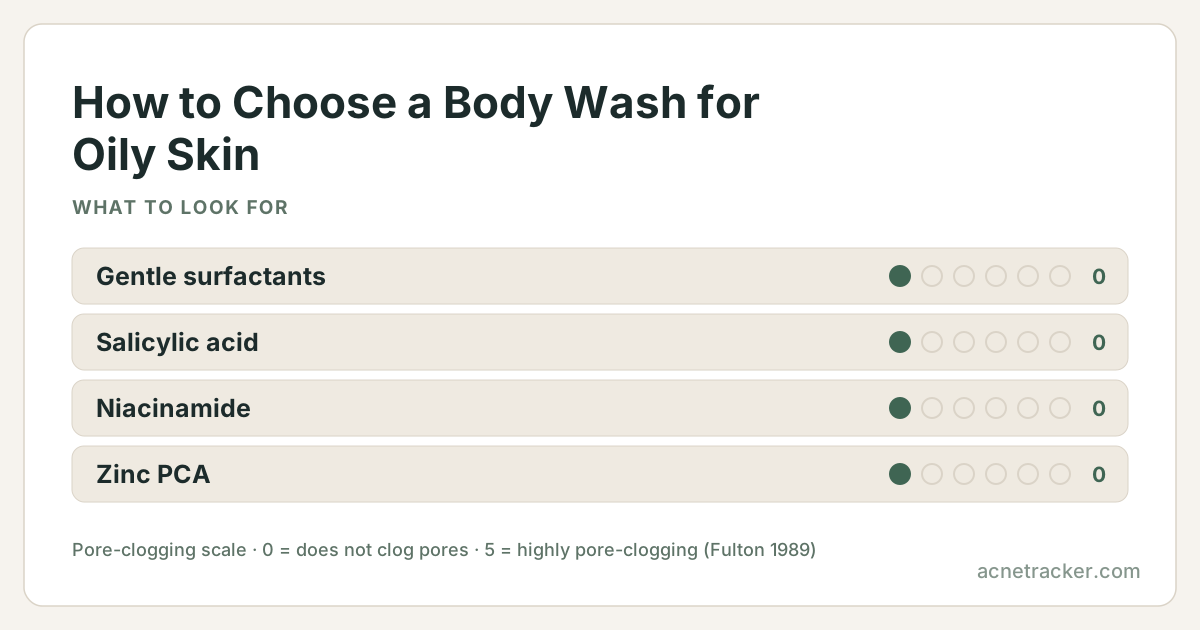
Ingredients to look for
| Ingredient | Why it matters |
|---|---|
| Gentle surfactants (coco-glucoside, cocamidopropyl betaine, sodium cocoyl isethionate) | Clean sweat and excess oil at skin-friendly pH without dissolving the barrier lipids the way high-pH soap does. |
| Salicylic acid | Oil-soluble, so it helps clear the congestion that oily body skin is prone to on the chest and back; a useful active in a wash for this skin. |
| Niacinamide | Lightly helps balance oil and calm the skin; a sign the formula respects the barrier rather than aiming to strip. |
| Zinc PCA | Mildly sebum-regulating and soothing, well suited to shiny, sweat-prone body skin. |
| Glycerin | Keeps a cleansing wash from dehydrating the skin, because dehydrated oily skin overproduces oil to compensate. |
Ingredients to avoid
| Ingredient | Why it matters |
|---|---|
| High-pH bar soaps | Alkaline washing disrupts the acid mantle, dries the surface and paradoxically drives more oil on already-oily body skin. |
| Denatured alcohol high on the ingredient list | Gives a brief matte feeling by dissolving surface oil, then triggers rebound shine and irritation with repeated use. |
| Harsh scrubs and stiff brushes | Abrasion inflames oily, congestion-prone skin and does nothing about the oil inside the follicle. |
| Heavy, greasy body butters as your cleanser | Rich cleansing formulas leave a residue that sits on already-oily skin between showers. |
How to choose
Favour a gel or light foaming texture over rich, creamy washes; the format suits oily body skin the way it suits an oily face. Read the ingredient list for a short surfactant system from the gentle families above, glycerin in the top half, and no denatured alcohol near the top; add salicylic acid if the chest or back tends to congestion. Ignore 'deep-cleansing', 'purifying' and 'oil-free' as marketing, and use the after-shower feel test instead: skin should feel clean but not tight, because tightness within minutes signals a wash that strips and provokes rebound oil. Keep water lukewarm rather than hot. And remember the wash is one part of the picture — for oily skin that also breaks out, a light leave-on treatment does more than any cleanser rinsed away in seconds.
How to apply
Wash once or twice daily and after sweating, using lukewarm water rather than hot. Lather over the oil-prone chest, back and shoulders with your hands, giving any salicylic acid a short working time, then rinse thoroughly so no residue is left in the follicles. Dry with a clean towel. Even oily body skin benefits from a light, non-greasy lotion afterwards if it feels tight, which prevents the dehydration that drives more oil.
Frequently asked questions
Should oily body skin use a foaming body wash?
Foam is fine as long as the surfactant system is gentle. A modern low-pH foaming gel cleans oily body skin well, while an old-school high-pH foaming soap strips it and provokes rebound oil. Judge the ingredient list and after-wash feel, not the amount of lather.
How often should I wash oily body skin?
Once or twice a day plus after heavy sweating is usually right. Washing more often, or scrubbing hard, strips the barrier and prompts the skin to produce even more oil, which is the opposite of the goal.
Does oily body skin still need moisturiser?
Often yes, at least a light one. Oily skin can still be dehydrated, and dehydration drives more oil production, so a thin non-greasy lotion after washing keeps the barrier balanced without adding a greasy feel.
Why is my back and chest oilier than my arms and legs?
The chest, back and shoulders carry more and larger sebaceous glands than the limbs, so they naturally produce more oil and are more prone to shine and congestion. That is why oily-skin body washes and any actives are usually focused there.
Sources & further reading
There is no single study of this exact question. The guidance here is reasoned from the ingredient profiles below, each of which carries its own references:
- Cocamidopropyl Betaine2 refs
- Salicylic Acid2 refs
- Niacinamide2 refs
- Zinc PCA3 refs
- Glycerin3 refs
Show every reference behind this page (9)
- European Commission CosIng — Cocamidopropyl Betainecited by Cocamidopropyl Betaine, Niacinamide, Zinc PCA, Glycerin
- Cosmetic Ingredient Review — safety assessment of Cocamidopropyl Betainecited by Cocamidopropyl Betaine
- Salicylic acid as a peeling agent: a comprehensive review (PubMed)cited by Salicylic Acid
- FDA OTC monograph — acne drug products (salicylic acid 0.5–2%)cited by Salicylic Acid
- Niacinamide: mechanisms of action and its topical use in dermatology (PubMed)cited by Niacinamide
- PubChem — Zinc PCA (zinc pyrrolidone carboxylate)cited by Zinc PCA
- Zinc l-pyrrolidone carboxylate inhibits the UVA-induced production of matrix metalloproteinase-1 by in vitro cultured skin fibroblasts, whereas it enhances their collagen synthesis (PubMed)cited by Zinc PCA
- PubChem — Glycerol compound summarycited by Glycerin
- DermNet — Moisturiserscited by Glycerin
Medical disclaimer
Ingredients mentioned on this page
Find your personal acne triggers
Our free Acne Tracker lets you log breakouts, sleep, stress and diet, and shows you which factors correlate with your flare-ups.