Can You Mix Ceramides and Niacinamide?
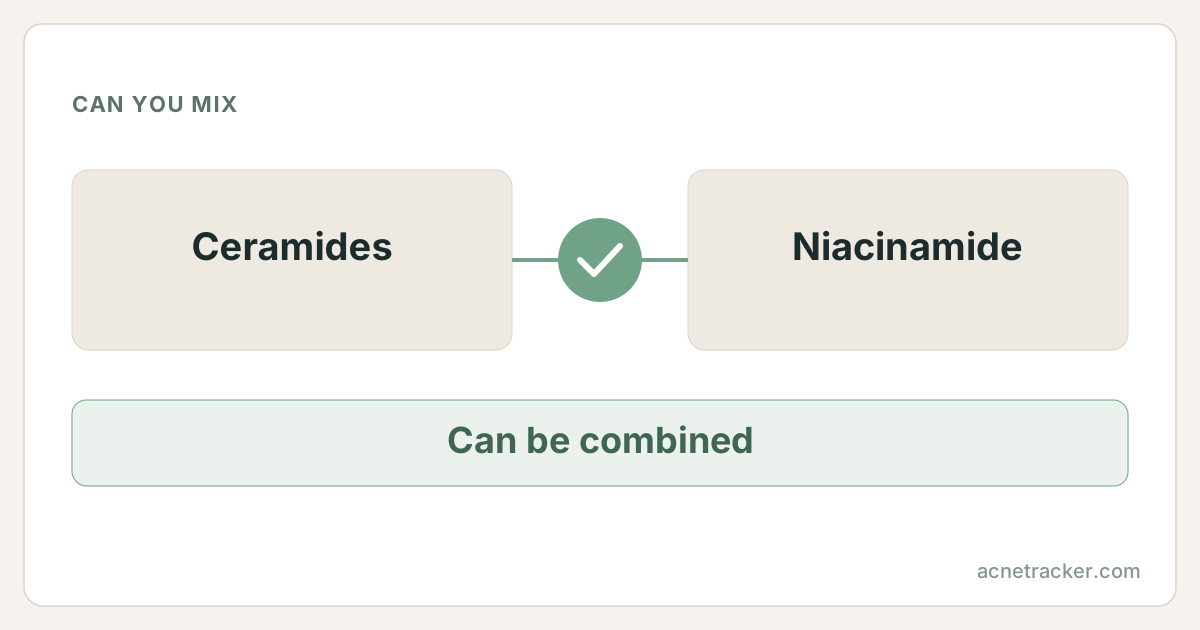
Yes, and it is one of the best barrier-repair combinations you can use. Niacinamide actually boosts your skin's own production of ceramides, so pairing it with applied ceramides works on the same goal from two directions. They are completely compatible, gentle and non-exfoliating. Apply the lighter niacinamide serum first, then a ceramide moisturizer to seal everything in.
How this pairing resolves
The two ingredients, their published numbers, and where they land together.
The numbers beside each ingredient are its published comedogenic rating and effective pH window, taken from its own profile page.
Show the numbers
| Ingredients | Metric | 0–5 |
|---|---|---|
| Ceramides | Comedogenic rating | 0/5 |
| Ceramides | Effective pH | no published pH |
| Niacinamide | Comedogenic rating | 0/5 |
| Niacinamide | Effective pH | 5.0–7.0 |
Why
Ceramides are lipids that make up a large share of the skin barrier, the mortar between skin cells that keeps water in and irritants out. When ceramide levels drop — through age, over-exfoliation, harsh weather or conditions like eczema — the barrier weakens, leading to dryness, sensitivity and irritation. Applying ceramides tops up that mortar directly. Niacinamide approaches the same barrier from inside the skin's biology: it is a well-documented booster of the skin's own synthesis of ceramides and other barrier lipids, and it also calms inflammation and reduces water loss. So the two are genuinely synergistic — niacinamide helps the skin manufacture more of exactly the lipid you are also applying, while both reduce trans-epidermal water loss. There is no pH conflict, no exfoliation and no irritation risk, making this one of the safest and most restorative pairings in skincare, ideal for compromised, sensitive or over-treated skin.
How to combine them
Layer thin to rich: apply the water-based niacinamide serum to clean skin first, let it absorb, then apply a ceramide-containing moisturizer or cream on top to seal in the serum and reinforce the barrier. Often the easiest approach is a niacinamide serum followed by a good ceramide moisturizer, since ceramides most commonly appear in creams rather than standalone serums. Both can be used morning and night, every day, with no adjustment period, and this pairing is especially valuable as the calming, rebuilding base of a routine that also includes stronger actives like retinoids or acids — using it on recovery nights helps the barrier bounce back. Finish mornings with sunscreen. There is no waiting time or special order beyond serum-before-cream.
Example routine
| When | Steps |
|---|---|
| Morning | Cleanser → Niacinamide → Ceramide moisturizer → SPF 30+ |
| Evening | Cleanser → Niacinamide → Ceramide moisturizer |
| Recovery nights | Cleanser → Niacinamide → Ceramide cream (barrier rebuild) |
Warning signs
Frequently asked questions
Do niacinamide and ceramides work well together?
Very well. Niacinamide boosts your skin's own ceramide production while applied ceramides top up the barrier directly, so the two reinforce the same repair goal from different angles.
Do ceramides go on before or after niacinamide?
Apply the water-based niacinamide serum first, then a ceramide moisturizer or cream to seal it in. Ceramides usually come in richer creams, which belong later in the routine.
Is this combination good for a damaged skin barrier?
Yes, it is one of the best choices for barrier repair. Both reduce water loss and rebuild barrier lipids, and niacinamide calms inflammation, making the pair ideal for sensitive or over-treated skin.
Can I use this alongside retinol or acids?
Yes. Niacinamide and ceramides make an excellent calming base and are especially useful on recovery nights, helping the barrier bounce back from stronger actives like retinoids or exfoliating acids.
Can I use them every day?
Absolutely. Both are gentle, non-exfoliating and need no adjustment period, so daily morning and evening use is the standard way to maintain a strong, comfortable barrier.
Sources & further reading
There is no single study of this exact question. The guidance here is reasoned from the ingredient profiles below, each of which carries its own references:
- Ceramides3 refs
- Niacinamide2 refs
Show every reference behind this page (4)
- DermNet — Skin barrier functioncited by Ceramides
- PubChem — Ceramide compound summarycited by Ceramides
- European Commission CosIng database — Ceramide NPcited by Ceramides, Niacinamide
- Niacinamide: mechanisms of action and its topical use in dermatology (PubMed)cited by Niacinamide
Medical disclaimer
Ingredients mentioned on this page
Find your personal acne triggers
Our free Acne Tracker lets you log breakouts, sleep, stress and diet, and shows you which factors correlate with your flare-ups.