Maskne on the Cheeks
Maskne is the everyday name for breakouts that appear where a face covering rubs and seals the skin, and on the cheeks it typically follows the exact band where the mask edges sit. It is a form of acne mechanica, driven by friction, pressure, heat and trapped humid air rather than by any failing of your cleansing. Behind a mask the cheeks become warm and damp, oil and sweat build up, and constant rubbing irritates follicles into inflamed papules and pustules. Anyone who wears masks for long stretches at work can get it. The good news is that a few practical changes to the mask and a gentle routine usually bring it under control.
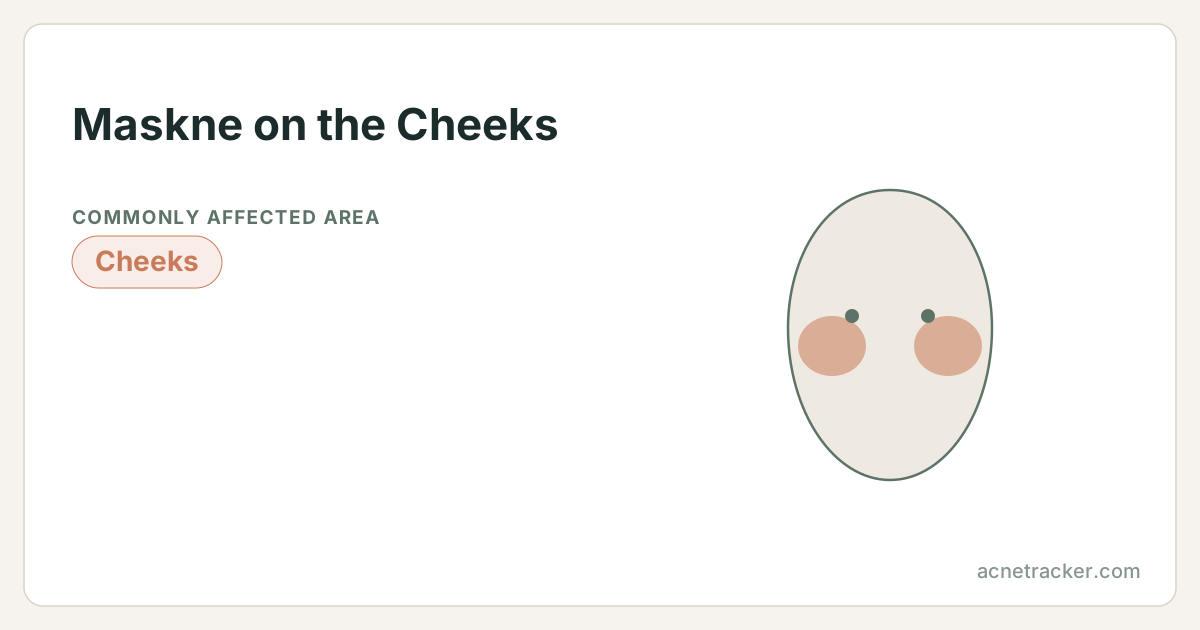
How to recognize it
Maskne shows up as clusters of papules, pustules and small comedones concentrated exactly where the mask contacts the cheeks, along with redness, chafing and sometimes a rough or raw feeling from friction. The pattern following the mask's footprint is the giveaway, sparing the areas the mask does not touch. It can be mixed with irritation and, in some people, a flare of the yeast-driven bumps of fungal folliculitis in the warm, humid conditions. If bumps are uniform and intensely itchy rather than a varied acne mix, a fungal component may be adding to the friction breakout.
What causes it
Friction and pressure
The mask rubs against the cheeks with every movement and word, irritating follicles mechanically. This constant friction is the core of acne mechanica and explains why breakouts trace the mask's edges.
Heat and trapped humidity
Breathing behind a mask creates a warm, moist microclimate against the cheeks. That humidity swells and softens follicle openings and encourages both clogging and, in some, yeast overgrowth.
Sweat, oil and debris build-up
Sweat, sebum, saliva and skincare accumulate under the mask with nowhere to evaporate, mixing into a film that clogs follicles across the covered cheek far faster than usual.
Reused or unwashed masks
Wearing the same cloth mask without washing, or a disposable one for too long, presses accumulated oil and bacteria back against the cheeks, feeding the breakout with each wear.
Ingredients with evidence
| Ingredient | Role |
|---|---|
| Salicylic acid (BHA) | Clears the follicles clogged under the mask and calms surface inflammation; use across the affected cheek band a few evenings a week. |
| Benzoyl peroxide | Reduces acne bacteria on the inflamed papules and pustules of maskne; apply thinly to spots rather than the whole cheek to avoid over-drying. |
| Niacinamide | Calms the redness and irritation of friction and supports a barrier stressed by rubbing and trapped moisture. |
| Ceramides | Help repair and reinforce the barrier worn down by friction, so the cheeks tolerate both the mask and any active treatment. |
Building the routine
Manage the mask and support the skin. Choose a soft, breathable, well-fitting mask, wash cloth masks after each wear, and change disposable ones regularly, swapping a damp mask for a dry one on long days. Take short mask breaks where it is safe. Keep skincare light under the mask, skip heavy makeup on the covered cheeks, and apply a barrier cream with ceramides at the friction points. In the evening, cleanse gently and treat breakouts with salicylic acid across the band and benzoyl peroxide on active spots, moisturizing to protect the barrier. Avoid squeezing the pustules, which chafing already inflames. As mask habits improve, the cheeks usually settle over a few weeks.
When to see a doctor
Frequently asked questions
What causes maskne on the cheeks?
Maskne is friction acne, or acne mechanica: the mask rubs and presses the cheeks while trapping heat, humidity, sweat and oil against them. That combination irritates and clogs follicles exactly where the mask sits, producing papules, pustules and small comedones.
How do I prevent maskne without stopping mask wearing?
Use a soft, well-fitting, breathable mask, wash or change it often, and swap a damp one for a dry mask on long days. Keep skincare light under it, skip heavy makeup on the covered cheeks, and apply a ceramide barrier cream at the contact points.
Is maskne the same as regular acne?
It is a form of acne triggered mainly by friction and occlusion rather than internal factors, so it follows the mask's footprint. It responds to the same gentle actives as ordinary acne, but the most important step is reducing the friction and moisture that drive it.
Could my mask breakout actually be fungal?
Sometimes. The warm, humid space behind a mask can trigger fungal folliculitis, which looks like uniform, intensely itchy bumps rather than a varied acne mix. If usual acne care is not helping and the bumps itch, ask a clinician about an antifungal approach.
Sources & further reading
What this page cites about the condition itself:
There is no single study of this exact question. The guidance here is reasoned from the ingredient profiles below, each of which carries its own references:
- Salicylic Acid2 refs
- Benzoyl Peroxide3 refs
- Niacinamide2 refs
- Ceramides3 refs
Show every reference behind this page (8)
- Salicylic acid as a peeling agent: a comprehensive review (PubMed)cited by Salicylic Acid
- FDA OTC monograph — acne drug products (salicylic acid 0.5–2%)cited by Salicylic Acid, Benzoyl Peroxide
- PubChem — Benzoyl peroxide compound summarycited by Benzoyl Peroxide
- DermNet — Benzoyl peroxidecited by Benzoyl Peroxide
- Niacinamide: mechanisms of action and its topical use in dermatology (PubMed)cited by Niacinamide
- European Commission CosIng database — Niacinamidecited by Niacinamide, Ceramides
- DermNet — Skin barrier functioncited by Ceramides
- PubChem — Ceramide compound summarycited by Ceramides
Medical disclaimer
Ingredients mentioned on this page
Find your personal acne triggers
Our free Acne Tracker lets you log breakouts, sleep, stress and diet, and shows you which factors correlate with your flare-ups.