How to Choose a Cleanser for Eczema-Prone Skin
Eczema-prone skin has a weakened barrier that loses water easily and reacts to detergents most other skin shrugs off. Eczema is a medical condition, so a cleanser is a supporting measure rather than a treatment — but the wrong wash can strip the barrier further and set off itching and flares. The safest approach is the gentlest clean possible: a non-foaming or very low-foam formula, no fragrance, and added humectants and lipids to leave the barrier intact. This guide describes the ingredient profile that suits eczema-prone skin, the triggers to screen out, and why a doctor's guidance matters alongside any routine.
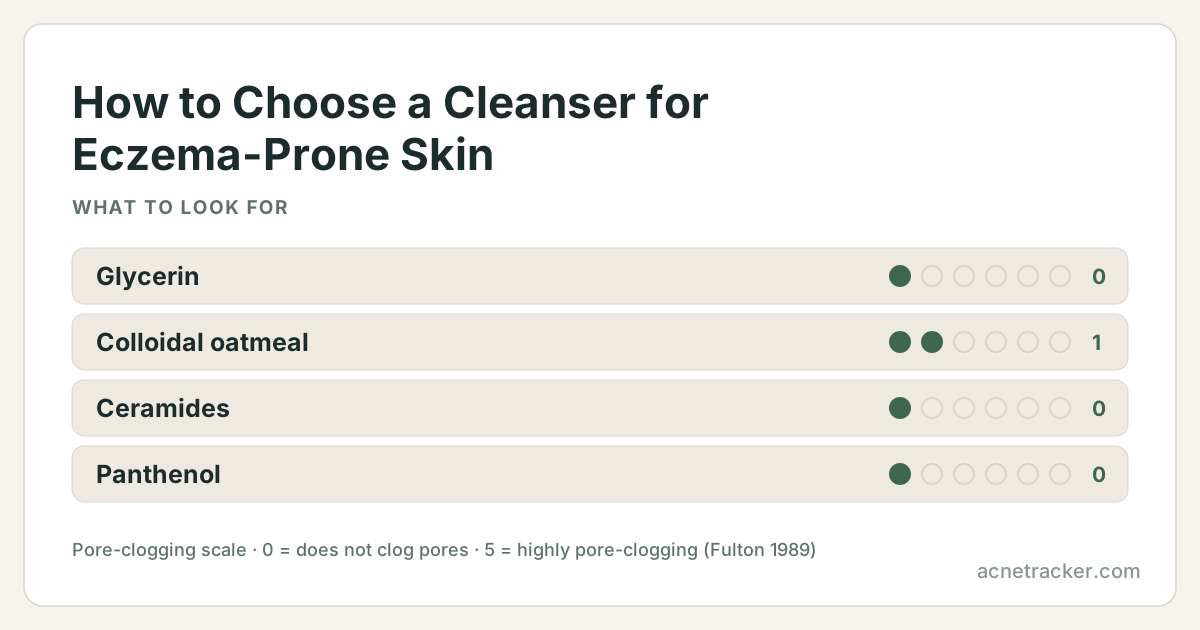
Ingredients to look for
| Ingredient | Why it matters |
|---|---|
| Glycerin | A gentle humectant that helps a compromised, water-losing barrier stay hydrated through washing. |
| Colloidal oatmeal | A recognised skin protectant that soothes itch and supports comfort in eczema-prone skin. |
| Ceramides | The barrier lipids eczema-prone skin is often short of; help washing leave the barrier less depleted. |
| Panthenol | Softens and calms rough, itchy patches and supports barrier recovery. |
| Coco-glucoside | A very mild surfactant that cleans at low strength, well suited to a fragile barrier. |
Ingredients to avoid
| Ingredient | Why it matters |
|---|---|
| Sodium lauryl sulfate (SLS) and harsh sulfates | Strong detergents that strip barrier lipids and are a well-known trigger for eczema flares. |
| Fragrance and essential oils | Common contact triggers that provoke itching and worsen flares in eczema-prone skin. |
| High-pH bar soaps | Alkaline washing disrupts an already fragile acid mantle and dries the skin further. |
| Hot water and scrubbing | Both strip lipids and trigger the itch–scratch cycle that keeps eczema flaring. |
How to choose
Prioritise a non-foaming or very low-foam texture — cream, lotion or a syndet formula — over any foaming gel, because less surfactant means less barrier disruption. Look for glycerin, a barrier ingredient such as ceramides, and a soothing agent like colloidal oatmeal or panthenol. Screen out SLS, fragrance and essential oils, which are among the most common eczema triggers, and choose 'fragrance-free' over 'unscented'. Formulas that carry a recognised eczema or dermatology association endorsement can be a helpful shortcut, though the ingredient list still decides. Because eczema is a medical condition, use a gentle wash alongside a doctor's advice; prescribed treatments and emollients address flares a cleanser cannot. Judge the product by comfort: no tightness, stinging or itch after rinsing means it suits the barrier.
How to apply
Cleanse gently, ideally once a day in the evening, with lukewarm water and fingertips only — no cloths, brushes or hot water. Keep it brief; long washing removes more lipids. Pat, do not rub, dry, and apply an emollient or barrier cream within a couple of minutes onto slightly damp skin to lock in water. During a flare, cut back to a plain water rinse and lean on your prescribed emollient. If eczema is widespread, weeping, painful or not improving, see a doctor, as it may need medical treatment.
Frequently asked questions
Can a cleanser cure eczema?
No. Eczema is a medical condition, and a cleanser cannot treat it. A gentle, fragrance-free wash simply avoids triggering flares, while the actual treatment — emollients and prescribed therapies — comes through a doctor who can tailor it to your skin.
Is soap bad for eczema-prone skin?
Traditional high-pH bar soap usually is, because it strips barrier lipids and raises skin pH, both of which can trigger flares. A non-foaming, fragrance-free syndet cleanser is far gentler and better suited to a fragile barrier.
Should I stop cleansing during a flare?
You can reduce it. During an active flare, a plain lukewarm water rinse may be enough, saving a full cleanse for when skin is calmer. Follow immediately with your prescribed emollient to support the barrier while it recovers.
When should I see a doctor about eczema?
If eczema is widespread, weeping, painful, infected-looking or not improving with gentle care and emollients, see a doctor. Eczema is treatable, and a professional can prescribe therapies and rule out other conditions that skincare alone cannot address.
Sources & further reading
There is no single study of this exact question. The guidance here is reasoned from the ingredient profiles below, each of which carries its own references:
- Glycerin3 refs
- Colloidal Oatmeal2 refs
- Ceramides3 refs
- Panthenol3 refs
- Coco-Glucoside2 refs
Show every reference behind this page (10)
- PubChem — Glycerol compound summarycited by Glycerin
- DermNet — Moisturiserscited by Glycerin
- European Commission CosIng database — Glycerincited by Glycerin, Ceramides, Panthenol, Coco-Glucoside
- FDA OTC monograph — skin protectant drug products (colloidal oatmeal)cited by Colloidal Oatmeal
- PubMed — Colloidal oatmeal formulations as adjunct treatments in atopic dermatitis (J Drugs Dermatol, 2012)cited by Colloidal Oatmeal
- DermNet — Skin barrier functioncited by Ceramides
- PubChem — Ceramide compound summarycited by Ceramides
- PubChem — Panthenol compound summarycited by Panthenol
- Safety Assessment of Panthenol, Pantothenic Acid, and Derivatives as Used in Cosmetics (PubMed)cited by Panthenol
- Cosmetic Ingredient Review — safety of alkyl glucosidescited by Coco-Glucoside
Medical disclaimer
Ingredients mentioned on this page
Find your personal acne triggers
Our free Acne Tracker lets you log breakouts, sleep, stress and diet, and shows you which factors correlate with your flare-ups.