Can You Mix Mandelic Acid and Ceramides?
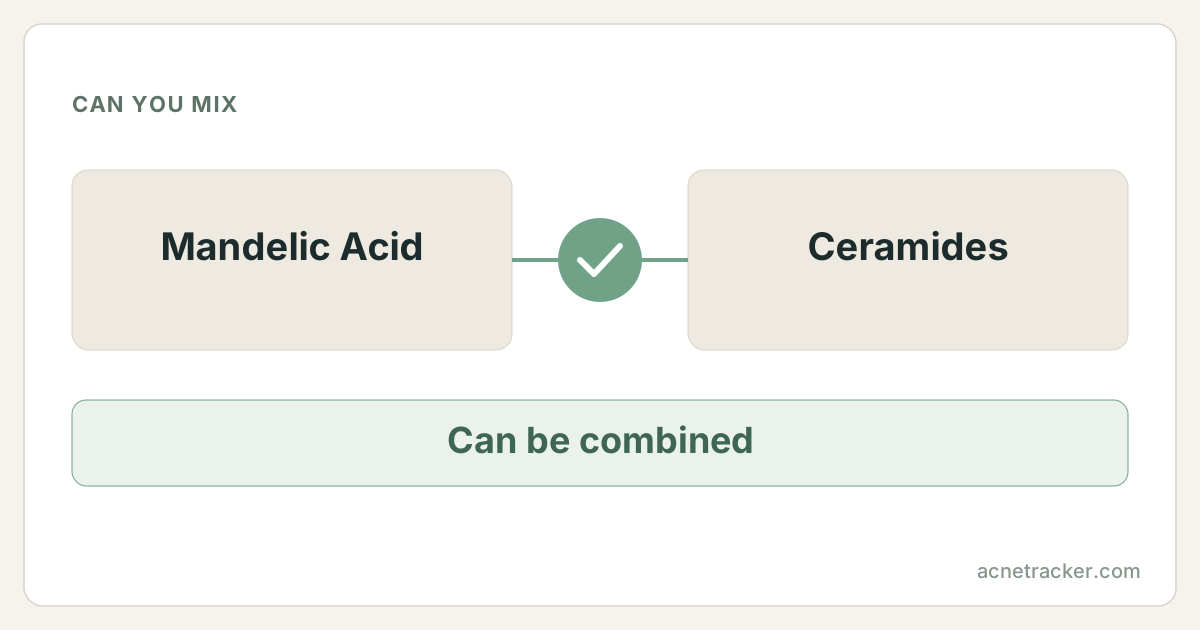
Yes — this is exfoliation and barrier repair working as a team. Mandelic acid gently lifts away dead surface cells, and ceramides replace the lipids that hold the skin barrier together, so the exfoliation never tips into dryness or tightness. It is one of the most sustainable ways to use an acid long term, especially on sensitive or dehydrated skin.
How this pairing resolves
The two ingredients, their published numbers, and where they land together.
The numbers beside each ingredient are its published comedogenic rating and effective pH window, taken from its own profile page.
Show the numbers
| Ingredients | Metric | 0–5 |
|---|---|---|
| Mandelic Acid | Comedogenic rating | 0/5 |
| Mandelic Acid | Effective pH | 3.0–4.0 |
| Ceramides | Comedogenic rating | 0/5 |
| Ceramides | Effective pH | no published pH |
Why
Every exfoliating acid removes a little of the mortar between skin cells along with the dead cells themselves, and that mortar is largely made of ceramides, cholesterol and fatty acids. Mandelic acid does this slowly and gently because its large molecule penetrates at a crawl, but even gentle exfoliation nudges barrier lipids down over time. Applying ceramides alongside simply puts back what the acid takes out, restoring the lamellar structure that keeps water in and irritants out. There is no pH conflict to manage: ceramides are inert lipids that do not care about the acid's low pH, and they are usually delivered in a rich cream applied after the acid has done its work. The result is a routine you can keep up indefinitely, because the barrier is being maintained rather than slowly eroded. For acne-prone skin this matters twice over — a strong barrier tolerates active treatment better and is less likely to overproduce oil in response to damage. Think of mandelic acid as the renovation and ceramides as the rebuild.
How to combine them
Use mandelic acid on clean, dry skin first, so it makes contact at its working pH, then follow with a ceramide moisturiser once the acid has absorbed — around five minutes later. Because ceramides are a leave-on repair step rather than an active with its own schedule, apply them every single day, morning and night, even on evenings you skip the acid. On acid nights the ceramide cream is your final step; on off nights it can be the whole routine. Mornings should always finish with SPF, since mandelic acid briefly increases photosensitivity. If your skin feels tight the day after exfoliating, that is a cue to lean harder on the ceramides and space the acid out, not to abandon either. A ceramide-rich cleanser is a gentle way to add even more barrier support.
Example routine
| When | Steps |
|---|---|
| Evening (2–3× week) | Cleanser → Mandelic acid → wait 5 min → Ceramide moisturizer |
| Off evenings | Cleanser → Ceramide moisturizer |
| Every morning | Cleanser → Ceramide moisturizer → SPF 30+ |
Warning signs
Frequently asked questions
Do ceramides reduce how well mandelic acid works?
No. Applied after the acid has absorbed, ceramides sit as a repair layer and do not block exfoliation. They simply replace the barrier lipids the acid loosens, which lets you keep using it comfortably.
Can I use ceramides every day even when I skip the acid?
Yes, and you should. Ceramides are a leave-on moisturiser, not a scheduled active, so daily morning and night use keeps the barrier strong between exfoliation sessions.
Is mandelic acid with ceramides good for a damaged barrier?
It is a smart rebuild routine. Pause the acid until the barrier calms, lean on ceramides daily, then reintroduce mandelic acid slowly once tightness and stinging are gone.
Should ceramides go on before or after mandelic acid?
After. Mandelic acid needs direct contact with bare skin at a low pH, so it goes first; the ceramide cream is the final, sealing step once the acid has sunk in.
Sources & further reading
There is no single study of this exact question. The guidance here is reasoned from the ingredient profiles below, each of which carries its own references:
- Mandelic Acid2 refs
- Ceramides3 refs
Show every reference behind this page (5)
- Mandelic acid — PubChem compound summarycited by Mandelic Acid
- DermNet — Alpha hydroxy acidscited by Mandelic Acid
- DermNet — Skin barrier functioncited by Ceramides
- PubChem — Ceramide compound summarycited by Ceramides
- European Commission CosIng database — Ceramide NPcited by Ceramides
Medical disclaimer
Ingredients mentioned on this page
Find your personal acne triggers
Our free Acne Tracker lets you log breakouts, sleep, stress and diet, and shows you which factors correlate with your flare-ups.