How to Choose a Cleanser for Dry Skin
Dry skin lacks oil, so the wrong cleanser makes the problem worse before your moisturiser even reaches the mirror. The goal is a wash that lifts dirt and sunscreen while leaving the barrier's own lipids in place. That means low-foam or non-foaming textures, a short list of mild surfactants, and added humectants that hold water at the surface. This guide walks through the ingredient profile to look for on any label, the harsher ingredients that quietly cause tightness and flaking, and the simple after-rinse test that tells you more than any marketing claim. We describe formulas, not brands, so the criteria still hold when a product is reformulated.
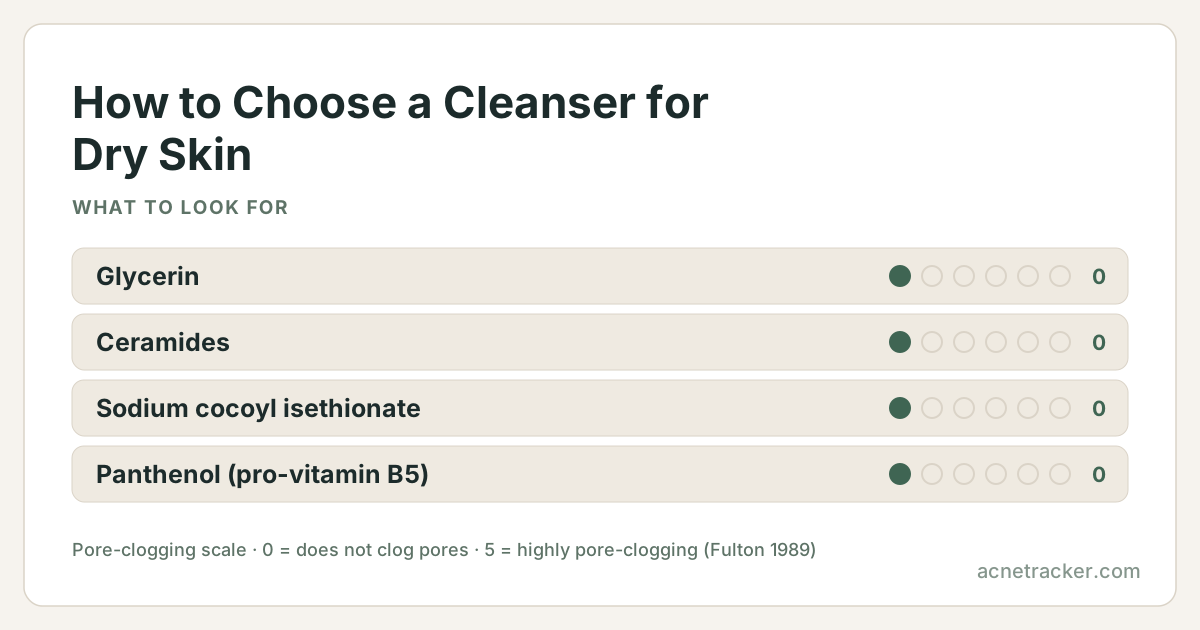
Ingredients to look for
| Ingredient | Why it matters |
|---|---|
| Glycerin | A humectant that draws water into the upper layers, so skin feels supple rather than tight straight after washing. |
| Ceramides | Barrier lipids that help a cleanser leave the skin's own protective film intact instead of stripping it. |
| Sodium cocoyl isethionate | A mild surfactant that cleans gently and rinses without the tight, squeaky feel of soap. |
| Panthenol (pro-vitamin B5) | Softens and soothes the surface, a useful addition when dryness tips into rough or itchy patches. |
| Squalane | A lightweight emollient sometimes added to cream and oil cleansers to replace lost softness during washing. |
Ingredients to avoid
| Ingredient | Why it matters |
|---|---|
| Sodium lauryl sulfate (SLS) and other harsh sulfates | Strong detergents that strip surface lipids and leave dry skin tight, flaky and more reactive. |
| High-pH bar soaps | Alkaline cleansing disrupts the acid mantle for hours, which dry skin is least able to repair quickly. |
| Alcohol denat. near the top of the list | Dissolves the little surface oil dry skin has and speeds up water loss after rinsing. |
| Strong fragrance and essential oils | A common trigger for stinging and redness on an already compromised, moisture-poor surface. |
How to choose
Start with texture. Cream, milk, lotion and oil cleansers suit dry skin far better than clear foaming gels, because they clean with less surfactant and often leave a softening residue. Next, scan the first half of the ingredient list: you want glycerin present, a short mild-surfactant system, and ideally ceramides or an emollient such as squalane. pH matters too — a figure between 4.5 and 5.5, or the phrases 'soap-free' and 'pH-balanced', point to a gentler formula, while 'deep-cleansing' and 'purifying' are unregulated marketing. Avoid anything built around SLS or listing alcohol denat. early. Finally, trust the after-rinse feel over any promise on the front of the bottle. If your face feels tight, papery or itchy within ten minutes of washing, the cleanser is too aggressive for dry skin, no matter how gentle the label claims to be.
How to apply
Cleanse once a day, in the evening, and simply rinse with lukewarm water in the morning — over-washing is a leading cause of persistent dryness. Keep the water cool to lukewarm, since hot water accelerates moisture loss. Massage a cream or oil cleanser over dry skin first if you wear sunscreen or makeup, then emulsify with a little water and rinse. Do not wait for skin to fully dry: apply your humectant serum or moisturiser onto slightly damp skin within a minute of patting off, so you trap water rather than let it evaporate.
Frequently asked questions
Is a foaming cleanser bad for dry skin?
Not automatically, but most foaming gels use a stronger surfactant load that dry skin tolerates poorly. A cream, milk or oil format usually leaves the barrier more comfortable, so foam is worth avoiding unless a specific low-surfactant formula feels fine on your skin.
Should I cleanse twice a day if my skin is dry?
Usually once is enough. A full cleanse in the evening removes the day's sunscreen and grime, while a plain water rinse in the morning avoids stripping the barrier before it has recovered overnight.
Why does my face feel tight after washing?
Tightness means the cleanser has removed too much of your surface oil and raised the skin's pH. Switching to a lower-foam formula with glycerin, and moisturising on damp skin straight after, usually resolves it.
Do I still need to remove makeup if I have dry skin?
Yes, but an oil or balm cleanser does this gently and dissolves makeup without scrubbing. It is a kinder route to a clean face than a strong foaming wash that would leave dry skin taut.
Sources & further reading
There is no single study of this exact question. The guidance here is reasoned from the ingredient profiles below, each of which carries its own references:
- Glycerin3 refs
- Ceramides3 refs
- Sodium Cocoyl Isethionate2 refs
- Panthenol3 refs
- Squalane3 refs
Show every reference behind this page (9)
- PubChem — Glycerol compound summarycited by Glycerin
- DermNet — Moisturiserscited by Glycerin, Squalane
- European Commission CosIng database — Glycerincited by Glycerin, Ceramides, Sodium Cocoyl Isethionate, Panthenol, Squalane
- DermNet — Skin barrier functioncited by Ceramides
- PubChem — Ceramide compound summarycited by Ceramides
- Cosmetic Ingredient Review — safety assessment of isethionate surfactantscited by Sodium Cocoyl Isethionate
- PubChem — Panthenol compound summarycited by Panthenol
- Safety Assessment of Panthenol, Pantothenic Acid, and Derivatives as Used in Cosmetics (PubMed)cited by Panthenol
- PubChem — Squalane compound summarycited by Squalane
Medical disclaimer
Ingredients mentioned on this page
Find your personal acne triggers
Our free Acne Tracker lets you log breakouts, sleep, stress and diet, and shows you which factors correlate with your flare-ups.