How to Choose a Cleanser for Mature Skin
Mature skin tends to be drier and thinner, with a barrier that repairs more slowly and a surface that loses water more easily than it once did. That makes gentle cleansing more important, not less: a stripping wash exaggerates dryness, dullness and the look of fine lines. A cleanser cannot reverse ageing, and no wash-off product delivers meaningful anti-ageing benefit in seconds of contact — that work belongs to leave-on actives. What a cleanser can do is clean without depleting the barrier. This guide describes the ingredient profile that suits mature skin, the harsh formulas to avoid, and how to read a label past the anti-ageing marketing.
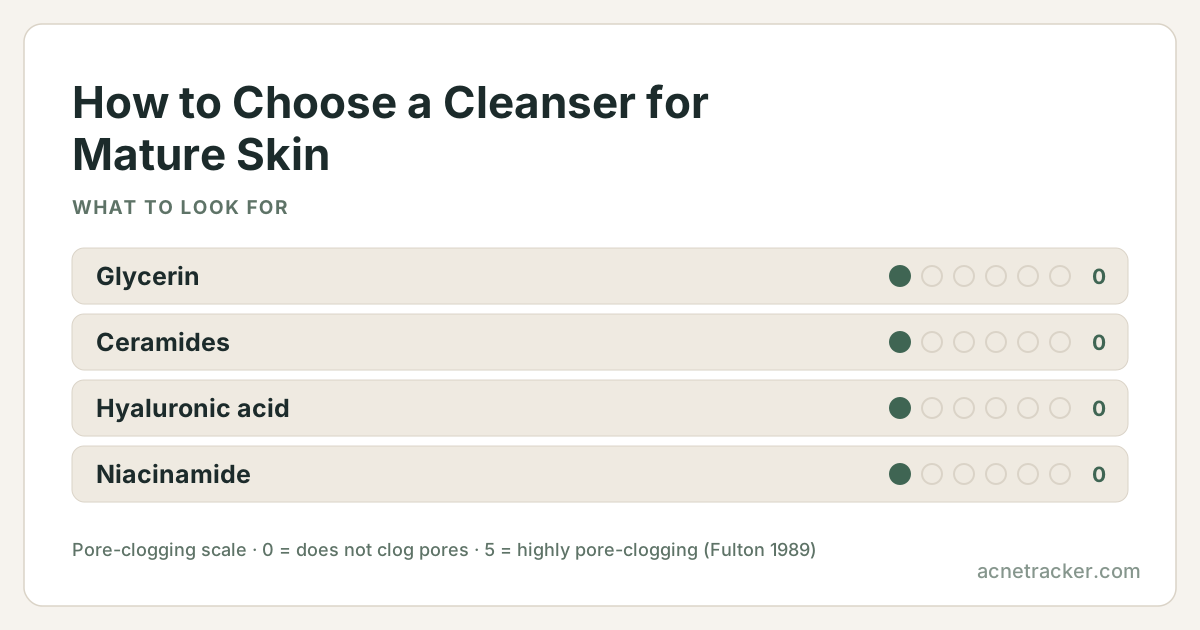
Ingredients to look for
| Ingredient | Why it matters |
|---|---|
| Glycerin | A humectant that keeps mature, drier skin comfortable and hydrated through washing. |
| Ceramides | Support a barrier that repairs more slowly with age, so cleansing leaves it less depleted. |
| Hyaluronic acid | A humectant that helps the surface hold water, softening the look of fine, dehydration-related lines. |
| Niacinamide | Signals a barrier-friendly formula and supports overall skin comfort in thinner, drier skin. |
| Squalane | A lightweight emollient in cream and oil cleansers that replaces softness lost during washing. |
Ingredients to avoid
| Ingredient | Why it matters |
|---|---|
| Harsh sulfates and high-pH soap | Strip an already thinner, drier barrier and exaggerate dryness and dullness. |
| Denatured alcohol high on the list | Dries the surface and can make fine lines look more pronounced. |
| Abrasive scrubs | Thinner, more fragile mature skin is easily irritated by mechanical friction. |
| Very hot water | Increases water loss and leaves mature skin feeling tight and looking dull after washing. |
How to choose
Favour a cream, milk or gentle gel-cream over a foaming gel, since drier mature skin does better with less surfactant. Look for glycerin, a barrier ingredient such as ceramides, and ideally a humectant like hyaluronic acid, all within the first half of the list. Avoid SLS, early denatured alcohol and scrubs. Do not expect a cleanser to firm or de-wrinkle: 'anti-ageing', 'lifting' and 'renewing' washes are marketing, since contact time is too short for actives to work — those results come from leave-on retinoids, vitamin C and sunscreen. Judge instead by comfort. After rinsing, skin should feel soft and supple rather than tight or squeaky. That comfort, plus a formula that supports the barrier, is what actually serves mature skin at the cleansing step.
How to apply
Cleanse once daily in the evening, and rinse with lukewarm water in the morning to avoid over-washing thinner skin. In the evening, a cream or oil cleanser lifts sunscreen and makeup gently; follow it, if you like, with a mild second cleanser. Keep the water lukewarm and washing brief. Apply your treatment serum and moisturiser onto slightly damp skin to hold water in. Save the actual anti-ageing work for leave-on steps — a gentle cleanser simply keeps the barrier intact so those actives are better tolerated.
Frequently asked questions
Can an anti-ageing cleanser reduce wrinkles?
No. A wash-off product has too little contact time for anti-ageing actives to work, so 'anti-ageing' on a cleanser is marketing. Wrinkles are better addressed by leave-on retinoids, vitamin C and daily sunscreen, with the cleanser simply keeping skin comfortable.
Should mature skin avoid foaming cleansers?
Often it is gentler to. Mature skin tends to be drier and thinner, so a cream or milk cleanser with less surfactant usually leaves the barrier more comfortable than a foaming gel, especially in the evening after sunscreen.
Is it better to cleanse once or twice a day?
For drier mature skin, a full cleanse in the evening plus a lukewarm water rinse in the morning is usually enough. Over-washing strips the barrier, which repairs more slowly with age and shows dryness more readily.
Do I need a separate eye cleanser?
Not necessarily. A gentle cream or oil cleanser removes eye makeup without a dedicated product, and avoids the tugging that thinner skin around the eyes tolerates poorly. Be gentle and let the product dissolve makeup rather than rubbing it off.
Sources & further reading
There is no single study of this exact question. The guidance here is reasoned from the ingredient profiles below, each of which carries its own references:
- Glycerin3 refs
- Ceramides3 refs
- Hyaluronic Acid3 refs
- Niacinamide2 refs
- Squalane3 refs
Show every reference behind this page (8)
- PubChem — Glycerol compound summarycited by Glycerin
- DermNet — Moisturiserscited by Glycerin, Hyaluronic Acid, Squalane
- European Commission CosIng database — Glycerincited by Glycerin, Ceramides, Hyaluronic Acid, Niacinamide, Squalane
- DermNet — Skin barrier functioncited by Ceramides
- PubChem — Ceramide compound summarycited by Ceramides
- PubChem — Hyaluronic acid compound summarycited by Hyaluronic Acid
- Niacinamide: mechanisms of action and its topical use in dermatology (PubMed)cited by Niacinamide
- PubChem — Squalane compound summarycited by Squalane
Medical disclaimer
Ingredients mentioned on this page
Find your personal acne triggers
Our free Acne Tracker lets you log breakouts, sleep, stress and diet, and shows you which factors correlate with your flare-ups.