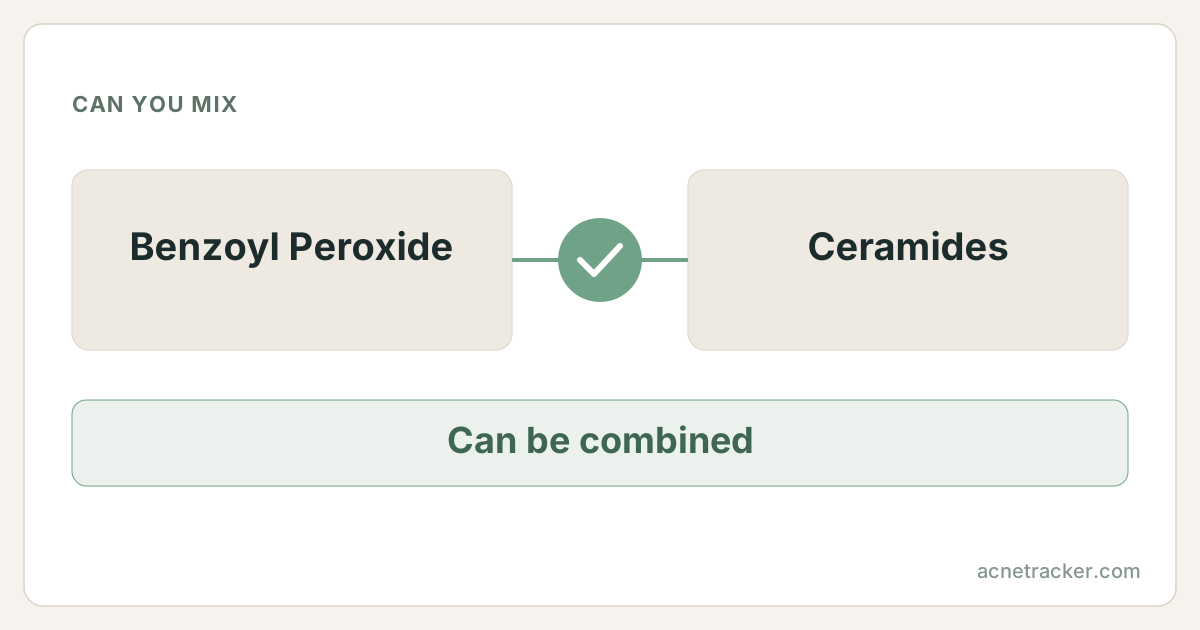
Can You Mix Benzoyl Peroxide and Ceramides?
Yes, and this is arguably the pairing most benzoyl peroxide users are missing. Ceramides are the lipids that hold the outer skin together; benzoyl peroxide is drying and disrupts them. Putting ceramides back on top does not blunt the treatment — benzoyl peroxide has already reached the follicle by then. Apply benzoyl peroxide to clean dry skin first, then a ceramide moisturiser over the whole face.
How this pairing resolves
The two ingredients, their published numbers, and where they land together.
The numbers beside each ingredient are its published comedogenic rating and effective pH window, taken from its own profile page.
Show the numbers
| Ingredients | Metric | 0–5 |
|---|---|---|
| Benzoyl Peroxide | Comedogenic rating | 0/5 |
| Benzoyl Peroxide | Effective pH | no published pH |
| Ceramides | Comedogenic rating | 0/5 |
| Ceramides | Effective pH | no published pH |
Why
The stratum corneum works like brickwork: corneocytes are the bricks, and the mortar is a lipid matrix of roughly equal parts ceramides, cholesterol and free fatty acids. Benzoyl peroxide's dryness is not imaginary — it degrades sebum and disturbs that mortar, which is why the tight, flaky week-three phase happens so predictably. Ceramides are the matching mortar component, and formulations that supply them alongside cholesterol and fatty acids are better supported by barrier research than ceramides alone, because the ratio matters as much as the presence. There is no interaction to worry about. Ceramides are lipid molecules with no reactive handle that free-radical oxygen exploits at skin temperature, and a moisturiser applied after the treatment sits above where benzoyl peroxide is working, not in its way. The practical case is adherence again: acne treatment is judged at twelve weeks, and dryness is the reason people never get there. Restoring lipids also matters because a damaged barrier is itself pro-inflammatory — it lets irritants in, which makes acne look angrier, which tempts people to apply even more benzoyl peroxide.
How to combine them
Order matters, and it is simple: treatment first, lipids second. Cleanse with something non-foaming, dry the skin, apply benzoyl peroxide to the affected areas, wait until it has absorbed, then apply a ceramide moisturiser over everything — including the treated spots. Twice daily is fine for the moisturiser even if benzoyl peroxide is only on at night. If your skin is already raw when you start, invert the plan for a week: ceramides only, no benzoyl peroxide, then reintroduce the treatment at 2.5% three nights weekly. The alternative sequence — ceramide cream first as a buffer, benzoyl peroxide on top — is sometimes suggested for very reactive skin, and it does reduce sting, though you should expect it to reduce delivery too. Choose it deliberately as a tolerance measure, not as the default.
Example routine
| When | Steps |
|---|---|
| Evening | Non-foaming cleanser → Benzoyl peroxide 2.5% → absorb → Ceramide moisturiser |
| Morning | Rinse → Ceramide moisturiser → SPF 30+ |
| If skin is peeling | Ceramide moisturiser only for 5–7 days, then restart benzoyl peroxide slowly |
| Very reactive skin | Ceramide cream as a buffer → Benzoyl peroxide on top (less sting, less delivery) |
Warning signs
Frequently asked questions
Do ceramides stop benzoyl peroxide from working?
No. Applied after the treatment has absorbed, a ceramide moisturiser sits above the level where benzoyl peroxide is acting, inside the follicle. It restores lipids without interfering with the antibacterial chemistry.
Should the moisturiser go before or after benzoyl peroxide?
After, as the default — treatment on clean dry skin, lipids on top. Applying the cream first is a deliberate tolerance trick for very reactive skin, and it will reduce how much benzoyl peroxide gets through.
Are ceramides too rich for acne-prone skin?
Ceramides themselves are the skin's own lipids and are not considered pore-clogging. The texture of the product is what matters: a ceramide gel-cream or lotion is a better fit for oily skin than a heavy balm.
Will a ceramide moisturiser stop the benzoyl peroxide peeling entirely?
It reduces it substantially in most people but does not abolish it. If peeling persists after a fortnight of diligent moisturising, the frequency or the strength of the benzoyl peroxide is the thing to change.
Sources & further reading
There is no single study of this exact question. The guidance here is reasoned from the ingredient profiles below, each of which carries its own references:
- Benzoyl Peroxide3 refs
- Ceramides3 refs
Show every reference behind this page (6)
- PubChem — Benzoyl peroxide compound summarycited by Benzoyl Peroxide
- DermNet — Benzoyl peroxidecited by Benzoyl Peroxide
- FDA — Drugs (OTC acne products)cited by Benzoyl Peroxide
- DermNet — Skin barrier functioncited by Ceramides
- PubChem — Ceramide compound summarycited by Ceramides
- European Commission CosIng database — Ceramide NPcited by Ceramides
Medical disclaimer
Ingredients mentioned on this page
Find your personal acne triggers
Our free Acne Tracker lets you log breakouts, sleep, stress and diet, and shows you which factors correlate with your flare-ups.